Types of Industrial Instruments: A Selection Guide by Measurement
Industrial instruments measure and transmit process variables: pressure, temperature, flow, and level. Selecting the right one means matching the measurement principle to the process, then matching the output signal to the control system. This guide maps the main instrument families by what they measure, how they work, and the standards that govern them.
It is written for procurement, MRO, and plant engineers specifying instrumentation for process control, monitoring, and safety. Each family below links to the live category where you can compare and source verified products.
The main instrument families at a glance
Most process instrumentation falls into a handful of families defined by the variable measured. The table maps them, and the detail follows.
Instrument
Measures
Common signal
Key standard
Transmitter
Pressure, temp, flow, level
4-20 mA, HART
Varies by variable
Thermocouple / RTD
Temperature
mV / resistance
IEC 60584 / IEC 60751
Flow meter
Flow rate or mass
4-20 mA, pulse
ISO 5167 (DP type)
Level gauge
Tank or vessel level
4-20 mA, radar
Varies by type
Analytical
pH, conductivity, gas
4-20 mA, digital
Application-specific
Flame & gas detector
Hazard presence
Relay, 4-20 mA
IEC 61508 / 61511
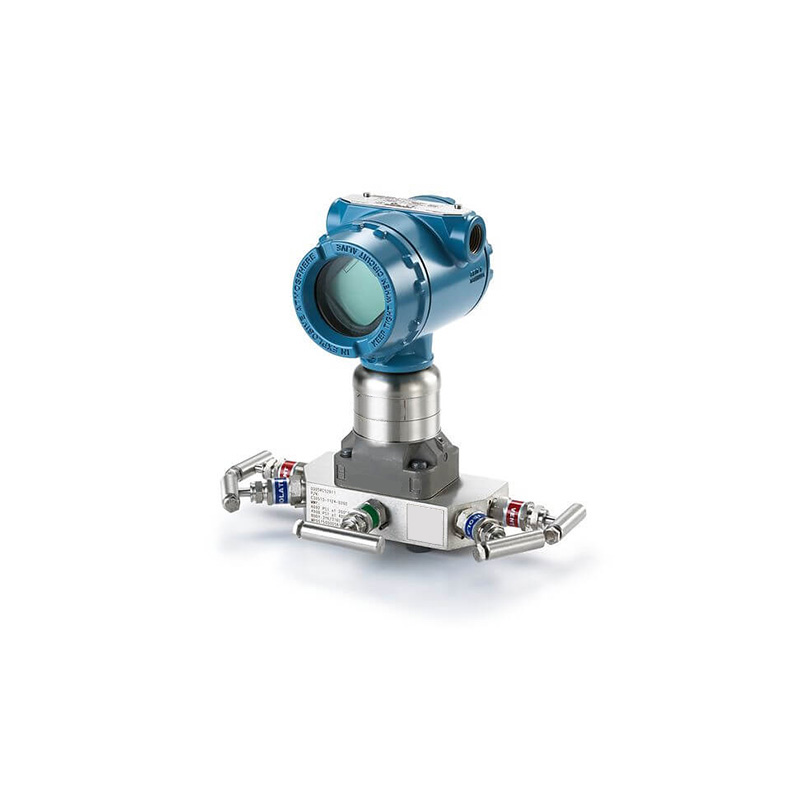
Transmitters
A transmitter converts a sensor's raw signal into a standardized industrial output, almost always a 4-20 mA current loop. The 4-20 mA standard is preferred because it resists electrical interference over long cable runs and detects a broken loop (a zero reading is a fault, not a valid measurement).
Modern transmitters add digital communication over the current loop. HART is the most common, with Foundation Fieldbus, Modbus, and WirelessHART also in use. This lets one device carry measurement, diagnostics, and configuration to a PLC or DCS.
Transmitters are specified by variable (pressure, temperature, flow, level), accuracy (percent of span), and turndown ratio. Modern units reach turndown ratios up to 100:1, letting one transmitter cover a wide range through digital calibration. Browse the liveTransmitters range, including wireless, acoustic, and totalizing types.
Temperature: thermocouples vs. RTDs
Temperature is the most measured process variable, and two sensor types dominate. The choice between them is an accuracy-versus-range-and-cost decision.
Feature
Thermocouple
RTD (Pt100)
Principle
Voltage from dissimilar metals
Resistance change of platinum
Range
Widest, to ~1700°C (type-dependent)
-200 to 650°C
Accuracy
Lower
Higher, Class A 0.25%
Stability
Drifts more over time
Superior, less drift
Standard
IEC 60584 (types J, K, T, E)
IEC 60751
Thermocouples generate a small voltage from two dissimilar metals joined at a point, and their wide range and low cost make them the default for high-temperature service such as flue gas or furnaces, with types and tolerances defined inIEC 60584. RTDs measure the resistance change of a platinum element, offering higher accuracy and stability. A Pt100 reads 100 ohms at 0 degrees C and changes about 0.385 ohms per degree C, calibrated per IEC 60751.
For RTDs, use a 3-wire connection to compensate for lead resistance, or 4-wire to eliminate it, since uncompensated cable resistance adds measurable error. Both sensor types feed a temperature transmitter that outputs 4-20 mA to the control system.
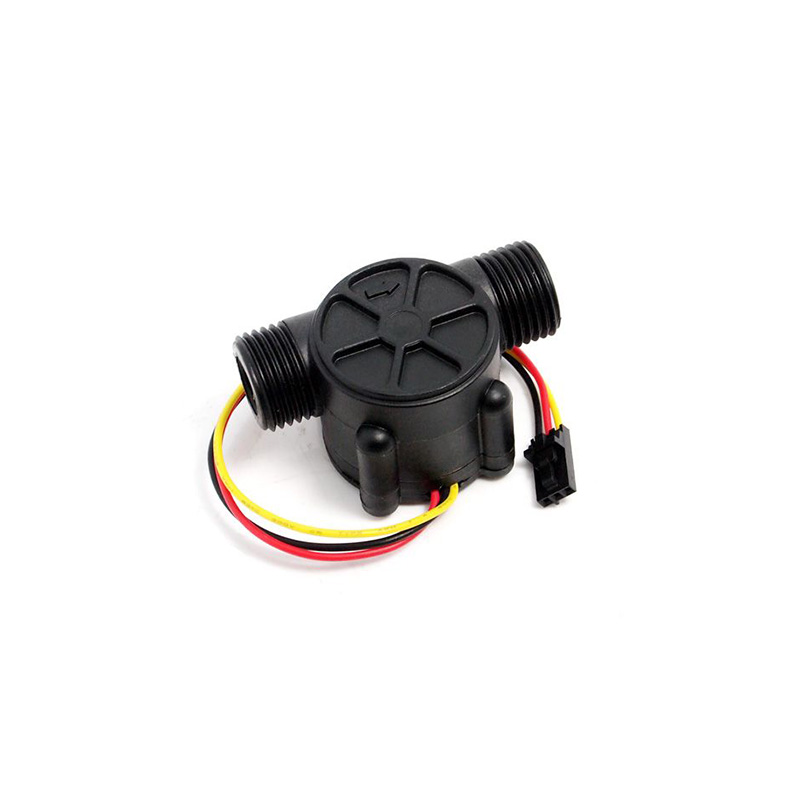
Flow meters
Flow measurement is critical in oil and gas, water treatment, and food processing. The technology choice depends on the fluid, accuracy needed, and whether volume or mass is required. The table compares the main types.
Flow meter
Measures
Best for
Differential pressure (orifice)
Volume via pressure drop
General service, steam, gas
Coriolis
Mass directly
High-accuracy, custody transfer
Electromagnetic
Volume
Conductive liquids, slurries
Ultrasonic
Volume
Clean liquids, non-invasive
Vortex
Volume
Steam, gas, liquids
Differential-pressure meters infer flow from the pressure drop across an orifice plate or nozzle, sized perISO 5167, and remain the most widely used for their simplicity and cost. Coriolis meters measure mass directly for the highest accuracy, favored in custody transfer. Electromagnetic meters suit conductive liquids and slurries, while ultrasonic meters measure clean liquids non-invasively. Match the meter to the fluid and the required turndown.
Level measurement
Level instruments monitor liquid or solid inventory in tanks and vessels. Modern gauges add remote monitoring, improving both safety and stock control.
Common technologies include radar and guided-wave radar for non-contact accuracy, hydrostatic (using differential pressure) for liquids, and ultrasonic for simpler service. Radar is increasingly the default for demanding applications because it is unaffected by density, vapor, or temperature changes. Select by the medium, the vessel conditions, and whether contact is acceptable.
Analytical instruments
Analytical instruments measure the chemical properties of liquids and gases, essential for quality control and environmental compliance. Liquid analyzers measure pH, conductivity, and dissolved oxygen, while gas analyzers evaluate composition and detect contaminants.
These instruments protect product quality and keep processes within environmental limits. They are common in water treatment, petrochemical, and pharmaceutical production. Density and viscosity meters fall here too, measuring mass per unit volume and resistance to flow for formulation control.
Flame and gas detection
Flame and gas detectors are safety instruments, not process instruments, and they protect people and assets. They identify toxic gases, flammable vapors, and open flames, then trigger alarms or shutdowns.
Because they are safety-critical, they are specified to a Safety Integrity Level (SIL) underIEC 61508 and IEC 61511. Detection technologies include infrared and ultraviolet flame detectors, and catalytic or infrared gas detectors. Always confirm the required SIL for the application before specifying.
Calibration and reliability
Every instrument drifts, so calibration is what keeps a measurement trustworthy. Regular calibration against a traceable reference maintains accuracy and supports compliance audits.
Calibration equipment includes pressure calibrators, signal generators, and multifunction calibrators. Best practice maintains a test accuracy ratio of at least 4:1 between the reference and the instrument under test, with traceability to a recognized standard such as ISO/IEC 17025. Budget for calibration accessories, since documented accuracy is often a regulatory requirement.
How to select an industrial instrument
Five factors drive the selection once you know the variable to measure. The table summarizes them.
Factor
What to confirm
Variable and range
What to measure and the expected span
Accuracy
Required precision as percent of span
Signal and protocol
4-20 mA, HART, Fieldbus, wireless
Environment
Temperature, area classification, materials
Compliance
Applicable standard or SIL requirement
Start from the process variable and its range, then set the accuracy the application needs, avoiding over-specification. Confirm the output signal and protocol match your control system, verify the instrument suits the environment and area classification, and check any compliance requirement such as a SIL rating for safety instruments.
Source industrial instruments through eINDUSTRIFY
eINDUSTRIFY is a premier global B2B marketplace for industrial supplies, connecting plant, MRO, and process teams with vetted suppliers of instrumentation. Every seller is vetted, so you source correctly specified, standard-compliant instruments with documentation, and compare accuracy, signal, and range across suppliers in one place.
Browse the liveInstrumentation category, includingTransmitters andFlow Sensors, serving the Power Generation, Manufacturing, and Electric Utilities sectors. For range selection, accuracy requirements, or project sourcing,submit an RFQ and our team will match your specification to the right suppliers. Call 1-888-774-7632 or email info@eindustrify.com to get started.
Frequently asked questions
What are the main types of industrial instruments?
The main families are transmitters (pressure, temperature, flow, level), temperature sensors (thermocouples and RTDs), flow meters, level gauges, analytical instruments (pH, conductivity, gas), and flame and gas detectors. Each measures a specific process variable and outputs a standardized signal, usually 4-20 mA, to a control system.
What is the difference between a thermocouple and an RTD?
A thermocouple generates a voltage from two dissimilar metals and offers the widest temperature range at low cost, suiting high-temperature service. An RTD measures the resistance change of a platinum element, offering higher accuracy and stability over a range of -200 to 650°C. Use thermocouples for extreme heat and RTDs where accuracy matters most.
What is a 4-20 mA signal and why is it standard?
4-20 mA is the standard analog current-loop signal for industrial instruments. It resists electrical interference over long cable runs, and because a live signal never drops to zero, a 0 mA reading indicates a fault rather than a valid measurement. Many instruments add HART digital communication over the same loop.
What types of flow meters are used in industry?
Common types are differential-pressure (orifice) meters sized per ISO 5167, Coriolis mass meters for high accuracy, electromagnetic meters for conductive liquids, ultrasonic meters for clean liquids, and vortex meters for steam and gas. Select by the fluid, the accuracy required, and whether volume or mass measurement is needed.
What is a transmitter turndown ratio?
Turndown ratio is the span over which a transmitter can be calibrated while holding accuracy. Modern transmitters reach up to 100:1, letting one unit cover a wide range. Avoid setting too wide a range, since accuracy at the low end degrades.
How often should industrial instruments be calibrated?
Calibration frequency depends on the application, the drift rate, and any regulatory requirement, and is verified against a traceable reference. Best practice maintains a test accuracy ratio of at least 4:1 between the reference and the instrument, with traceability to a standard such as ISO/IEC 17025.
What standards apply to flame and gas detection?
Flame and gas detectors are safety instruments specified to a Safety Integrity Level (SIL) under IEC 61508 and IEC 61511. Detection technologies include infrared and ultraviolet flame detection and catalytic or infrared gas detection. Confirm the required SIL for the specific hazard before specifying.
Tags: industrial instruments transmitters thermocouple vs RTD flow meters process instrumentation instrument calibration














 vs Automatic Transfer Switch (ATS) for Data Centers.png)