Industrial Hardware and Fastener Selection: Grades, Standards, and Materials
Selecting industrial hardware starts with the fastener grade, because grade defines the tensile strength, material, and application a bolt is rated for. The three governing systems are SAE J429 for inch-series bolts, ISO 898-1 for metric property classes, and ASTM F3125 for structural bolts. Matching grade, material, and coating to the joint is what separates a reliable connection from a field failure.
This guide explains fastener grades, the standards behind them, and how to select the right hardware for industrial duty. It is written for procurement, MRO, and maintenance teams sourcing fasteners and structural hardware for heavy-duty applications.
What is a bolt grade?
A bolt grade is a mechanical classification defined by material, heat treatment, and standard-based strength limits. It tells you the tensile and yield strength a fastener is rated for, marked on the bolt head by radial lines (SAE) or raised numbers (ISO). Grade is the single most important fastener specification, because an under-graded bolt fails under load and an over-graded one can be too brittle for a dynamic joint.
The three dominant grading systems serve different markets. SAE J429 covers inch-series fasteners in North America, ISO 898-1 covers metric fasteners internationally, and ASTM standards cover construction and structural bolting. Each uses its own markings and qualification route, so grades are not freely interchangeable across systems.
SAE J429 bolt grades
SAE J429 is the standard for inch-series bolt grades in North America, defining strength by grade number marked as radial lines on the bolt head. The three most common grades span low to high strength, and the table gives their tensile ratings and typical use.
SAE grade
Tensile strength
Typical use
Grade 2
60,000 to 74,000 PSI
Non-critical, general assembly
Grade 5
105,000 to 120,000 PSI
Automotive, machinery
Grade 8
150,000 PSI
Heavy machinery, high-stress
Grade 2 is low-strength carbon steel for non-critical joints. Grade 5 is medium-strength carbon or alloy steel, the workhorse for automotive and machinery assembly. Grade 8 is high-strength alloy steel for heavy-duty, high-stress applications.SAE J429 governs the mechanical and material requirements, with dimensional inspection under ASME B18.2.1.
ISO 898-1 metric property classes
ISO 898-1 is the international standard for metric fastener strength, expressed as a property class rather than a grade. The class is a two-part number, such as 8.8 or 10.9, stamped on the bolt head, where the first digit relates to tensile strength and the second to the yield-to-tensile ratio. ISO 898-1 covers carbon and alloy steel bolts, screws, and studs.
The common classes map roughly to SAE grades for reference. Class 8.8 is comparable to SAE Grade 5, and Class 10.9 is comparable to SAE Grade 8, while Class 12.9 offers the highest standard strength for critical applications like engine and motor assemblies. These comparisons are for reference only, since the thread forms, dimensions, and qualification routes differ between the inch and metric systems.
ASTM structural bolts: A325, A490, and A307
ASTM F3125 is the structural bolt standard, consolidating the former A325 and A490 grades used in steel construction. A325 (now F3125 Grade A325) is a heavy hex structural bolt for steel connections, and A490 is its higher-strength counterpart.ASTM F3125 governs both inch and metric structural grades.
A critical procurement rule follows: an SAE Grade 5 cannot substitute for an ASTM A325, even though their mechanical properties look nearly identical. The A325 has a heavy hex head, a shorter thread length for structural connections, and a different qualification route. For general low-strength bolting, ASTM A307 covers non-critical carbon steel bolts, comparable to SAE Grade 2. Substituting across these standards without engineering approval is a common and costly specification error.
Stainless and corrosion-resistant fasteners
Stainless steel fasteners are governed by ISO 3506-1, not ISO 898-1, because stainless behaves differently under torque and preload than carbon or alloy steel. The two common industrial grades are A2 (304 stainless), a general corrosion-resistant grade, and A4 (316 stainless), a marine grade with added molybdenum for chloride resistance. ISO 3506-1 defines their property classes, such as A2-70 and A4-80.
Material and coating are selected for the environment, not just strength. Zinc plating suits indoor and low-corrosion service, hot-dip galvanizing suits outdoor structural use, and 316 stainless suits coastal, chemical, and washdown environments. Stainless fasteners also require care against galling, since stainless-on-stainless threads can seize under torque without a lubricant or anti-seize compound.
How to select an industrial fastener
Selecting a fastener means matching grade, material, thread, and coating to the joint's load and environment, not simply choosing the strongest bolt. A stronger bolt does not make a safer joint. If the nut grade is too low, the washer too soft, the thread engagement too short, or the friction condition wrong, the joint can fail well below the bolt's rated tensile strength.
Specify the grade to the structural load, the material and coating to the corrosion environment, and the nut and washer to match the bolt grade. Confirm the thread system (UNC/UNF inch or metric) and adequate thread engagement, typically at least one bolt diameter into a tapped hole. For critical or structural joints, follow the governing standard's substitution rules and seek engineering approval rather than swapping grades by strength alone.
Source industrial hardware and fasteners through eINDUSTRIFY
eINDUSTRIFY is a premier global B2B marketplace for industrial supplies, connecting procurement, MRO, and maintenance teams with vetted suppliers of fasteners and structural hardware. Every seller is vetted, so you source graded, standard-compliant fasteners with material documentation, and compare grade, material, and coating across suppliers in one place.
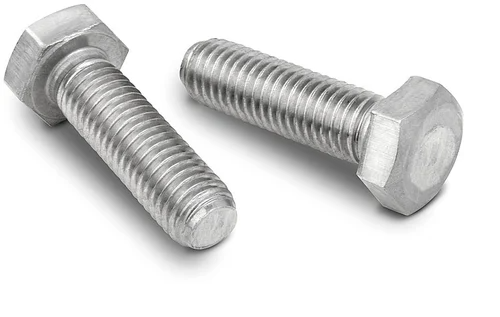
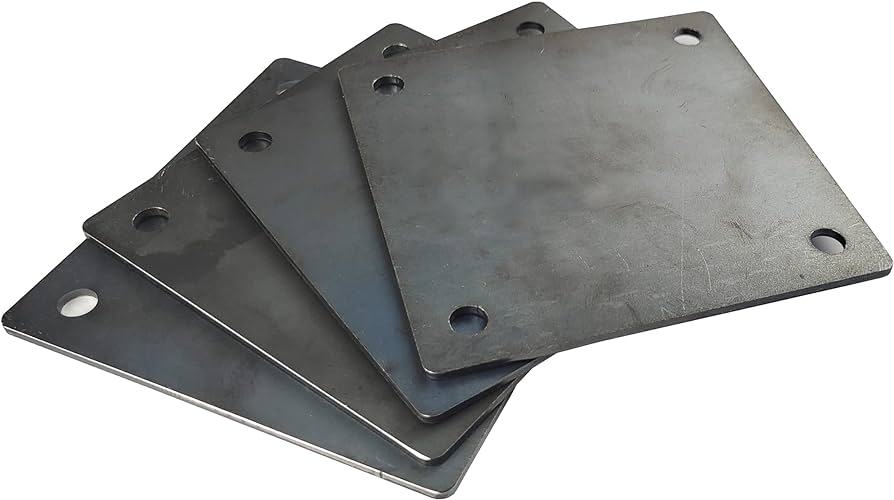
Browse the live Hardware category, including Fasteners with Screws, Bolts, Nuts, Washers, and Anchors, plus Structural Supports and Plates. For related sourcing, see our guide onindustrial sealants. These serve the Construction and Manufacturing sectors. For bulk orders,submit an RFQ.
Frequently asked questions
What is the difference between a Grade 5 and a Grade 8 bolt?
An SAE Grade 5 bolt is medium-strength carbon or alloy steel with 105,000 to 120,000 PSI tensile strength, marked with three radial lines, suited to automotive and machinery. A Grade 8 bolt is high-strength alloy steel rated to 150,000 PSI, marked with six radial lines, for heavy-duty high-stress joints. Grade 8 offers higher preload and yield strength, but the correct choice depends on the joint's load and dynamics.
What is the difference between property class 8.8 and 10.9?
ISO 898-1 property class 8.8 and 10.9 are metric bolt strength ratings, where 10.9 is significantly stronger. Class 8.8 is roughly comparable to SAE Grade 5 and suits general machinery, while Class 10.9 is comparable to SAE Grade 8 and is used in heavy machinery, military, and aerospace. The two-part number encodes tensile strength and the yield-to-tensile ratio, stamped on the bolt head.
Can I substitute a Grade 5 bolt for an ASTM A325?
No. An SAE Grade 5 bolt cannot substitute for an ASTM A325 (now F3125) structural bolt, even though their mechanical properties look nearly identical. The A325 has a heavy hex head, a shorter thread length designed for structural steel connections, and a different qualification route. Substituting by mechanical properties alone is a specification error that requires engineering approval in structural applications.
What stainless steel grade is best for fasteners?
For corrosion resistance, 316 stainless (ISO 3506-1 grade A4) is best in coastal, chemical, and washdown environments because its molybdenum content resists chloride pitting. 304 stainless (grade A2) suits general corrosion-resistant service at lower cost. Stainless fasteners are governed by ISO 3506-1, not ISO 898-1, and require an anti-seize compound to prevent galling, since stainless threads can seize under torque.
What standards govern industrial fasteners?
Industrial fasteners are governed by SAE J429 for inch-series grades, ISO 898-1 for metric property classes, ASTM F3125 for structural bolts (formerly A325 and A490), ASTM A307 for general bolts, and ISO 3506-1 for stainless. Dimensions follow ASME B18.2.1 for inch fasteners. Specifying the correct standard and grade is the foundation of a compliant, comparable fastener procurement package.
Does a stronger bolt always make a safer joint?
No. A stronger bolt does not automatically make a safer joint. If the nut grade is too low, the washer too soft, the thread engagement too short, or the friction condition changes from coating or lubricant, the joint can fail below the bolt's rated tensile strength. Correct fastener selection matches the bolt, nut, washer, and installation method together, not the bolt strength in isolation.