Buying Air Filters in Bulk: A Standards-Based Selection Guide for Facilities
Buying air filters in bulk for industrial and multi-site facilities comes down to four decisions: filter type, MERV rating, correct sizing, and replacement quantity. The MERV scale is defined by ASHRAE 52.2 and runs from 1 to 16, while the international ISO 16890 standard classifies filters by particulate-matter fraction. Getting these right prevents airflow problems, protects equipment, and controls the total cost of a bulk order.
This guide explains the standards, the selection criteria, and the filter types for facility and MRO bulk procurement. It is written for facilities, maintenance, and procurement teams managing air filtration across one or many sites.
Why air filters matter in industrial facilities
Air filters protect both indoor air quality and the HVAC and process equipment that moves the air. In industrial facilities, a correctly specified filter captures particulates that would otherwise foul coils, abrade fans, and degrade product, while an incorrectly specified one restricts airflow and strains the system. Filtration is equipment protection first, and air quality second.
Bulk purchasing supports the scheduled replacement that keeps filtration effective across multiple air handlers or sites. A missed or delayed change lets pressure drop rise, energy use climb, and unfiltered air bypass the media. Standardizing filters and buying to a maintenance schedule is what makes multi-site filtration both reliable and cost-controlled.
Key Considerations Before Buying Air Filters in Bulk
Bulk air filter procurement rests on five considerations: filter type, MERV rating, correct sizing, replacement quantity, and storage. Each affects either filtration performance or total cost, and getting any wrong undermines a large order. The sections below cover each in turn.
Know your filter type and application
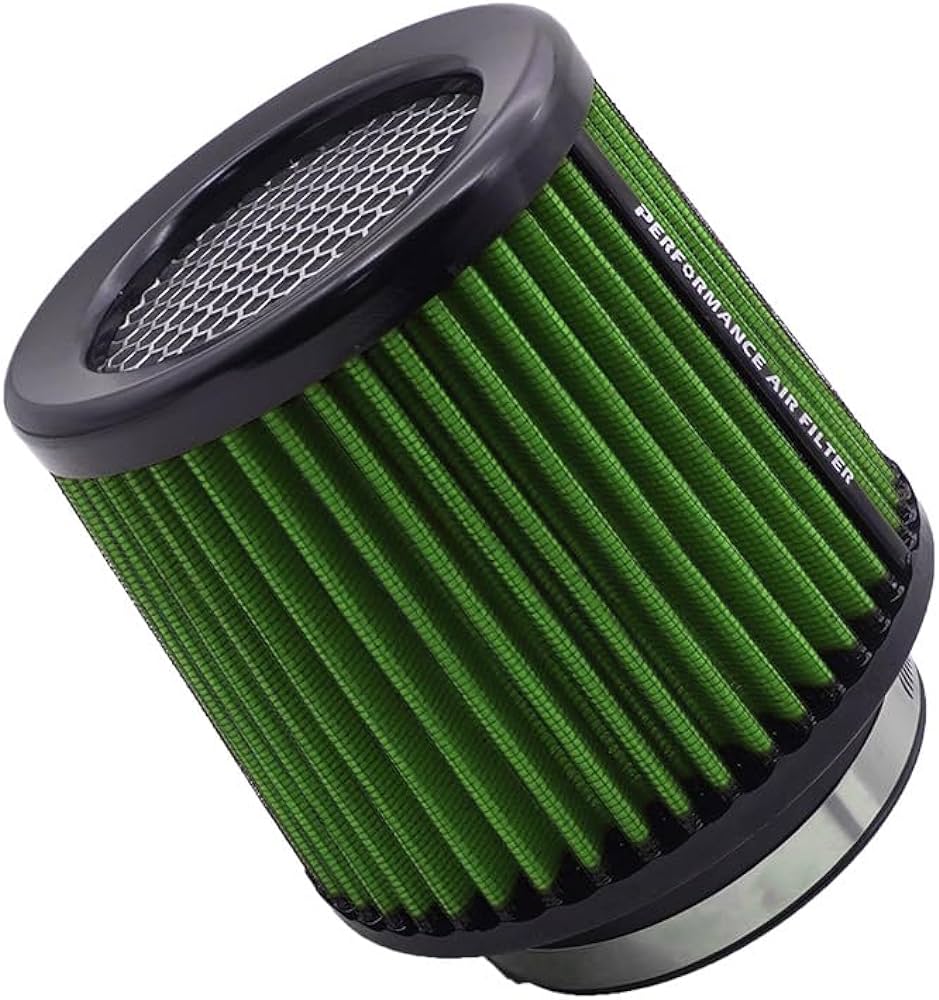
Filter type should match the application, since no single filter suits every system. Pleated filters offer a large surface area that captures particulates without excessive airflow restriction, making them the industrial workhorse. Cartridge, bag, and panel filters suit specific housings and dust loads, while custom sizes serve non-standard return vents and equipment.
Identify the system and the contaminant before selecting. A dust-collection application, a process-air stream, and a building HVAC return each demand different media and construction. Matching type to application is the first filter decision and shapes every later one.
Understand MERV ratings
MERV, defined by ASHRAE 52.2, is the standard rating of a filter's particle-capture efficiency on a scale from 1 to 16. A higher MERV captures smaller particles, but also restricts airflow more, so the rating must match both the air-quality need and the system's fan capacity. The table maps the tiers to particle size and industrial application.
MERV range
Captures
Typical industrial application
MERV 1 to 4
Large particles above 10 µm
Basic protection, pre-filters
MERV 5 to 8
Mold spores, coarse dust
General facility HVAC
MERV 9 to 12
Fine dust, 1 to 3 µm
Better air quality, light industrial
MERV 13 to 16
Bacteria, smoke, fine particulate
Hospitals, cleanroom pre-filtration
An over-specified MERV rating restricts airflow and forces the fan to work harder, raising energy use and straining the air handler.ASHRAE 52.2 tops out at MERV 16, so any filter rated MERV 17 or higher is using a non-standard scale. Internationally,ISO 16890 classifies filters instead as ISO Coarse, ePM10, ePM2.5, and ePM1 by particulate-matter fraction.
Confirm the size and dimensions
Correct sizing is critical, because a filter that does not seal lets unfiltered air bypass the media entirely. Measure the length, width, and depth of the existing filter before ordering, and confirm whether the listed size is nominal or actual.
Pro Tip: Always verify whether the size is nominal (rounded) or actual (precise). A filter labeled 20x20x1 often measures 19.5x19.5x0.75 inches. Ordering thousands of filters to the wrong convention is a costly bulk-order error, so confirm the actual dimensions against the housing before committing.
Determine the right quantity
Bulk quantity should be set by the replacement schedule, not by the discount alone. Industrial air filters are typically replaced every one to three months, depending on dust load, runtime, and filter type. Multiply the filter count per system by the systems and by the annual change frequency to size the order.
A yearly stock streamlines maintenance and lowers per-unit cost, but only if storage protects the filters. Order to the schedule you can store and rotate, rather than to the largest available discount.
Plan for storage and shelf life
Air filters degrade if stored poorly, so bulk orders need a dry, temperature-controlled space. Humidity warps frames and promotes mildew, and pleated media can sag if stored flat under weight. Most filters hold their integrity for several years when stored correctly.
Label boxes with purchase dates and rotate stock first-in, first-out. Correct storage protects the value of the bulk discount that justified the order in the first place.
MERV versus HEPA: a critical distinction
MERV and HEPA are separate classifications, and a high-MERV filter is not a HEPA filter. ASHRAE 52.2 MERV tops at 16, while HEPA is defined under EN 1822 and ISO 29463 as a filter capturing 99.97 percent of particles at 0.3 microns, corresponding to the H13 and H14 grades. HEPA is tested by a different method (Most Penetrating Particle Size), not the MERV scale.
This distinction matters in procurement, because a MERV 16 filter and a HEPA H13 filter are not interchangeable. Cleanrooms, pharmaceutical suites, and critical containment require genuine HEPA to EN 1822, while general facility HVAC is served by MERV-rated filters. Specifying MERV where HEPA is required, or the reverse, is a specification error with real compliance consequences.
Types of Air Filters You Can Find at eINDUSTRIFY
eINDUSTRIFY lists a range of industrial air filters mapped to distinct applications, from building HVAC to gas-turbine protection. Each type below serves a specific system and contaminant profile. Browse the live Air Filters range within the Filters category.
Industrial Air Filters
Industrial air filters are heavy-duty filters for large-scale HVAC systems in factories, warehouses, and manufacturing plants. They capture particulates, dust, debris, and fumes to protect equipment and maintain indoor air quality. Available in pleated, cartridge, bag, and panel forms, they handle high airflow and volume, and often carry higher MERV ratings. Source these through the liveIndustrial Air Filters range.
Turbine Air Filters
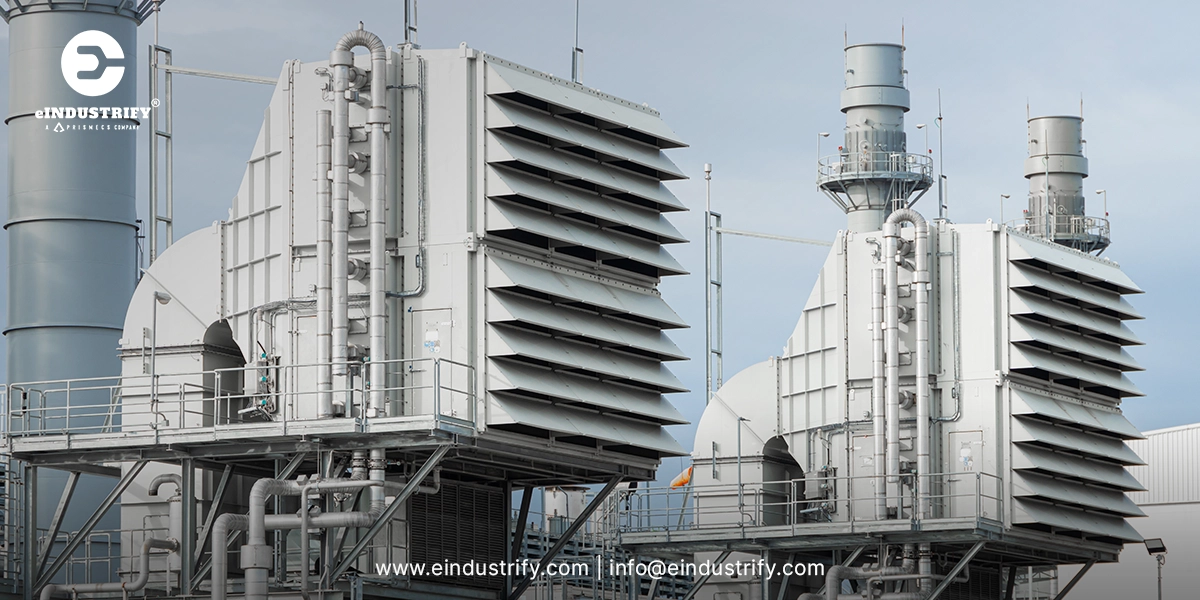
Turbine air filters protect gas turbines and compressors from airborne particles such as dust, salt, and moisture. They guard compressor blades from erosion and fouling, which directly preserves turbine efficiency and output.Power generation and aviation depend on them for reliable operation. For the key design choice within this class, see our comparison of static versus pulse turbine filter systems. Source these through the live Turbine Air Filters range, which serve the Power Generation sector directly.
Industrial Air Quality Filters
Industrial air quality filters enhance indoor air quality in commercial and industrial environments. They often use high-efficiency media to remove fine particulates and, where required, activate carbon to address volatile organic compounds (VOCs). They support workplace-health and regulatory compliance by maintaining clean, safe air circulation. Source these through the live Industrial Air Quality Filters range.
Glass Fiber Air Filters
Glass fiber air filters use layered fiberglass media to trap large particles such as dust and lint. They are cost-effective and suited to basic filtration or pre-filtration ahead of a higher-efficiency stage. Their efficiency is lower than pleated or high-efficiency media, so they suit coarse-particle duty. Source these through the live Glass Fiber Air Filters range.
Air Filter Elements and Vacuum Pump Filters
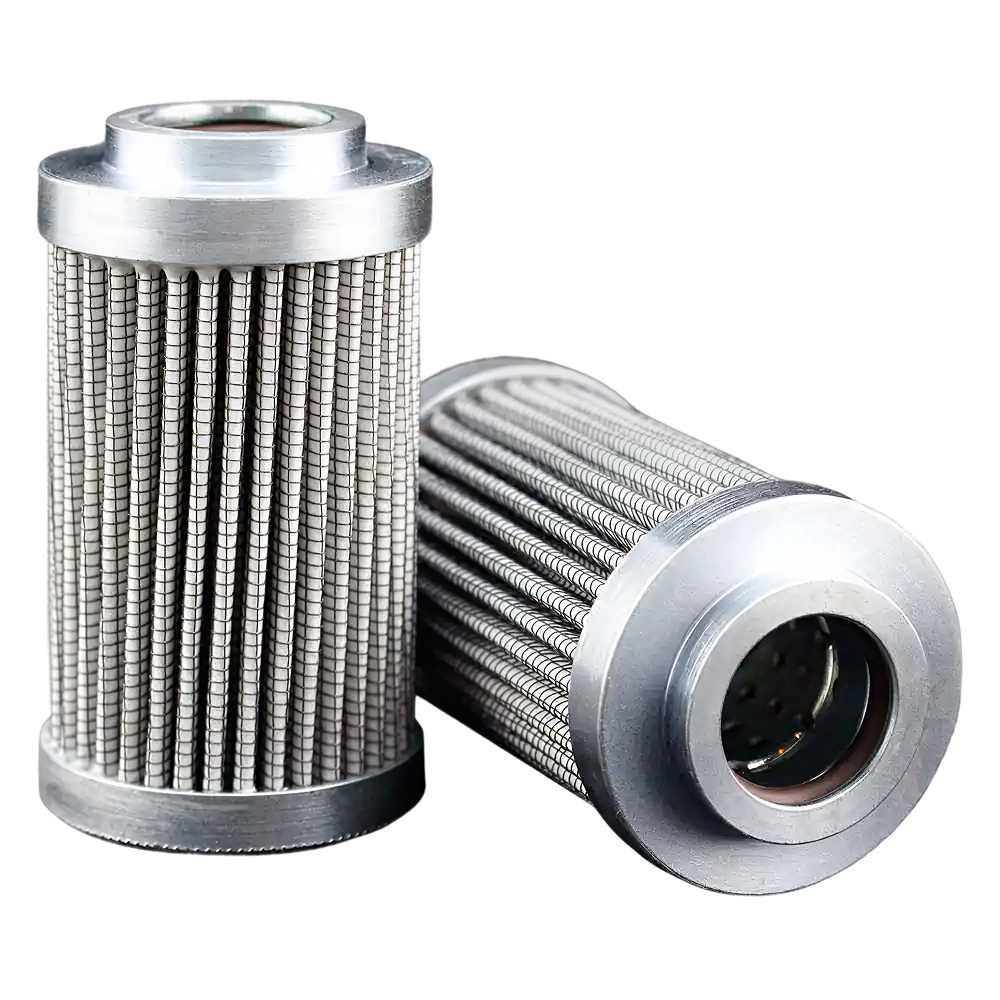
Air filter elements and vacuum pump filters protect specific equipment from contaminant ingress. Vacuum pump filters prevent dust, oil mist, and contaminants from entering or leaving the pump, protecting internal components in laboratory and manufacturing service. Available in inlet and exhaust configurations, they maintain clean, efficient vacuum operation. Source these through the live Air filter element range.
Match the filter to your system and buy from a vetted supplier
Filter compatibility and supplier quality determine whether a bulk order performs or fails. Not every filter suits every system, and some equipment requires specific media or dimensions for warranty compliance. Confirm compatibility against the equipment manual before committing to a large order.
Filter quality also varies at the same nominal rating, since cheaper media may lack the fiber density or surface area to hold its rated efficiency. eINDUSTRIFY is a premier global B2B marketplace for industrial supplies, connecting facilities and procurement teams with vetted air-filter suppliers. Every seller is vetted, so you source filters that meet their stated ASHRAE 52.2 or ISO 16890 rating, and compare specification and bulk pricing across suppliers. For water filtration, see our companion guide onindustrial water filters. To place a bulk order,submit an RFQ.
Frequently asked questions
What is a MERV rating?
MERV, or Minimum Efficiency Reporting Value, is the standard rating of an air filter's particle-capture efficiency, defined by ASHRAE 52.2 on a scale from 1 to 16. A higher MERV captures smaller particles, from coarse dust at MERV 1 to 4 up to bacteria and smoke at MERV 13 to 16. Higher ratings also restrict airflow more, so the rating must match the system's fan capacity as well as the air-quality need.
What is the difference between MERV and HEPA?
MERV and HEPA are separate classifications, and a high-MERV filter is not HEPA. ASHRAE 52.2 MERV tops at 16, while HEPA is defined under EN 1822 as capturing 99.97 percent of particles at 0.3 microns, the H13 and H14 grades. HEPA uses a different test method (Most Penetrating Particle Size). Cleanrooms and pharmaceutical suites require genuine HEPA, while general facility HVAC uses MERV-rated filters.
What MERV rating should an industrial facility use?
Most industrial facilities use MERV 8 to 13, balancing filtration against airflow. MERV 8 protects general HVAC equipment, MERV 11 to 13 improves air quality and captures finer particulate, and MERV 13 approaches the practical ceiling for standard systems. Higher ratings restrict airflow and can strain fans not designed for them. Match the rating to both the contaminant and the air handler's capacity, confirmed against the equipment specification.
What is the difference between nominal and actual filter size?
Nominal size is the rounded label size, while actual size is the precise measured dimension. A filter labeled 20x20x1 inches often actually measures 19.5x19.5x0.75 inches. Ordering to the wrong convention causes filters that do not seal, letting unfiltered air bypass the media. Always measure the existing filter's actual length, width, and depth before placing a bulk order to avoid a costly sizing error.
How often should industrial air filters be replaced?
Industrial air filters are typically replaced every one to three months, depending on dust load, system runtime, and filter type. Heavier particulate environments and continuous operation shorten the interval, while cleaner spaces and higher-capacity filters extend it. Monitoring pressure drop across the filter is the most reliable indicator, since a clogged filter raises resistance, energy use, and bypass risk before the calendar interval expires.
What is ISO 16890 and how does it relate to MERV?
ISO 16890 is the international air-filter standard in force since 2016, replacing the older EN 779. It classifies general-ventilation filters as ISO Coarse, ePM10, ePM2.5, and ePM1 by particulate-matter fraction, aligning with WHO and EPA air-quality metrics. ASHRAE 52.2 MERV remains the North American standard. The two use different methods, so always request the actual test report rather than assuming a direct MERV-to-ISO equivalence.
Tags: industrial air filters MERV rating ASHRAE 52.2 HEPA filters bulk filter procurement air filtration













 vs Automatic Transfer Switch (ATS) for Data Centers.png)