Corrosion Inhibitors for Industrial Use: Types, Selection, and Application Guide
Corrosion inhibitors are chemical compounds added to a system in small concentrations to slow or stop the electrochemical reactions that degrade metal. They work by forming a protective film on the metal surface or by neutralizing the corrosive agents (oxygen, water, acids, CO2, or H2S) that drive metal loss.
The stakes are not small. The NACE International IMPACT study estimated the global cost of corrosion at US$2.5 trillion per year, roughly 3.4% of global GDP, and found that applying known corrosion-control practices could recover 15% to 35% of that cost. Inhibitors are one of the most cost-effective controls in that toolkit.
This guide covers the main types of corrosion inhibitors, how to select the right one by metal and environment, typical dosage ranges, the standards that govern performance, and the specific products eINDUSTRIFY supplies for power generation, oil and gas, water treatment, and industrial storage.
What Are Corrosion Inhibitors and How Do They Work?
A corrosion inhibitor is any substance that, present in small quantities, significantly reduces the corrosion rate of a metal. Most industrial inhibitors protect ferrous metals such as carbon steel and cast iron, though many also protect copper, brass, aluminum, and multi-metal systems.
Inhibitors stop corrosion through three main mechanisms. Adsorption-type inhibitors bond to the metal surface and form a molecular barrier film. Passivating inhibitors drive the formation of a protective oxide layer on the metal. Precipitation-type inhibitors form an insoluble deposit that coats and shields the surface.
The mechanism matters because it determines where each inhibitor works best. A filming amine that adsorbs onto pipe walls suits a flowing pipeline. A passivating molybdate suits a closed cooling loop. Matching mechanism to environment is the core of correct selection, which the tables below address directly.
Types of Corrosion Inhibitors
Different environments demand different chemistries. The five categories below cover nearly all industrial applications, followed by a comparison table you can use to shortlist a solution.
Anodic Inhibitors (Passivating)
Anodic inhibitors form a passive oxide film at the anodic sites of the metal, stopping the metal-dissolution half of the corrosion reaction. Common examples include nitrites, chromates, molybdates, and orthophosphates.
They are highly effective but carry a known risk. If underdosed, they can leave parts of the surface unprotected and trigger aggressive localized pitting. For this reason, anodic inhibitors must be maintained above their critical concentration and monitored consistently.
Cathodic Inhibitors
Cathodic inhibitors suppress the cathodic reaction, either by limiting oxygen reduction or by precipitating onto cathodic sites. Zinc salts and polyphosphates are typical examples.
Because they do not carry the pitting risk of underdosed anodic inhibitors, cathodic inhibitors are considered safer to operate, though generally less efficient on their own. They are often paired with anodic chemistries for balanced protection.
Mixed Inhibitors
Mixed inhibitors act on both the anodic and cathodic reactions at once, giving broader protection in systems where corrosion is driven from multiple sources. Orthophosphate paired with a zinc cathodic inhibitor is a widely used synergistic blend for multi-metal water systems.
These formulations are common in cooling water and process water where mild steel, copper, and brass all need protection in one loop.
Volatile Corrosion Inhibitors (VCIs)
Volatile corrosion inhibitors, also called vapor-phase inhibitors, evaporate from a powder or liquid source, travel through the air in an enclosed space, and adsorb onto exposed metal surfaces to interrupt the corrosion process. They protect metal that a liquid inhibitor cannot easily reach.
VCIs are the standard choice for packaging, shipping, and long-term storage of metal components, spare parts, electronics, and machinery. VCI films protect recesses, threads, and internal cavities without leaving a heavy residue.
Rust Preventives and Film-Forming Inhibitors
Rust preventives are oil-based or solvent-based inhibitors that deposit a protective film to block moisture and oxygen from reaching steel. They are used on machined parts, tooling, and equipment during manufacturing, transport, and storage, and are common in automotive and general industrial settings.
eINDUSTRIFY stocks several ready-to-apply rust preventives, detailed in the product section below.
Inhibitor Type Comparison
Inhibitor type
Mechanism
Best environment
Metals protected
Example chemistry
Key caution
Anodic (passivating)
Forms passive oxide film at anode
Closed cooling loops, treated water
Carbon steel, cast iron
Nitrite, molybdate, orthophosphate
Underdosing causes pitting
Cathodic
Suppresses cathodic reaction
Cooling water, potable systems
Steel, galvanized steel
Zinc salts, polyphosphates
Lower standalone efficiency
Mixed
Acts on both reactions
Multi-metal water systems
Steel, copper, brass
Orthophosphate plus zinc
Requires balanced dosing
Volatile (VCI)
Vapor adsorbs onto surfaces
Enclosed storage, packaging
Steel, electronics, multi-metal
Amine carboxylate salts
Needs sealed enclosure
Rust preventive
Oil or solvent film barrier
Storage, transit, machined parts
Carbon steel
Oil-dispersed film formers
Surface must be clean and dry
Filming amine or imidazoline
Adsorbs film on pipe wall
Oil and gas pipelines
Carbon steel, alloys
Imidazoline, amine derivatives
Film can strip at high shear
How to Choose the Right Corrosion Inhibitor
Selecting an inhibitor is a decision driven by four variables: the metal, the environment, the application method, and the required protection duration. The wrong match wastes chemicals and leaves assets exposed, so work through each variable before you buy.
Match the Inhibitor to the Metal
Steel, copper, aluminum, and brass respond differently to corrosive agents and to inhibitor chemistries. A single-metal treatment can fail in a mixed-metal system, so multi-metal loops need mixed or synergistic blends proven across all alloys present.
Match the Inhibitor to the Environment
Temperature, pH, salt content, flow velocity, and the presence of acid gases all shape the choice. Sweet systems dominated by CO2 and sour systems containing H2S behave very differently, and high-velocity lines can strip a weak film. Sour service also brings its own material standard, discussed below.
Match the Inhibitor to the Application Method
Inhibitors come as continuous-injection liquids, batch treatments, coatings, and vapor sources. A pipeline needs continuous or batch injection, a stored part needs a VCI or rust preventive, and a closed loop needs a dosed liquid maintained by testing.
Match the Inhibitor to the Protection Duration
Storage inhibitors protect for a defined shelf window, while injected inhibitors protect assets in continuous service. Define your timeframe before selecting, because a short-term preventive will not hold up in aggressive long-term exposure.
Selection Matrix by Application
Application
Primary corrosive agents
Recommended inhibitor type
Typical dosage or basis
Governing standard
Oil and gas pipeline (sweet, CO2)
Carbonic acid from dissolved CO2
Filming imidazoline or amine
10 to 100 ppm continuous
NACE SP0106
Oil and gas pipeline (sour, H2S)
Hydrogen sulfide, brine
High-shear-resistant filming inhibitor
25 to 150 ppm, batch up to % levels
NACE MR0175 / ISO 15156
Closed cooling loop
Dissolved oxygen
Molybdate or nitrite anodic
Molybdate 50 to 100 ppm; nitrite 800+ ppm
ASTM D1384
Cooling tower (multi-metal)
Oxygen, scale, mixed metals
Orthophosphate plus zinc blend
Program-specific, monitored
ASTM D1384
Metal storage and transit
Humidity, condensation
VCI or oil-based rust preventive
Film or vapor coverage
ASTM B117 (salt spray)
Gas turbine and rotating equipment
Moisture, marine salt
Rust preventive plus VCI for lay-up
Film coverage, reapplied
Per OEM lay-up spec
A useful benchmark from cooling water practice: sodium molybdate at 50 to 100 ppm delivers corrosion protection comparable to sodium nitrite at over 800 ppm, while keeping conductivity and galvanic potential lower. That efficiency is why molybdate programs are often chosen for sensitive closed loops despite a higher unit cost.
Corrosion Inhibitors in Oil and Gas
The oil and gas sector is the single largest consumer of corrosion inhibitors, and for good reason. NACE International has estimated the annual cost of corrosion to the US oil and gas industry alone at roughly US$27 billion, driven by pipeline, wellbore, and refinery losses.
Internal pipeline corrosion is driven mainly by water combined with acid gases. Dissolved CO2 forms carbonic acid and produces sweet corrosion, while H2S produces sour corrosion and the cracking risks that come with it. A mixture of CO2 and H2S in produced fluids is especially aggressive to carbon steel.
Filming inhibitors are the workhorse defense. Field literature reports imidazoline quaternary ammonium salt inhibitors achieving inhibition efficiencies above 96% on carbon steel by building an adsorbed film that raises polarization resistance. Continuous injection typically runs in the 10 to 100 ppm range, with batch treatments applied at higher percent-level concentrations.
Two failure modes deserve special attention. Top-of-line corrosion occurs where inhibitor partitions poorly into condensing water at the top of a wet gas line, leaving the upper pipe wall exposed. High wall shear stress in fast-flowing lines can strip a water-soluble film, which is why high-velocity service often calls for a shear-resistant oil-soluble, water-dispersible formulation. For sour service, inhibitor selection must sit alongside NACE MR0175 / ISO 15156 material compliance.
Corrosion Inhibitors in Power Generation
Power generation is a major and growing end use for corrosion inhibitors, and it is central to the assets eINDUSTRIFY serves. By one market estimate, the power generation segment accounts for over 31% of corrosion inhibitor demand, reflecting how critical metal integrity is to plant availability.
Closed cooling loops and auxiliary water systems in power plants rely on dosed anodic inhibitors, typically molybdate or nitrite blends, to protect mild steel, cast iron, and copper alloys against oxygen-driven corrosion. These programs run at controlled ppm levels and are maintained by routine water testing.
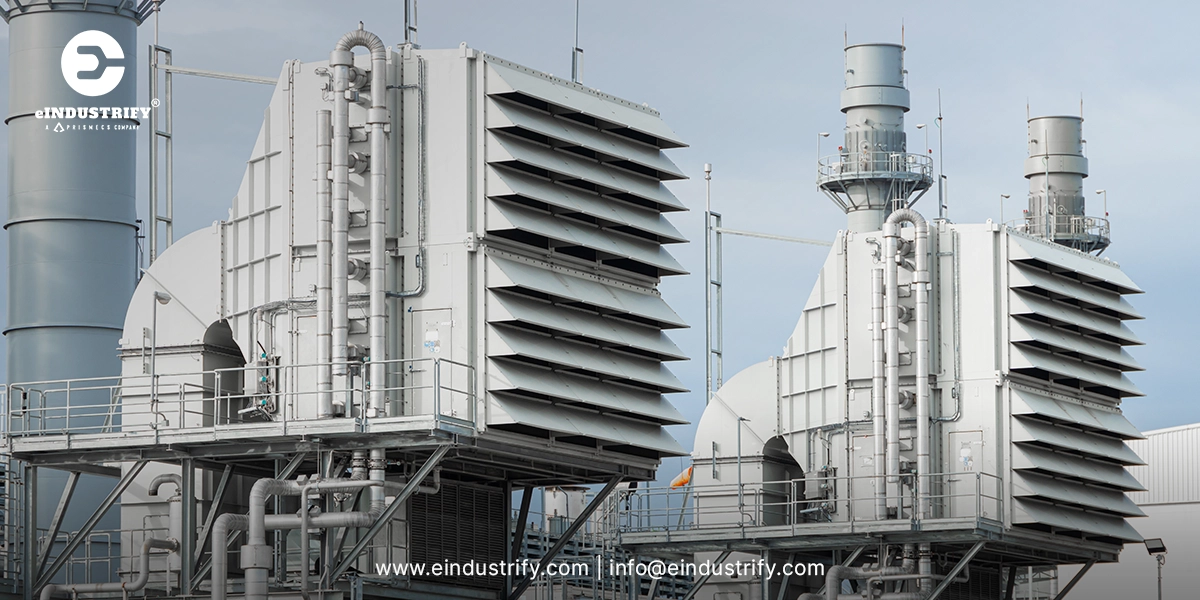
Gas turbines add a distinct challenge. Inlet systems, exhaust ducting, and rotating hardware face moisture and, at coastal and offshore sites, airborne salt. During outages and lay-up, VCIs and rust preventives protect internal surfaces and spare components that would otherwise corrode in storage. For plants sourcing turbine spares, matching inhibitor and preservation practice to the equipment protects the value of high-cost inventory.
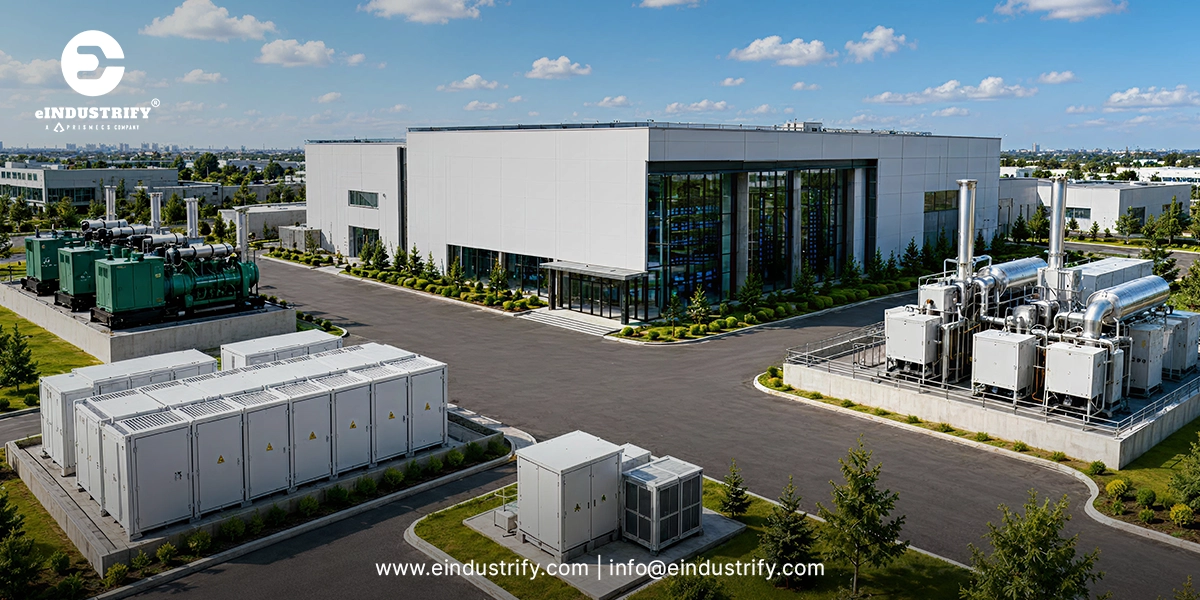
Data center backup power adds another layer. Standby generators, switchgear, and enclosures sit idle for long periods in variable humidity, exactly the conditions where VCI protection and proper preservation prevent corrosion-driven failures during the rare moments the equipment must start on demand.
Corrosion Inhibitors in Water Treatment
Cooling towers, boilers, and closed-loop systems depend on inhibitors to protect heat-transfer surfaces from both corrosion and scale. Uncontrolled corrosion here reduces energy efficiency, fouls heat exchangers, and shortens equipment life.
Chemistry choice follows the system. Molybdate and nitrite anodic inhibitors suit closed loops, while phosphate and zinc blends with polymeric dispersants suit open recirculating cooling water where scale control matters as much as corrosion control. Modern programs increasingly favor chromate-free and lower-nitrite formulations to meet tightening environmental and discharge regulations, a real procurement driver as older chemistries are phased out.
Best Practices for Applying Corrosion Inhibitors
Getting full value from an inhibitor depends as much on application as on chemistry. The four practices below are where most preventable failures originate.
Start with a clean, dry surface. Oil, dirt, and existing rust block film formation, so degrease and remove contaminants before applying any preventive or coating. Skipping this step is the most common cause of premature failure.
Apply evenly and reach every surface. Uneven coverage leaves gaps that become corrosion initiation sites, so pay attention to edges, joints, welds, and crevices where attack usually starts. For injected systems, confirm the chemical actually reaches the zone you need to protect.
Monitor and maintain concentration. Inhibitor films degrade over time and injected concentrations drift, so inspect on a schedule and redose to keep the treatment above its effective level. Underdosed anodic inhibitors are worse than none because of pitting risk.
Combine inhibitors with other controls. Inhibitors work best as one layer in a defense system that also includes coatings, cathodic protection, and sound material selection. This multi-barrier approach delivers the longest asset life.
eINDUSTRIFY Corrosion Inhibitor Products
eINDUSTRIFY supplies vetted rust preventives and corrosion inhibitors for storage, transit, and in-service protection. Each product below is available through our catalog, with technical support and bulk sourcing through our Request for Quotation process.
Aladdin RP 210 Rust Inhibitor
An oil-dispersed, all-purpose rust preventive. The formulation displaces water and provides strong protection against rust and oxidation, suited to machined parts and equipment in storage or transit. Oil-based films of this type are chosen where moisture resistance and long-lasting surface protection are priorities.
Aladdin DWRP 360 (4 Oz) Aeros Rust Inhibitor
A solvent-dispersed, all-purpose rust preventive that displaces water and guards against rust and oxidation. The solvent carrier flashes off to leave a protective film, useful where a lighter deposit is preferred.
Aladdin DWRP 360 (16 Oz) Spray Can Rust Inhibitor
The same solvent-dispersed protection in a 16 Oz aerosol format for fast, even field application to exposed steel, edges, and hard-to-reach areas.
For anodic, cathodic, mixed, VCI, or heavy-duty inhibitors for a specific system, submit an RFQ and our technical team will match a solution to your metal, environment, and duty. For power generation and turbine assets, our procurement-as-a-service team can source both the inhibitor and the preservation program for outage and lay-up work.
Frequently Asked Questions
What is the difference between a rust inhibitor and a corrosion inhibitor?
A corrosion inhibitor is the broad category covering any chemistry that slows metal degradation across many metals and environments. A rust inhibitor, or rust preventive, is a subset aimed specifically at preventing iron oxide (rust) on ferrous metals, usually delivered as an oil or solvent film for storage and transit.
What is the difference between anodic and cathodic inhibitors?
Anodic inhibitors form a passive film at the anode and stop metal dissolution, but underdosing them can cause pitting. Cathodic inhibitors slow the cathodic reaction and are safer to operate but generally less efficient alone. Many practical programs blend the two.
What dosage of corrosion inhibitor is used in oil and gas pipelines?
Continuous injection of filming inhibitors typically runs in the 10 to 100 ppm range, with exact dosing set by fluid chemistry, flow velocity, and CO2 or H2S content. Batch treatments are applied at higher percent-level concentrations. Sour service also requires NACE MR0175 / ISO 15156 material compliance.
How do volatile corrosion inhibitors (VCIs) work?
VCIs evaporate from a powder or liquid source, move through the air inside a sealed enclosure, and adsorb onto exposed metal to form a protective molecular layer. They protect recesses and cavities a liquid cannot reach, which makes them ideal for packaging, spare parts, and long-term storage.
What is the best corrosion inhibitor for a closed cooling loop?
Molybdate and nitrite anodic inhibitors are standard for closed loops. Molybdate at 50 to 100 ppm provides protection comparable to nitrite at over 800 ppm while keeping conductivity lower, though nitrite remains widely used where cost is the priority. Selection should follow ASTM D1384 evaluation and your system metallurgy.
Are there chromate-free and nitrite-free corrosion inhibitors?
Yes. Tightening environmental and discharge regulations have driven a shift toward chromate-free and reduced-nitrite formulations, including molybdate, phosphonate, and polymer-based programs. Many facilities now specify these to meet compliance requirements without sacrificing protection.
What standard measures rust preventive performance?
Salt spray (fog) testing under ASTM B117 is the common benchmark for rust preventives and coatings, reported as hours of protection before corrosion appears. For cooling water inhibitors, ASTM D1384 is the standard corrosion test.
Protect Your Assets With eINDUSTRIFY
Corrosion is inevitable, but asset loss is not. The right inhibitor, correctly matched and correctly applied, extends equipment life, cuts unplanned downtime, and protects both safety and profit.
Whether you operate in power generation, oil and gas, water treatment, or industrial manufacturing, eINDUSTRIFY supplies vetted corrosion inhibitors and rust preventives backed by technical support and bulk sourcing. Browse our corrosion inhibitor catalog or submit a Request for Quotation, and our team will match a solution to your system.
Tags: Corrosion InhibitorsCorrosive Agenttype of corrosioncathodic inhibitoranodic inhibitortypes of corrosion inhibitorscorrosion inhibitingCorrosion Inhibitor UsesVapor Corrosion InhibitorVolatile Corrosion InhibitorIndustrial Corrosion InhibitorsHeavy Duty Corrosion InhibitorCorrosion Inhibitor in Oil and Gas Industry












 vs Automatic Transfer Switch (ATS) for Data Centers.png)