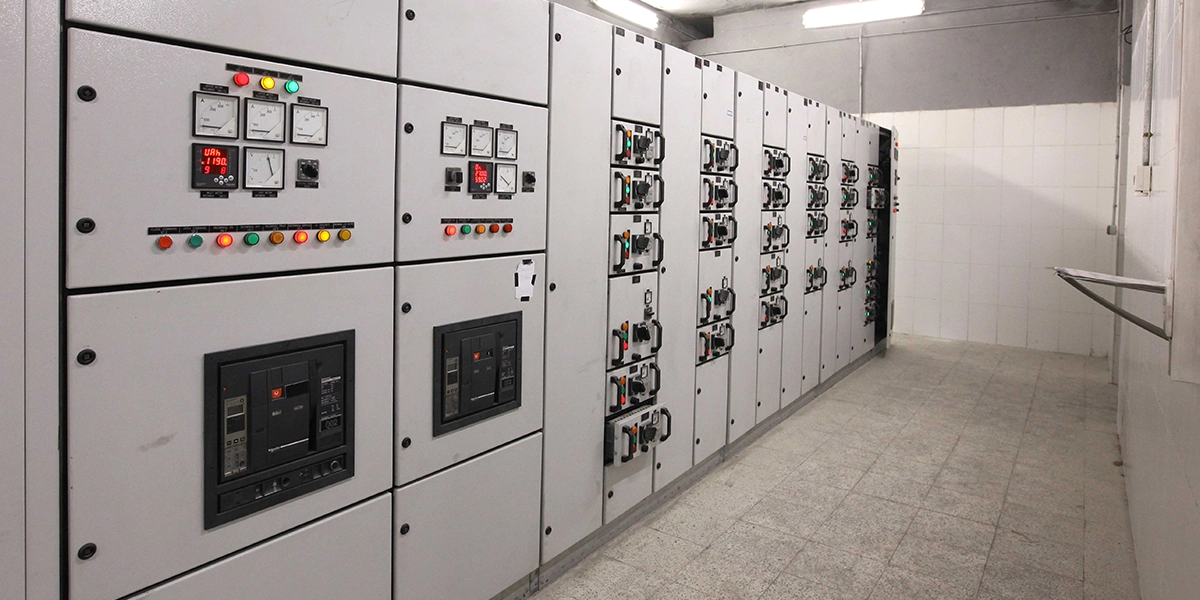
Industrial Electrical Supply and Power Quality: Standards, Problems, and Solutions
Industrial power quality is the degree to which voltage, frequency, and waveform stay within the limits that keep equipment running reliably. Poor power quality, voltage sags, harmonics, and low power factor, causes downtime, overheating, and premature equipment failure. The governing standards are IEEE 519 for harmonics, IEEE 1159 for monitoring, and ANSI C84.1 for voltage tolerance. This guide explains the problems, the standards, and the components that protect an industrial electrical supply.
Why Electrical Supply Quality Matters in Industrial Environments
Industrial facilities demand more from the electrical supply than commercial buildings, because their equipment is both more sensitive and more disruptive to the grid. Factories, production plants, and data centers run high-frequency machinery, nonlinear loads, and sensitive controls that react badly to voltage deviation. ANSI C84.1 defines the acceptable service-voltage range as plus or minus 5 percent (Range A) of nominal.
Poor power quality causes overheating of components, interruption of automated processes, frequent system reboots, degraded UPS performance, and early wear on machinery. Maintaining supply within standard limits prevents these failures, reduces downtime, and lowers repair and replacement cost. Over the equipment lifecycle, consistent power quality directly improves safety and return on assets.
Common power quality issues that plague industrial facilities
Industrial facilities encounter a defined set of power quality disturbances, categorized by IEEE 1159. Each has a distinct cause, symptom, and mitigation, summarized in the table below.
Issue
Cause
Symptom
Mitigation
Voltage sag
Large load starting, faults
Equipment trips, resets
Voltage regulator, UPS
Voltage swell/spike
Load rejection, lightning, switching
Circuit and insulation damage
Surge protection (SPD)
Harmonic distortion
Nonlinear loads (VFDs, rectifiers)
Overheating, waveform distortion
Harmonic filters
Poor power factor
Reactive inductive loads
Utility penalties, lost capacity
Capacitor banks
Transients
Switching, lightning
Control faults, damage
Surge suppression
Voltage sags are short dips in voltage, typically when large loads such as motors start. They can trip sensitive equipment or interrupt control systems, and are the most common industrial power quality complaint.
Voltage spikes and swells are sudden overvoltages caused by lightning, load rejection, or internal switching transients. Without surge protection, they damage circuits and insulation.
Harmonic distortion comes from nonlinear loads such as variable frequency drives and rectifiers, which draw current in pulses and distort the voltage waveform. The fifth and seventh harmonics typically dominate.IEEE 519 limits voltage total harmonic distortion (THD) to 5 percent, with no single harmonic above 3 percent, at the point of common coupling for systems from 1 kV to 69 kV.
Poor power factor occurs when reactive inductive loads rise, forcing the facility to draw power it cannot use as work. Utilities penalize a low power factor, and correcting it above 0.95 with capacitor banks removes the penalty and frees system capacity.
Key Components of a Reliable Industrial Electrical Supply
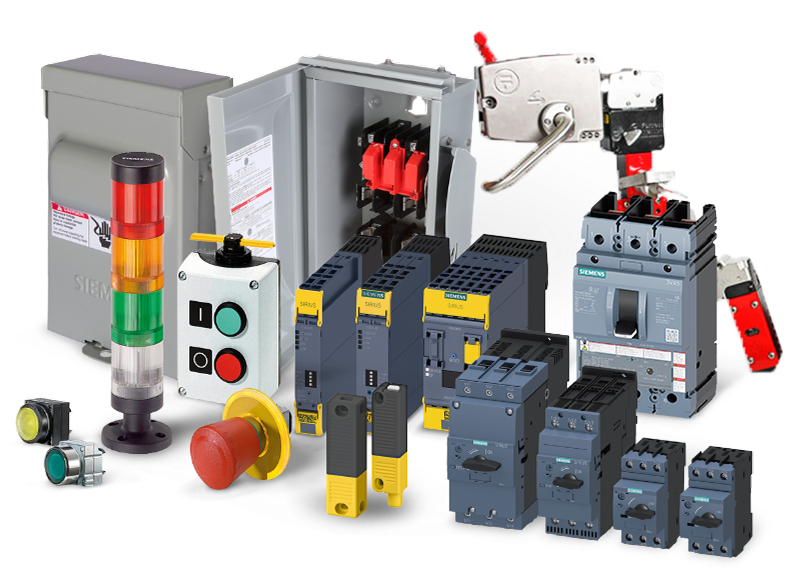
A reliable industrial electrical supply depends on five protective component classes working together. Each addresses a specific power quality threat, and specifying them correctly is the core of a resilient system.
Surge protection devices (SPDs) divert transient overvoltages from lightning or switching to ground, protecting equipment. Install coordinated SPDs on main panels, subpanels, and sensitive loads. See ourcircuit protection devices guide for coordination detail.
Uninterruptible power systems (UPS) provide ride-through and backup during outages, enabling safe shutdown or continuous operation. Our power supply systems guide covers UPS topologies in depth.
Power conditioners smooth voltage fluctuations and filter high-frequency noise, buffering sensitive loads from upstream disturbances. Voltage regulators hold a constant output voltage, protecting against both sags and overvoltage. Circuit breakers and distribution panels ensure current flows safely; source these through the liveDistribution Panels range and see ourdistribution panels guide.
Tips for Choosing the Right Electrical Supplies
Selecting industrial electrical supplies means matching capacity, quality, compliance, and scalability to the facility. Focusing on these four criteria simplifies an otherwise overwhelming market.
Know your load requirements: calculate total consumption including peak demand, reactive loads, and nonlinear loads, since these determine both sizing and harmonic exposure.
Prioritize quality over price: certified industrial-grade components cost more upfront but avoid the equipment damage and downtime that cheap parts cause.
Check compliance standards: confirm components meet the relevant standards, includingIEEE 519 for harmonics,IEC 61000 for electromagnetic compatibility, and UL listing for safety. These confirm safety, efficiency, and interoperability.
Plan for expansion: select supplies that scale with growth, so adding machinery does not require replacing the existing infrastructure.
How industrial electrical supply affects operational efficiency
Power quality directly affects the bottom line through downtime, energy cost, equipment life, and safety. Each links a power quality parameter to a measurable financial outcome.
Reduced downtime: stable supply cuts the failures that halt production, where even one hour of downtime can cost thousands in lost output. Improved energy efficiency: correcting power factor above 0.95 and filtering harmonics reduces wasted energy and lowers utility bills, particularly with the inductive loads common in motor-driven plants.
Extended equipment life: clean, regulated voltage reduces thermal and electrical stress on motors, drives, and electronics, delaying failure. Improved safety: surge protection and correct grounding to IEEE 1100 reduce the risk of electrical fire from short circuits and overloads. Grounding is a safety function, distinct from the uptime provided by UPS and regulation.
The Role of Regular Maintenance in Supply Quality
Even a well-specified electrical system degrades without scheduled maintenance. Routine care keeps breakers, transformers, and protective devices performing to specification, and prevents small power quality issues from escalating into failures.
A maintenance program should include thermal imaging to detect overheating connections, load testing of UPS systems, inspection of surge protection devices, tightening of electrical connections, and cleaning of dust from panels and enclosures. Neglecting these lets power quality issues compound, so a documented service calendar is essential. Regular monitoring against IEEE 1159 parameters catches degradation before it causes downtime.
Monitoring and modern power quality management
Modern power quality management uses continuous monitoring to catch disturbances before they cause failures. Smart monitoring systems track real-time voltage, current, power factor, and harmonics, alerting technicians to anomalies. IEC 61000-4-30 defines the measurement methods for this monitoring.
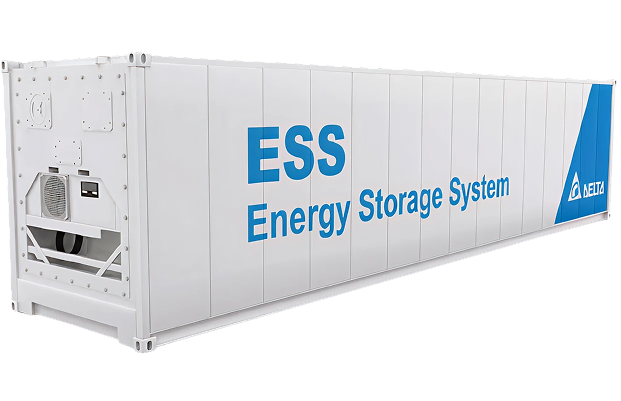
Energy storage integration pairs the supply with batteries to buffer demand surges and support ride-through, drawing on the live Energy Storage range. Analytics and AI-driven tools analyze monitoring data to flag developing faults and optimize load. Together these give plant teams visibility into power quality that manual inspection cannot match.
Real-world applications: powering modern industry
Industrial power quality is mission-critical across sectors, each with a distinct risk profile. In manufacturing plants, clean power keeps motors, drives, and automation running without interruption. In data centers, uninterruptible, low-distortion power keeps servers online and protects data integrity.
Chemical facilities need safe, compliant power in explosion-proof environments, and oil and gas operations need reliable supply in remote and hazardous locations. Automotive assembly lines need stable power for robotic precision. In every case, consistent power quality underpins production, which is why sourcing certified components matters. These serve the Power Generation and Manufacturing sectors.
Source industrial electrical supplies through eINDUSTRIFY
eINDUSTRIFY is a premier global B2B marketplace for industrial supplies, connecting plant, engineering, and procurement teams with vetted suppliers of electrical components. Every seller is vetted, so you source certified, IEEE- and IEC-compliant surge protection, UPS, power conditioners, voltage regulators, and distribution equipment, and compare ratings across suppliers in one place.
Browse the liveElectrical category and its Power Distribution Components and Power Supplies ranges. For related sourcing, see our guides on power distribution equipment and distribution transformer ratings. To source from vetted suppliers,submit an RFQ.
Frequently asked questions
What is industrial power quality?
Industrial power quality is the degree to which voltage, frequency, and waveform conform to the limits that keep equipment operating reliably. Good power quality means steady voltage within plus or minus 5 percent of nominal per ANSI C84.1, stable frequency, and a clean sinusoidal waveform. Poor power quality, including sags, harmonics, and low power factor, causes downtime, overheating, and premature equipment failure in industrial facilities.
What is IEEE 519?
IEEE 519 is the recommended practice for harmonic control in electric power systems, setting limits on harmonic distortion at the point of common coupling. For systems from 1 kV to 69 kV, it limits voltage total harmonic distortion (THD) to 5 percent, with no single harmonic exceeding 3 percent. Below 1 kV the voltage THD limit is 8 percent. Current limits scale with the short-circuit ratio.
What causes harmonic distortion in industrial power systems?
Harmonic distortion is caused by nonlinear loads that draw current in pulses rather than smoothly, primarily variable frequency drives, rectifiers, and switched-mode power supplies. These distort the voltage waveform, with the fifth and seventh harmonics typically dominant. Harmonics cause overheating in transformers and cables, higher energy losses, and equipment malfunction. Harmonic filters and higher-pulse drive configurations mitigate them to meet IEEE 519.
How do I correct a poor power factor?
Correct a poor power factor by installing capacitor banks that supply reactive power locally, offsetting the inductive loads from motors and transformers. The target is a power factor above 0.95, which removes utility penalty charges and frees system capacity. For facilities with variable loads, automatic power-factor-correction banks switch capacitance in steps. Correcting power factor is one of the fastest-paying power quality investments.
What is an acceptable voltage tolerance for industrial equipment?
ANSI C84.1 defines the acceptable service-voltage range as plus or minus 5 percent of nominal for Range A, the normal operating range. Range B allows a wider tolerance for limited durations. Sustained voltage outside these bands stresses motors and electronics and shortens equipment life. Voltage regulators and conditioners hold supply within tolerance despite upstream sags and swells.
Does grounding prevent downtime?
No. Grounding is a safety function that protects personnel and equipment from fault currents and provides a reference for surge protection, per IEEE 1100. It does not by itself prevent downtime from sags or outages, which require UPS, voltage regulation, and surge protection. Confusing grounding with uptime protection is a common error; both are needed, but they solve different problems.
Tags: industrial power quality electrical supply IEEE 519 harmonic distortion power factor correction voltage regulation