B2B Industrial E-Commerce: How Procurement Teams Source Smarter, Faster, and Safer
Industrial procurement has changed more in the last five years than in the previous fifty. The buyer who once sourced a replacement transformer, a set of turbine air filters, or a rack of data-center backup batteries through a Rolodex of reps and faxed purchase orders now expects to find, compare, and requisition that same equipment online, with live stock, verified suppliers, and a quote in hours rather than weeks.
That shift is what B2B industrial e-commerce is really about. It is not simply putting a catalog on a website. It is rebuilding the entire sourcing workflow around speed, transparency, and trust. And the scale of the shift is hard to overstate. The global B2B e-commerce market reached an estimated $32.1 trillion in 2025 and is projected to grow to $62.2 trillion by 2030 at a compound annual growth rate of about 14.5%, making it several times larger than the consumer e-commerce market. Estimates vary by research house and definition, but all point the same direction: sustained, structural growth.
For procurement teams in power generation, energy, data centers, aerospace, and heavy manufacturing, the stakes are high. A single delayed critical spare can idle a plant. This guide explains how B2B industrial e-commerce works, what separates a genuine industrial marketplace from a generic web store, and how to evaluate a platform when the parts you buy keep the lights on. It is written for the buyer, the procurement manager, the maintenance lead, and the sourcing specialist. If you sell industrial goods, the same principles apply in reverse.
What Is B2B Industrial E-Commerce?
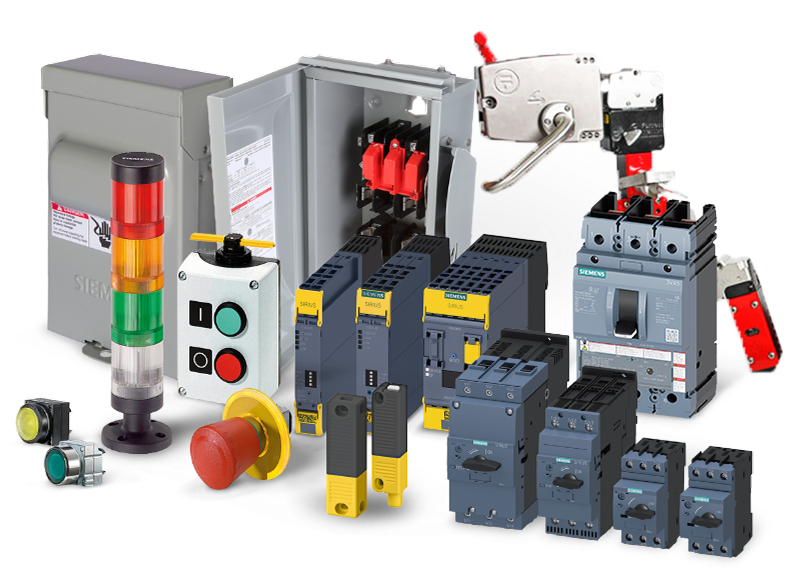
B2B industrial e-commerce is the online sale and procurement of industrial equipment, components, and MRO (maintenance, repair, and operations) supplies between businesses. It covers everything from a single circuit breaker to a complete gas-turbine package, bought through a digital platform rather than through offline reps and paper purchase orders.
What makes it industrial, and different from ordinary B2B or consumer e-commerce, is the nature of the transaction. It involves large order volumes, negotiated and account-specific pricing, multi-stakeholder approvals, technical specification matching, and long-term supplier relationships where reliability matters more than the lowest sticker price. A wrong or counterfeit part is not an inconvenience. It is a safety and uptime risk.
B2B vs. B2C E-Commerce: Why Industrial Buying Is Different
Understanding the contrast clarifies what an industrial platform must get right. Consumer buying is fast and often emotional. Industrial buying is deliberate, researched, and accountable to a team.
Dimension
B2C E-Commerce
B2B Industrial E-Commerce
Buyer
Individual consumer
Procurement team and multiple stakeholders
Decision driver
Emotion, convenience, brand, price
Reliability, spec match, total cost, uptime
Purchase style
Often impulse
Deliberate, researched, approved
Pricing
Fixed and public
Negotiated, volume-based, account-specific
Order size
Small
Large, recurring, contract-based
Sales cycle
Minutes
Days to months
Relationship
Transactional
Long-term partnership
Consequence of error
Return an item
Downtime, safety risk, compliance exposure
The takeaway is that B2B buyers now expect the ease of a consumer checkout, but they operate under constraints a consumer never faces. This expectation is driven partly by generational change, with millennials now representing 73% of B2B buyers, a generation that grew up with Amazon and expects self-service and consumer-grade mobile experiences in every purchasing context. The best industrial platforms deliver B2C-grade usability on top of B2B-grade controls, including negotiated pricing, approval workflows, and specification-level accuracy.
The Core Benefits of B2B Industrial E-Commerce for Procurement Teams
Most articles frame these benefits from the seller's point of view. The benefits that matter to a procurement team look different.
Faster sourcing and less downtime.
Digital platforms replace the phone-and-email hunt for a part with instant search across suppliers. For a maintenance team facing an unplanned outage, hours saved sourcing a critical spare translate directly into avoided downtime cost. Buyer confidence in digital sourcing has risen sharply, and McKinsey's B2B Pulse research found that 39% of B2B buyers are now willing to spend over $500,000 per order through self-service or remote channels, up from 28% two years earlier.
Price transparency and easier comparison.
Instead of waiting on three separate rep quotes, buyers compare brands, specifications, and availability side by side. That visibility strengthens negotiating position and surfaces alternatives when a preferred part is on a long lead time.
One consolidated source instead of dozens of vendors.
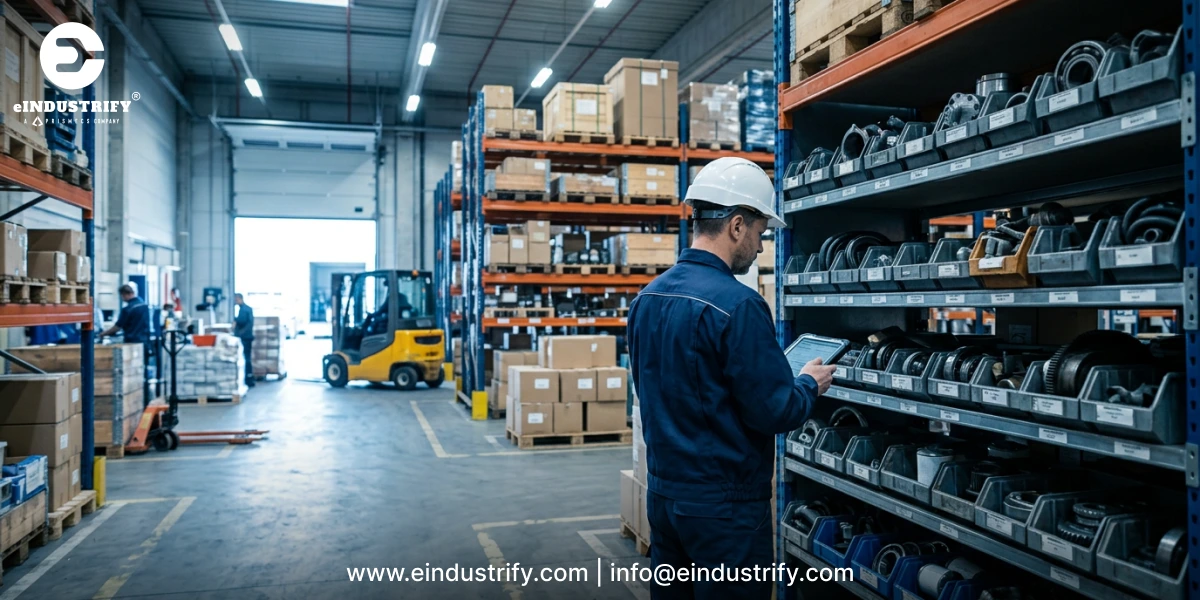
Consolidating spend across a single marketplace reduces the administrative overhead of managing hundreds of supplier relationships, purchase orders, and invoices. This is a major hidden cost in industrial procurement, and it is one of the fastest ways to make a sourcing function more efficient.
24/7 availability across time zones.
Global operations do not run nine to five. A platform that lets a plant in one region requisition parts at any hour, against live stock, keeps procurement moving without waiting for a sales office to open.
Verified suppliers and counterfeit avoidance.
In industrial supply, the gray market and counterfeit components are a genuine risk. A vetted marketplace, where every seller is screened, protects uptime and safety in a way an open search engine never can. Reliability is not a soft benefit here. McKinsey found that more than half of B2B buyers, 54%, are willing to switch suppliers after a poor-quality digital experience, so getting the part right the first time protects the relationship as well as the plant.
Auditable, data-driven purchasing.
Every transaction is logged, categorized, and reportable. Procurement leaders gain spend visibility, reorder patterns, and supplier-performance data that manual processes never captured.
How AI and Automation Power Modern Industrial Procurement
Artificial intelligence and automation are what let a modern industrial platform operate at scale. According to BCG, procurement functions that use AI can reduce overall costs by roughly 15% to 45% depending on the category, and eliminate up to 30% of the work for employees and teams. For the buyer, that value shows up as speed and accuracy across the sourcing workflow.
Demand forecasting and inventory intelligence.
Predictive models flag when critical spares are trending toward stockout, so teams reorder before a shortage bites.
Smart part matching and recommendations.
Instead of scrolling thousands of SKUs, buyers get spec-relevant matches and compatible alternatives surfaced automatically.
Dynamic, transparent pricing.
Pricing engines reflect real availability and volume, and quote turnaround shrinks from days to minutes.
Supply-chain optimization.
Route, lead-time, and logistics planning reduce delivery delays on time-critical orders.
Automated order processing and invoicing.
Order intake, validation, and billing run with minimal manual handling, cutting errors and speeding cash flow.
Fraud and risk screening.
Transactional analysis flags anomalies and helps keep bad actors and counterfeit stock out of the supply chain.
There is a second, newer reason procurement teams should care about AI. Generative AI assistants have become a primary research tool for B2B buyers. Recent buying research found that GenAI chatbots are now the single most influential source shaping B2B vendor shortlists at 17.1%, ahead of software review sites at 15.1%, vendor websites at 12.8%, and peer recommendations. Suppliers and platforms that publish clear, accurate, well-structured information are the ones these tools surface.
A few adoption realities are worth weighing. AI is only as good as the data behind it, so platform data quality matters. Security, privacy, and compliance controls are non-negotiable in industrial contexts. And the best results come when a platform pairs automation with human sourcing experts for the hard-to-find, high-stakes requests.
Personalization in B2B Industrial Platforms
Industrial buyers now expect the tailored experience they get as consumers, applied to procurement. In practice that means account-specific pricing and catalogs reflecting negotiated terms, customer portals showing order history and reorder lists, personalized recommendations based on a facility's installed equipment, and role-based dashboards for buyers, approvers, and maintenance leads.
This matters because the modern buyer is self-directed. Research consistently shows that B2B buyers complete most of their research independently, with buyers completing around 60% of their journey before contacting a vendor. By the time a procurement professional reaches out, they have usually already formed a preference. A platform that meets them with relevant, self-serve, personalized information wins the requisition.
What to Look For in a B2B Industrial E-Commerce Platform
When the parts you buy keep operations running, evaluate a platform against these criteria.
Criterion
What to confirm
Verified supplier network
Sellers screened, not an open free-for-all; counterfeit risk lives here
Catalog depth and live stock
Breadth of SKUs and real-time availability, not stale listings
Specification-level search
Match by technical spec, not just keyword
Negotiated pricing and RFQ
Quotes on non-standard, bulk, or hard-to-find items
ERP and procurement integration
Clean data flow into your existing purchasing stack
Approval workflows and spend controls
Multi-stakeholder buying handled natively
Secure payment and PO terms
Enterprise-grade transaction handling
Sourcing support for critical needs
A human team behind the platform when a part is mission-critical
Analytics and reporting
Spend visibility and supplier performance
Scalability
The platform grows with your operations and new sites
Where eINDUSTRIFY Fits
eINDUSTRIFY is a premier global B2B e-commerce marketplace built for industrial supply, and engineered around the exact criteria above.
Vetted sellers only.
Every seller is screened by our team. No counterfeits and no gray-market stock. Parts that work, delivered on time.
On-demand sourcing through Procurement-as-a-Service.
When a part is hard to find, or you need bulk or critical spares, our Procurement-as-a-Service platform, powered by Prismecs value-added services, handles sourcing, vendor management, and turnkey support.
Built for critical operations.
FromPower Generation and gas-turbine spares toData Center backup power and outage and emergency response, eINDUSTRIFY is designed for buyers whose uptime is non-negotiable.
If you source industrial equipment, whether routine MRO or critical turbine spares, eINDUSTRIFY combines the breadth of a marketplace with the reliability of vetted supply and the backup of a real procurement team.
It is the online sourcing and sale of industrial equipment, components, and MRO supplies between businesses, through a digital platform that supports negotiated pricing, bulk orders, and multi-stakeholder purchasing. It covers everything from a single circuit breaker to a complete gas-turbine package, replacing offline reps and paper purchase orders.
How is it different from a regular online store?
Industrial e-commerce handles account-specific pricing, technical specification matching, approval workflows, verified suppliers, and RFQ or quoting for non-standard parts. A consumer store needs none of these. The consequence of an error is also different: a wrong or counterfeit industrial part is a safety and uptime risk, not a simple return.
What is Procurement-as-a-Service?
It is a model where a provider handles sourcing, vendor management, and turnkey procurement on your behalf. It is especially useful for hard-to-find parts, bulk orders, and critical or emergency spares, where a buyer needs a human sourcing team behind the platform rather than a self-service catalog alone.
How do I avoid counterfeit industrial parts online?
Buy through a marketplace that vets every seller rather than an open listing site, and confirm that suppliers and stock are verified before ordering. The gray market and counterfeit components are a genuine risk in industrial supply, and a screened marketplace protects uptime and safety in a way an open search engine cannot.
How big is the B2B e-commerce market?
The global B2B e-commerce market reached an estimated $32.1 trillion in 2025 and is projected to grow to roughly $62.2 trillion by 2030 at about a 14.5% CAGR, making it several times larger than the consumer e-commerce market. Estimates vary by research house, but all indicate sustained structural growth.
Tags: b2b industrial ecommerce industrial procurement procurement as a service industrial marketplace MRO sourcing supplier verification









 vs Automatic Transfer Switch (ATS) for Data Centers.png)