Critical Spare Parts for Gas Turbines: What to Stock, Where Lead Times Hit Hardest and How to Prioritize
The critical spare parts to stock for a gas turbine are hot-gas-path parts, combustion hardware and fuel nozzles, bearings, control cards at risk of obsolescence, and generator and transformer components. Lead times hit hardest on rotors, new turbine castings, and transformer bushings, often quoted at many months to two years. Prioritize by scoring each part on failure impact, lead time, alternate sources, failure likelihood, and safety risk.
A part becomes critical when its failure can shut down the unit and getting a replacement would take longer than the planned outage window.
A Chevron and Strategic Power Systems study of 388 combined-cycle plants, using reliability data from 1995 to 2009, estimated that unplanned outages cost a 250 MW F-class plant about $775,000a year in lost net revenue, with the most serious individual events costing more than $1 million. Prices have changed since then, but the pattern hasn't: the longer a part takes to arrive, the more an outage costs.
However, not every component carries the same stocking priority or procurement risk. Some require immediate on-site availability, while others involve manufacturing lead times of several months or even years. Understanding these differences is essential to prioritizing inventory, controlling stocking costs, and avoiding prolonged outages.
This blog explains which components to stock, how to rank them by criticality, and where extended lead times create the greatest operational and financial risks.
What Makes a Spare Part Critical in a Gas Turbine
A spare part is critical when its unavailability during a failure or planned outage extends downtime beyond the scheduled window, creating revenue losses that far exceed the cost of keeping the part on hand.
Gas turbines present a sharper version of this problem than most industrial assets. Their hot-section components operate at temperatures above 1,100°C under extreme centrifugal loads, which means they degrade on a known schedule and fail in predictable patterns. But the materials involved, directionally solidified and single-crystal nickel superalloys, thermal barrier coatings, and platinum-aluminide bond coats, come from a small number of specialized foundries worldwide. This concentrates supply risk in ways that general MRO inventory frameworks do not account for. The global gas turbine market, valued at approximately USD 20.1 billion in 2025 and projected to reach USD 27.9 billion by 2033, depends on this narrow supply base for its most failure-critical components.
Gas turbine spare parts generally fall into three categories: critical spares, insurance spares, and capital spares. Critical spares are components whose failure can shut down the turbine, particularly when replacement lead times exceed acceptable downtime. Examples include first-stage buckets, transition pieces, and rotor assemblies. Insurance spares are high-value components kept in reserve for rare but potentially catastrophic failures, such as generator rotors and GSU transformer bushings. Capital spares are expensive components, typically costing more than $100,000, that require separate financial justification before being added to inventory.
These categories can overlap, as a single component may qualify as both an insurance and a capital spare.
Key Gas Turbine Components to Include in Spare Inventory
The key gas turbine components to include in a critical spare inventory are those required during combustion inspections (CI), hot-gas-path inspections (HGPI), and major overhauls (MO). Each inspection interval involves specific components that must be available before maintenance begins to avoid delays and extended equipment downtime.
Hot-Gas-Path Components
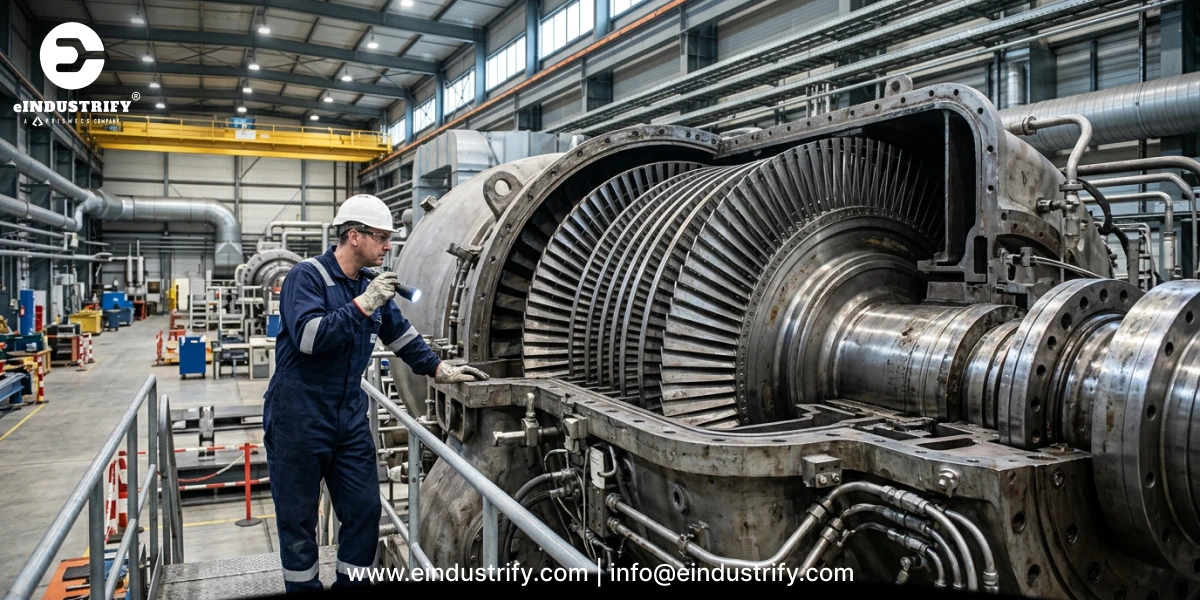
First-stage and second-stage buckets (blades), first-stage and second-stage nozzles (vanes), and shroud blocks are the highest-priority items on any gas turbine critical spares list. These parts operate in the hottest section of the turbine, typically reaching end-of-life between 24,000 and 48,000 equivalent operating hours depending on the frame and firing temperature.
A missing set of first-stage buckets during an HGPI can extend an outage by 20 to 40 weeks, the current lead time for new OEM castings on most F-class and H-class frames. The financial exposure on a 250 MW combined-cycle unit running at a $25/MWh spark spread adds up quickly: each day of extended outage costs roughly $150,000 in lost net revenue.
Combustion Section Parts
Combustion liners, transition pieces, crossfire tubes, end caps, and fuel nozzles make up the parts kit for a combustion inspection. These components see replacement or repair at intervals of 8,000 to 12,000 equivalent operating hours on dry low-NOx (DLN) frames. On high-utilization F-class units operating in baseload, this interval can be reached in as little as 12 to 18 months, requiring proactive procurement planning well ahead of the CI window.
Fuel nozzles deserve particular attention. A single stuck or damaged fuel nozzle can force a unit trip, and a full set of fuel nozzles for a GE 7FA or Siemens SGT6-5000F involves 14 to 18 individual assemblies. Refurbished fuel nozzle sets often serve as rotable spares, removed, repaired, and returned to inventory on a rotating basis, which reduces the capital required to maintain coverage.
Compressor and Rotating Parts
Compressor blades (particularly first-stage and inlet guide vanes), compressor stator vanes, and rotor components carry the longest lead times of any gas turbine parts. A compressor rotor or turbine rotor assembly can take 12 to 24 months to manufacture. These are insurance-level spares: the probability of needing one outside a planned major overhaul is low, but the consequence is a unit out of service for over a year.
Bearings, including journal, thrust, and tilt-pad varieties, are less expensive but equally time-sensitive. A bearing failure that occurs without a spare on hand means sourcing a component that may have an 8-to-16-week lead time, during which the turbine cannot operate.
Control and Instrumentation
Distributed control system (DCS) cards, programmable logic controller (PLC) modules, flame detectors, ignitors, and fuel gas control valves represent a different kind of criticality. Individual unit costs are modest compared to hot-section hardware, but obsolescence risk is high. OEMs discontinue electronic control cards with limited notice, and aftermarket replacements for proprietary control platforms are scarce.
Plants running legacy Mark V or Mark VIe control systems face growing availability gaps as these platforms age. Stocking a set of critical I/O cards, processor boards, and communication modules is an insurance decision that costs far less than a forced controls upgrade.
Generator and Electrical Systems
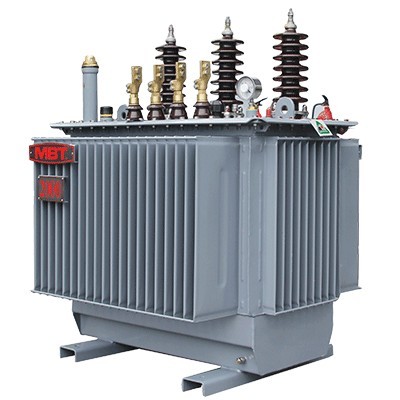
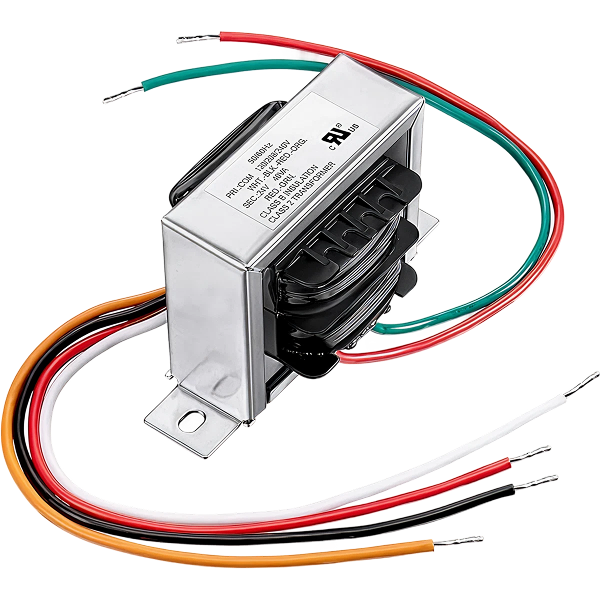
Generator stator bars, retaining rings, rotor windings, hydrogen seals, and exciter components round out the critical spares list. The generator step-up (GSU) transformer deserves separate consideration; transformer bushing lead times have stretched to 12 to 18 months for some voltage classes, and a bushing failure without a spare on hand can keep a fully operational turbine-generator offline.
How Aeroderivative Spares Are Different
Everything above applies most directly to heavy-duty frame turbines, which are usually repaired in place. Aeroderivative turbines such as the GE LM2500, LM6000, and TM2500 work differently, and so does their spares strategy.
Spare engines and modules. Many aeroderivative operators don't repair the gas generator on site. They swap it for a spare or a leased engine, send the removed one for depot overhaul, and get back online in days rather than weeks. For these plants, access to a spare or lease engine is the most important "spare" of all.
Life-limited parts. Key rotating parts can only run for a set number of cycles or hours. Your spares plan has to follow each part's life records, not just the inspection schedule, and any replacement needs complete history from the day it was made.
On-engine accessories. Fuel metering valves, staging valves, starters, ignitors, and sensors fail more often than major hardware and are quick to swap. They are well suited to exchange and overhauled-with-certification sourcing.
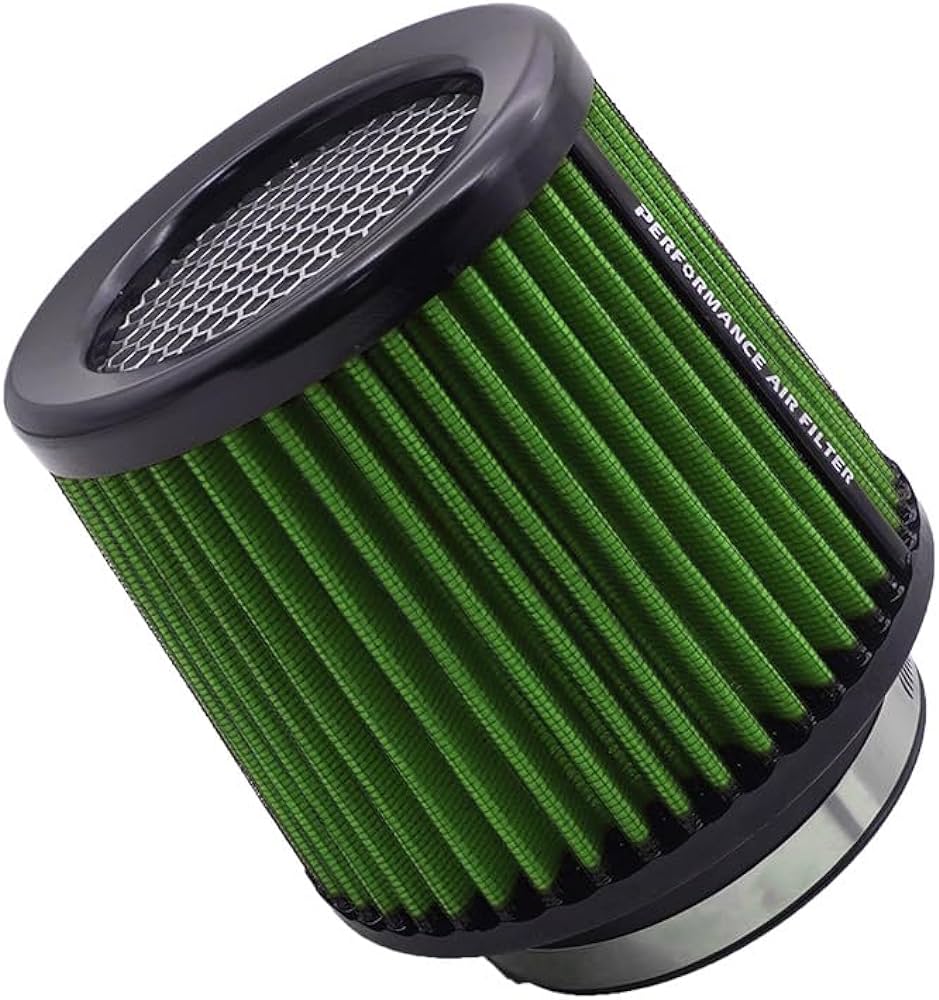
Package spares. Inlet air filters, anti-icing components, and lube oil and balance-of-plant parts keep the package running. Most can be stocked on site at modest cost.
A criticality score translates engineering judgment into a repeatable, defensible ranking that guides stocking decisions and capital allocation. Five factors capture the information that matters for gas turbine spares. Score each on a 1-to-5 scale.
Factor
What It Measures
Score of 5 Means
Failure consequence
Impact on unit output if unavailable
Complete unit shutdown, no workaround
Lead time
Weeks from order to delivery
Over 40 weeks
Replaceability
Availability from alternate sources
Single-source OEM only, no equivalent
Failure probability
Likelihood of needing the part within the planning window
Known wear-out item, consumed every inspection
Safety / environmental risk
Regulatory or safety consequence of failure
OSHA-reportable or environmental release
Multiply the five scores to produce a composite criticality index. A first-stage bucket set on a 7FA frame might score: consequence 5 × lead time 5 × replaceability 4 × probability 4 × safety 3 = 1,200. A combustion crossfire tube might score: 4 × 3 × 2 × 5 × 2 = 240.
Parts scoring above 500 typically justify on-site stocking. Parts between 200 and 500 warrant supplier-held or consortium inventory arrangements. Below 200, order-on-demand is usually acceptable, provided the lead time stays under four weeks.
Validating With FMEA
Failure Mode and Effects Analysis (FMEA) is a systematic methodology, formalized in standards such as SAE J1739 and IEC 60812, that adds rigor to the criticality scoring process. For each critical component, document the failure mode (e.g., thermal fatigue cracking in a first-stage bucket), the effect (forced outage, derating, or secondary damage), and the detection method (borescope inspection, vibration monitoring, exhaust temperature spread). The resulting Risk Priority Number (RPN) cross-checks the criticality score and highlights parts where detection capability is weak, which should push the stocking decision toward keeping more inventory, not less.
Lead Times, Stocking Levels, and the Cost of Getting It Wrong
Lead times for gas turbine critical spares range from 8 weeks to 24 months. Stock critical-tier parts (score above 500) as a complete set on-site. Miss the reorder window, and a single HGPI delay costs $150,000 per day in lost revenue on a 250 MW unit.
Component Category
Typical Lead Time
Notes
Hot-gas-path buckets and nozzles (new)
20–40 weeks
Longer for legacy frames with limited casting runs
Combustion liners and transition pieces
12–24 weeks
Refurbished sets available in 8–12 weeks
Fuel nozzle sets (new)
16–30 weeks
Rotable exchange can reduce effective wait to 4–6 weeks
Compressor rotor / turbine rotor
12–24 months
Insurance-level stocking recommended
DCS / control cards (legacy)
8–26 weeks
Longer if discontinued; some unavailable at any lead time
Generator retaining rings
10–20 weeks
Forging availability varies by size and alloy
GSU transformer bushings
12–18 months
Voltage-class dependent
Setting reorder points requires matching these lead times to consumption patterns and outage schedules. A plant with an HGPI scheduled 18 months out should place orders for hot-gas-path parts no later than 12 months before the outage window opens. For insurance spares with lead times exceeding 12 months, the reorder trigger is essentially immediate; if you do not have it, order it now.
Min/max inventory levels follow from criticality tier and lead time. Critical spares (score above 500) should maintain a minimum of one complete set on-site, with the reorder point set at the max quantity minus one. Insurance spares follow a different logic: the stocking decision is binary (stock or don't stock), justified by comparing the annual expected downtime cost against the annual carrying cost of the spare.
Stocking Strategies Beyond the Warehouse Shelf
Keeping every critical spare in your own warehouse ties up capital that many plants cannot justify. Several strategies reduce that financial burden without increasing outage risk.
Rotable and Exchange Programs
Rotable spares work best for components that are regularly consumed and can be repaired. Fuel nozzle sets, combustion liners, and certain hot-gas-path parts fit this model. The plant sends its removed set to a repair facility. It receives a pre-repaired set in exchange, typically within 4 to 6 weeks. This cuts inventory investment roughly in half.
Consignment and Vendor-Managed Inventory
Under a consignment arrangement, parts are stored at or near the plant but remain the supplier's property until consumed. The plant avoids carrying cost while the supplier guarantees availability. Vendor-managed inventory (VMI) extends this model. The supplier monitors stock levels and replenishes automatically. Both approaches work well for combustion hardware and fast-moving consumables.
Spares Pooling Across Sites
Operators with multiple gas turbine units can pool insurance-level spares across sites. A shared turbine rotor or generator field serves the fleet rather than sitting idle at a single location. SMRP benchmarks show multi-site pooling cuts per-plant insurance spare carrying costs by 40% to 60%.
Storage, Preservation, and Obsolescence Management
A critical spare loses its value if it degrades in storage before it is needed. Gas turbine components have specific preservation requirements that standard warehouse practices may not cover.
Coated hot-section parts, buckets and nozzles, with thermal barrier coatings require climate-controlled storage. Keep humidity below 60% and temperatures between 15°C and 30°C. Moisture exposure causes coating delamination and bond coat corrosion.
Electronic control cards and instrumentation modules need ESD-safe packaging and protection from temperature extremes. Shelf life for electrolytic capacitors on older control boards is typically 5 to 7 years. Boards stored longer should be tested before installation.
Elastomeric seals, gaskets, and O-rings have finite shelf lives governed by material compound. Nitrile and fluorocarbon seals stored per manufacturer recommendations remain serviceable for 10 to 15 years. Ozone, UV light, or excess heat accelerates degradation.
Obsolescence is the most expensive storage risk. When an OEM announces end-of-life for a control card, plants face a last-time-buy decision. The alternative, deferring until aftermarket premiums reach 3× to 5×, is almost always more expensive.
A structured inventory management system should track each component’s shelf life, preservation requirements, inspection history, and obsolescence status. Integrating these records with the turbine’s bill of materials (BOM) through a CMMS or ERP system helps ensure that critical spares remain serviceable and available when maintenance or replacement is required.
Sourcing Critical Spares: OEM, Aftermarket, and Marketplace Options
Not every critical spare needs to come from the OEM. The sourcing decision should align with the component's criticality tier, operating conditions, and risk tolerance.
OEM-genuine parts are non-negotiable for rotating components under high temperatures and centrifugal loads. First-stage buckets, turbine wheels, compressor rotors, and generator retaining rings require full material traceability and certified heat treatment.
OEM-equivalent and aftermarket parts suit many combustion components, static hardware, seals, and gaskets. Reputable aftermarket suppliers reverse-engineer these parts to OEM specifications, often with shorter lead times and lower costs. The key is supplier qualification. Material certifications, dimensional inspection reports, and coating specifications should match or exceed OEM requirements.
Refurbished parts offer a middle path for repairable hot-gas-path hardware. Weld buildup, re-coating, and re-machining restore buckets, nozzles, and transition pieces at 40% to 60% of new-part cost.
Industrial marketplaces like eINDUSTRIFY simplify critical spare procurement by bringing buyers and suppliers onto one platform. Operators can explore available inventory, compare suppliers, and submit RFQs to source OEM-genuine, aftermarket, and refurbished gas turbine components while reducing procurement delays.
Closing Insights
A good critical spares plan answers three questions for every part: what happens if it's missing, how long it takes to get, and where else it can come from. Score each part, stock the critical tier on site, use exchange, consignment, and pooling for the rest, and review the list before every major inspection. For aeroderivative units, plan around spare engines, life-limited parts, and on-engine accessories.
FAQs
1. What are critical spare parts for gas turbines?
Critical spare parts are components whose unavailability can extend turbine downtime during failures or planned maintenance. These include first-stage buckets, nozzles, combustion liners, fuel nozzles, bearings, control cards, and generator components with long replacement lead times.
2. How do you decide which spare parts to keep on-site?
Prioritize spare parts based on failure consequences, procurement lead times, replaceability, failure probability, and safety risks. A criticality scoring system helps determine which components justify on-site stocking, supplier-held inventory, or order-on-demand procurement.
3. What are insurance spares, and when are they justified?
Insurance spares are high-value components kept in reserve for low-probability failures that could cause extended outages. They are justified when potential downtime losses significantly exceed the annual cost of purchasing, storing, and maintaining the spare.
4. How do lead times affect gas turbine spare parts strategies?
Long procurement lead times require earlier purchasing decisions and higher inventory protection for critical components. Parts taking several months or longer to manufacture may require on-site stocking, supplier-held inventory, or shared arrangements to prevent extended outages.
5. What are spares pooling and consignment stock?
Spares pooling allows multiple facilities to share high-value components, reducing individual inventory investments. Consignment stock keeps parts at or near a plant while ownership remains with the supplier until use, helping operators maintain availability without carrying the full inventory cost.
6. How should critical spare parts be stored?
Critical spare parts should be stored according to manufacturer-prescribed preservation requirements. Hot-section components need controlled humidity and temperature, electronic modules require ESD-safe packaging, and elastomeric seals need protection from heat, ozone, and UV exposure. Regular inspections help identify deterioration before installation.
7. How are aeroderivative spares different from heavy-duty spares?
Aeroderivative turbines such as the LM2500 and LM6000 are often fixed by swapping the whole gas generator for a spare or leased engine, then overhauling the removed one at a depot. Their spares plan also has to track life-limited rotating parts and keep on-engine accessories, such as valves, starters, and ignitors, ready for exchange.
8. Should multi-site fleets pool critical spares?
Often, yes. Pooling lets one expensive spare protect several plants, so each site carries only part of the cost. It works best when the sites run the same turbine model and the spare can be shipped within an acceptable outage window.
Source Critical Gas Turbine Spares Through eINDUSTRIFY
Finding the right critical spare parts should not become another source of operational delays. Explore eINDUSTRIFY, an industrial marketplace connecting buyers with suppliers of gas turbine components, OEM parts, aftermarket alternatives, and refurbished equipment.
Submit an RFQto source the components your maintenance schedule demands, or call us at +1 888 774 7632 to discuss your sourcing requirements with our team.