When to Outsource Industrial Parts Sourcing: In-House vs Outsourced Framework for MRO Teams
Outsource industrial parts sourcing when your spending is spread across many suppliers; parts are hard to find, or your team spends more time chasing orders than improving maintenance. Keep sourcing in-house when parts are few, highly critical, and depend on deep knowledge of your plant.
Outsourcing industrial parts sourcing means handing some or all the work of finding, buying, and delivering maintenance, repair, and operations (MRO) parts to an outside partner, such as a distributor, integrated supplier, or procurement service.
Most MRO teams land somewhere in between. A simple build-vs-buy framework helps you decide by looking at six factors: how much you buy, how critical the parts are, your team's capacity, access to suppliers, speed needs, and quality and data control.
What Does Outsourcing Industrial Parts Sourcing Mean?
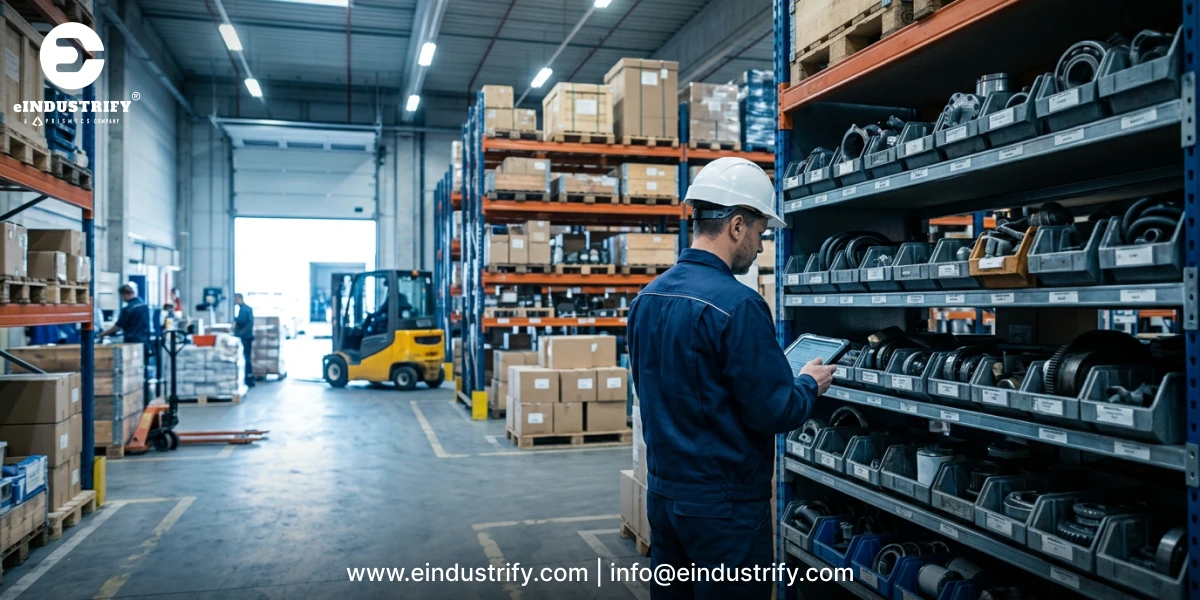
Every plant needs a steady flow of spare parts and supplies, from bearings, belts, and filters to motors, valves, and safety gear. The question is who does the work of getting them there. There are three basic ways to set this up.
The In-House ("Build") Model
Your own buyers and maintenance planners find suppliers, request quotes, place orders, follow up on deliveries, and manage the storeroom. You keep full control, but you also carry all the workload and cost.
The Outsourced ("Buy") Model
An outside partner takes over some or all the sourcing work. Common options include:
Distributors that supply a broad catalog of parts from many brands.
Integrated supply partners that manage purchasing and sometimes run your storeroom on site.
Procurement-as-a-Service (PaaS) providers that handle quotes, supplier management, and order tracking on demand.
Vendor-managed inventory (VMI), where a supplier monitors stock levels and refills them automatically.
The Hybrid Model
Many MRO teams split the work. They keep critical, plant-specific parts in-house and outsource the long list of everyday items, hard-to-find parts, or overflow work during busy periods such as shutdowns. For many facilities, this is the most practical answer.
Why the Build-vs-Buy Decision Matters for MRO Teams
MRO parts are usually a small slice of a company's total spending, so they rarely get the attention that raw materials do. But when the right part isn't there, the machine stays down.
MRO Buying Is Different
MRO purchasing tends to involve thousands of different items; many bought only once or twice a year, from dozens of suppliers. Orders are often small and urgent. That pattern makes MRO sourcing slow and expensive to manage, even when each individual part is cheap.
The Real Cost Is Downtime
The price on the invoice is only part of the story. The bigger costs come from delays, emergency orders, and machines waiting for parts. Research from the National Institute of Standards and Technology found that manufacturers relying heavily on reactive, fix-it-when-it-breaks maintenance had 3.3 times more downtime and 4.9 times more inventory increases due to maintenance issues than those relying on it least. A sourcing setup that delivers the right parts on time supports planned maintenance and keeps those losses down, whether the work is done in-house or by a partner.
The Build-vs-Buy Framework: Six Decision Factors
Use these six questions to judge whether a group of parts is better sourced in-house, outsourced, or split between the two.
1. How Much Do You Buy, and How Many Different Items?
If most of your spending goes to a short list of repeat items, an in-house team can manage it well. If your spending is spread across thousands of items and many suppliers, often called the "long tail," an outside partner with a broad catalog and buying power can usually handle it more efficiently.
2. How Critical Are the Parts?
Rank parts by what happens if they are missing. A part that stops a production line or creates a safety risk needs close control, careful stocking, and clear ownership. Low-risk, everyday items such as fasteners, gloves, and filters are good candidates for outsourcing.
3. Does Your Team Have the Time and Skills?
Sourcing takes real people and real hours. The U.S. Bureau of Labor Statistics reports that purchasing managers, buyers, and purchasing agents earned a median annual wage of $81,670 in May 2025. If adding staff is not realistic, or your experts spend their days chasing small orders, outsourcing routine work can free them for higher-value tasks.
4. Can You Reach the Right Suppliers?
Some parts are easy to buy locally. Others are obsolete, imported, or made by many different equipment brands across your plant. A partner with wide supplier networks and international reach can find these faster than a small in-house team starting from scratch.
5. How Fast Do You Need Parts?
If you often need parts the same day, local stock and fast decision-making matter. For planned maintenance and shutdowns, a partner that consolidates orders and coordinates deliveries can save time across many suppliers.
6. How Will You Protect Quality and Keep Good Records?
Counterfeit and gray-market parts are a real risk when buying outside trusted channels. Whoever handles sourcing should verify suppliers, provide documentation, and keep purchase records linked to your maintenance system. Platforms that offer vetted industrial parts from verified suppliers can reduce that risk.
A Simple Build-vs-Buy Scoring Matrix
Factor
Signals to keep in-house
Signals to outsource
Volume and variety
Few items, steady repeat orders
Thousands of items, many suppliers
Part criticality
High-risk, line-stopping parts
Low-risk, everyday supplies
Team capacity
Skilled team with available time
Team stretched or hard to hire
Supplier access
Local, well-known suppliers
Obsolete, imported, or multi-brand parts
Speed
Frequent same-day needs
Planned work and shutdowns
Quality and records
Strong in-house controls already
Gaps in supplier checks or data
Score each factor for a group of parts. If most signals point one way, you have your answer. If they are mixed, a hybrid approach is likely the best fit.
When to Keep Industrial Parts Sourcing In-House
Outsourcing is not always the right move. Keep sourcing in-house when:
Parts are critical and unique to your plant, such as custom-engineered spares or long-lead components for key equipment.
Equipment makers require specific parts or channels to keep warranties valid.
Your volume is small and stable, so a lean in-house process already works well.
Your team has strong supplier relationships that deliver good prices and fast service.
Security or compliance rules limit who can handle certain purchases or sensitive equipment data.
Signs It's Time to Outsource Industrial Parts Sourcing
These warning signs suggest your current setup is costing more than it should:
Emergency and rush orders are becoming normal rather than rare.
Your supplier list keeps growing, with many vendors used only once or twice.
Buyers and planners spend most of their day on quotes, follow-ups, and paperwork.
Machines wait for parts that are hard to find, obsolete, or imported.
Stock levels swing between shortages and piles of unused parts.
You are preparing for a major shutdown or expansion without extra procurement staff.
You have little visibility into what you spend, with whom, and why.
If several of this sound familiar, start by outsourcing one category of parts and measure the difference before going further.
How to Move to an Outsourced or Hybrid Model
A careful, step-by-step move protects uptime and builds trust between your team and the partner.
Step-by-Step Transition
Understand your current spending. List what you buy, from whom, how often, and how much it costs. Even a rough picture reveals where the biggest opportunities are.
Decide what stays and what goes. Use the scoring matrix to pick categories for outsourcing and keep critical parts under direct control.
Start with a pilot. Outsource one category, such as general MRO supplies or hard-to-find parts, for a few months before expanding.
Agree on clear service levels. Set expectations for response times, delivery times, part quality, documentation, and pricing.
Connect to the systems. Make sure orders, deliveries, and invoices flow into your maintenance and purchasing records, so nothing gets lost.
Review regularly. Meet monthly at first, then quarterly, to review results and fix problems early.
If you are new to the idea, this overview of the Procurement-as-a-Service model explains how on-demand sourcing support typically works.
What to Measure
Track a few simple numbers before and after the change:
Fill rate: How often parts are available when needed.
Lead time: how long it takes from request to delivery.
Order processing time and cost: how much effort each purchase takes.
Stockouts and emergency orders: how often work stops for missing parts.
Inventory levels: whether stock is right sized rather than too high or too low.
Totals spend including shipping, rush fees, and admin time, not just part prices.
Frequently Asked Questions
What is MRO procurement outsourcing?
MRO procurement outsourcing means using an outside partner to find, buy, and deliver the parts and supplies used to maintain equipment and facilities. The partner may handle everything or only selected categories, while your team keeps control of strategy and critical parts.
Is outsourcing parts sourcing cheaper than doing it in-house?
Often, but not always. Savings usually come from less admin work, fewer rush orders, better pricing, and less downtime rather than lower part prices alone. Compare the total cost, including staff time and delays, before deciding.
What is the difference between integrated supply and Procurement-as-a-Service?
Integrated supply usually involves a partner managing purchasing and often running your storeroom on site. Procurement-as-a-Service is typically more flexible, providing sourcing, quotes, and supplier management on demand without taking over your storeroom.
Should critical spare parts ever be outsourced?
Critical spares can be sourced through a partner, but decisions about which parts to stock, how many, and where should stay with your team. Many plants outsource the buying process while keeping close control of critical inventory.
How long does it take to outsource parts sourcing?
A pilot for one category can start within a few weeks. A full transition usually takes several months, depending on how many parts, sites, and systems are involved.
Key Takeaways
There is no one-size-fits-all answer to whether you should outsource industrial parts sourcing. Keep critical, plant-specific parts close, and consider outsourcing the long list of everyday, hard-to-find, or overflow items. Score each category on volume, criticality, team capacity, supplier access, speed, and quality, then start small and measure results. The MRO teams eINDUSTRIFY work with often finding that a hybrid model gives them the best balance of control and efficiency.
Spending Too Much Time Chasing Parts?
MRO managers, maintenance planners, and procurement leads can turn to eINDUSTRIFY for vetted industrial parts, quote and supplier management, and on-demand sourcing support, so your team can focus on keeping equipment running.












 vs Automatic Transfer Switch (ATS) for Data Centers.png)