eINDUSTRIFY is the industrial B2B marketplace that connects leading distributors with global customers.
Cutting-Edge Technology
ERP Enablement, Marketing Provision & Support, Shipment APIs & Analytics
Punch-Out Model
Achieve ROI without capex. Empowers both customers and providers
The Right Partner
Provides businesses with the tools they need to achieve growth & revenue goals
The Right Reach
A competitive advantage in the rapidly evolving world of B2B ecommerce.
Follow our streamlined and efficient registration process for seamless user onboarding, ensuring swift access to services with minimal hassle.
Start your B2B e-commerce journey by filling out our user-friendly application form. Our dedicated category experts will carefully evaluate your submission. If your products align with our platform, our team will reach out to you directly.
Once your application is approved and progress to the final setup phase in our portal. Work closely with your designated eINDUSTRIFY buyer to orchestrate the launch of your products.
We meticulously package and dispatch your products to customers. We also work with drop-ship partners if it is a good fit for both.
Our platform offers a wide range of features and services that are tailored to meet the needs of vendors
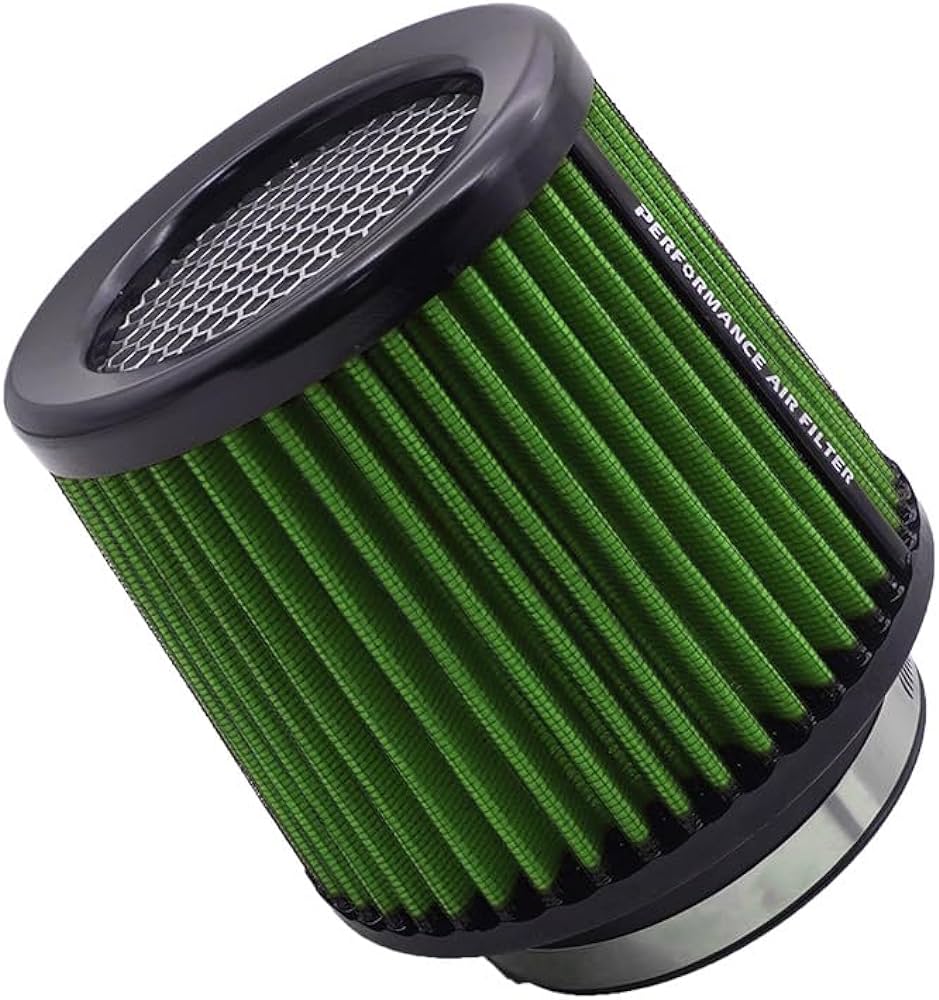
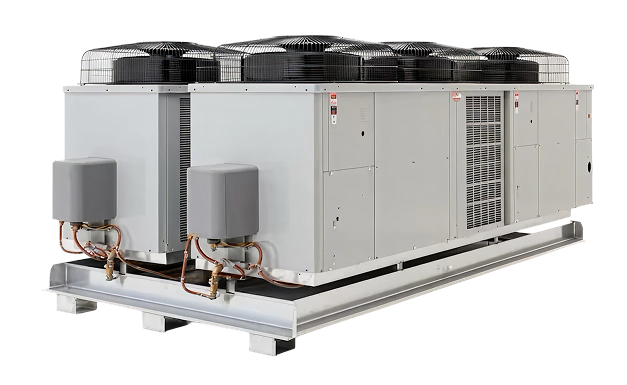
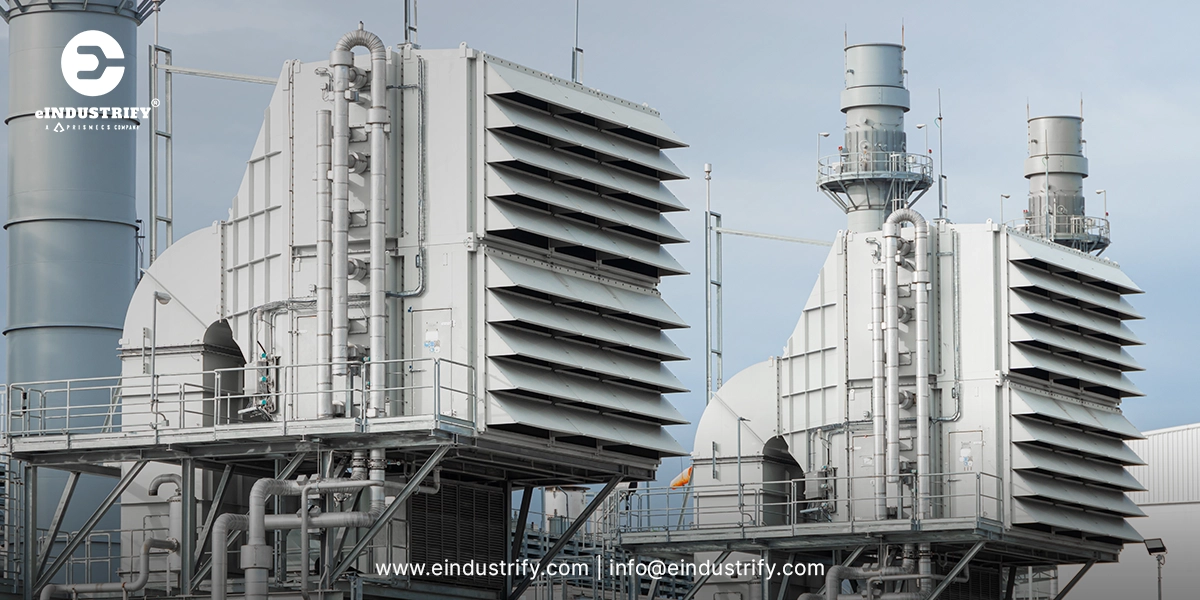
A baseload plant in the Gulf loses 4 megawatts of output over a single dust season, and the operator blames the turbine before anyone checks the inlet house. The filters were specified for a coastal site, then the plant was built 60 kilometers inland next to an expanding quarry. The elements were never wrong on paper. They were wrong for the air the machine actually breathes.That mismatch between specification and site is the real subject of this comparison. Choosing between static and pulse-jet inlet filtration is not a catalog decision. It sets your differential pressure curve, your replacement cadence, your compressed air load, and your exposure to unplanned outages for the life of the asset. This guide covers the choice and the ownership phase that follows it, from filter class selection through replacement triggers and total cost of ownership.Static vs Pulse-Jet Filters at a GlanceBoth systems trap particulate before it reaches the compressor. The difference is what happens to the captured dust. A static (barrier) system holds dust in the media until the element is replaced. A pulse-jet (self-cleaning) system periodically blows accumulated dust off the media with a reverse blast of compressed air while the turbine keeps running.The table below is the short answer. The sections after it explain the reasoning and the numbers behind each row, so every cell here is defensible rather than rounded for convenience.How Each System Actually Works, and the One Mechanism That Decides PulsabilityThe detail that determines whether a filter can be pulse-cleaned is not the housing. It is how the media captures dust. Two loading mechanisms exist, and they behave in opposite ways when you hit them with a reverse pulse.Depth-loading media traps particles throughout the thickness of the fiber matrix. Progressively smaller particles lodge deeper into the material as air passes through. This captures a wide particle range and builds dust-holding capacity, but the dust is embedded, not sitting on the surface. A reverse pulse cannot extract it, and aggressive pulsing damages the media. Depth-loading filters are therefore replaced, not cleaned.Surface-loading media does the opposite. Particles collect on the upstream face and form a thin dust cake. That cake increases resistance, but it releases cleanly when the media flexes under a compressed-air pulse from the clean-air side. The dislodged dust falls into a collection hopper, and the element returns near its starting pressure drop. This is the physical basis of self-cleaning, and it is why a pulse system needs surface-loading elements to work at all.Mechanically, a pulse element is usually a cartridge pair, one cylindrical and one conical, mounted to a tube sheet (the grid plate). Unfiltered air passes radially through the media; clean air exits into a plenum. The two dominant geometries are updraft (Pneuma-Pulse) cartridges derived from baghouse designs and cross-flow arrangements used where footprint is tight. One correction worth stating plainly, because a common misconception runs the other way: pulse cleaning happens while the turbine is running, not during shutdown. In-operation cleaning is the entire reason the architecture exists.What Contaminated Inlet Air Costs YouThis ground is well covered elsewhere, so the summary is short. Unfiltered particulate fouls compressor blades, which raises heat rate and drops power output. Salt and moisture corrode hot-section components. Abrasive dust erodes aerofoil profiles and forces re-balancing or replacement.Compressor washing recovers some fouling loss, but repeated washes degrade output over time and consume availability. The filtration decision is, at root, a decision about how much of that loss you accept and how you pay to avoid it.Filter Classes Explained: MERV, EN 779/EN 1822, ISO 16890 and ISO 29461A filter datasheet can carry four different classification systems, and procurement teams routinely compare elements rated on different scales. Knowing how they map prevents the most common specification error: buying a lower-performing element because its rating looked higher on an unfamiliar scale.The four standards you will see on a datasheetMERV (ASHRAE 52.2) runs from 1 to 16 and is still common in North American specifications. EN 779 used the older G, M and F grades (G1 to G4, M5 to M6, F7 to F9) and has largely been superseded. ISO 16890 replaced EN 779 and reports efficiency as ePM1, ePM2.5 and ePM10, tied to the particulate-matter fractions operators actually care about. EN 1822 governs EPA and HEPA filters, defining HEPA as at least 99.95 percent removal at the most penetrating particle size.ISO 29461: the gas-turbine-specific standard nobody else explainsThe standard built for this application gets almost no coverage in competing material, which is a gap worth closing. ISO 29461-1:2021 is the turbomachinery inlet filter test standard. Its second edition introduced a unified T-classification of 13 efficiency classes, T1 to T13, spanning coarse pre-filtration to HEPA-grade final filtration.The classes draw on existing test protocols: T1 through T9 are evaluated using ISO 16890 methods, while T10 through T13 use ISO 29463 (the HEPA test basis). Coarse classes T1 to T4 are dust-loaded to a final pressure drop of 375 Pa, and fine and high-efficiency classes T5 to T13 are loaded to 625 Pa, at which point dust-holding capacity is recorded. ISO 29461 also strips out electrostatic charge effects, which dissipate quickly in service and overstate field efficiency. For a buyer, that means a T-class rating reflects mechanical efficiency you will still have months into operation.ISO 29461 Part 2 adds something HVAC standards ignore entirely: a water-ingress endurance test under controlled fog and mist. For coastal and offshore sites, that test is the difference between a filter that holds and one that collapses under salt-laden moisture.Crosswalk: matching old F-class to ISO ePM and MERVUse the crosswalk below to compare elements specified on different scales. Treat it as practical alignment, not laboratory equivalence, since the test methods differ. Legacy EN 779 ISO 16890 (approx.) MERV (approx.) ISO 29461 band G3 / G4 Coarse MERV 5 to 8 T1 to T2 M5 / M6 ePM10 MERV 9 to 11 T3 to T4 F7 ePM2.5 MERV 13 T5 to T6 F8 ePM1 ~60 to 70% MERV 14 T7 F9 ePM1 ~80% MERV 15 T8 to T9 E10 to H14 (EN 1822) EPA / HEPA Above MERV 16 T10 to T13 The Pressure-Drop and Energy-Cost Penalty of Pulse GeometryPulse cartridges carry a structural disadvantage that rarely appears in a sales conversation: their geometry resists airflow more than a comparable static compact filter using the same media. The reason is aerodynamic, not media quality.Controlled testing by a European filter manufacturer makes the point with the same media roll in two filter formats. A pulse cartridge measured roughly 140 Pa at a test flow, against about 131 Pa for a compact filter, but the comparison hides a velocity difference. The pulse element ran at 2.03 cm/s media velocity while the compact ran at 5.31 cm/s. Normalized to equal velocity, the aerodynamic penalty of the pulse pleat geometry was an order of magnitude larger than the compact filters.Plants compensate by packing more filters into a pulse house to drop the per-element velocity. The same study showed a single Alstom GT26 frame served by 518 static compact filters in a European installation versus 1,176 pulse filters in a Middle East installation moving comparable air. More elements at lower velocity keep system pressure within limits, which is exactly why the Saudi Aramco desktop standards cap cleanable-system initial pressure differential at 400 Pa.Pressure drop is not an abstract number. Every additional inch of water gauge across the inlet is inlet depression the compressor has to overcome, and it shows up as a heat-rate penalty and lost output. When you evaluate a pulse system, you are accepting a higher baseline resistance in exchange for in-operation cleaning. Whether that trade pays depends entirely on the site, which is the next section.Environment Decision Matrix: Match the Site to the System and the ClassThe single most useful thing a buyer can do is stop treating dust as the only variable. Four conditions drive the decision together: particulate load, salt aerosol, humidity, and temperature extremes. The matrix below combines them into a starting recommendation.Site condition Recommended system Target class Primary risk to manage Desert / high dust / sandstorm Pulse-jet ISO ePM10 to ePM1 / T4 to T8 Rapid loading, abrasive erosion Coastal / marine Static, multi-stage ePM1 / T8 to T9 + water test Salt corrosion, water ingress Tropical / high humidity Static, multi-stage ePM1 / T7 to T9 Media wetting, pressure spikes Arctic / snow / icing Pulse-jet ePM2.5 to ePM1 / T5 to T8 Ice bridging, dP spikes Urban / moderate Static ePM2.5 to ePM1 / T6 to T8 Cost-efficiency balance Petrochemical / industrial Static + gas-phase ePM1 / T8 + molecular stage Hydrocarbon and gummy deposits Agricultural / seasonal dust Pulse-jet or hybrid ePM10 to ePM1 / T4 to T8 Seasonal load swings How to measure your site before you chooseSpecify against data, not anecdote. A direct-reading laser photometer measures airborne particulate in mg/m3 and gives you the dust load that anchors the whole decision. As a practical threshold, sustained loads above roughly 0.3 mg/m3 or frequent sandstorm events push the choice toward pulse.Log salt aerosol and humidity across a full seasonal cycle, not a single survey day. Turbine makers typically want less than 0.01 ppm of salt reaching the machine, while coastal air can carry 0.05 to 0.5 ppm on an ordinary day. That gap is what your watertightness rating and staging have to close.When inertial separation belongs in front of either systemIn very heavy or coarse dust, an inertial separation stage ahead of the filters earns its footprint. It forces a sudden change in air direction so heavier particles continue straight into a hopper while the airstream turns toward the elements. Used as a pre-stage, it strips the coarse fraction that would otherwise load fine filters in days, extending element life regardless of whether the downstream system is static or pulse.Anti-Icing: The Pulse Capability Static Cannot ReplicateIn cold climates, the filter decision is partly an icing decision. When snow or freezing fog bridges across filter faces, differential pressure climbs fast, and a static house has only two defenses: inlet bleed heat and hope. A blocked static element in a snow event is a forced derate or trip.A pulse system adds a third defense. The same reverse pulse that sheds dust also knocks down snow and ice bridging before it seals the face, which is why some cold-climate plants run pulse systems primarily for de-icing rather than dust. Hydrophobic media helps, but it manages water, not accumulation. Where winter availability is contractual, the pulse capability is not a luxury; it is the mechanism that keeps the machine online through the event.There is a hybrid worth knowing about. Some designs run static and pulse elements in parallel in the same stage, using the pulse cartridges purely for anti-icing margin while static elements carry the optimized filtration. The turbine keeps running even if a fraction of elements ice, because the rest remain clear.The Hidden Cost of Pulse: Compressed Air, Valves and ControlsThe brochure cost of a pulse system is the housing and elements. The real cost includes a subsystem that runs for the life of the plant. A pulse house needs a continuous, reliable compressed-air supply at header pressure, plus the diaphragm or solenoid pulse valves, a controller, and the instrument air that feeds them.Those pulse valves are consumables on a slow clock. Diaphragms fatigue, solenoids stick, and a valve that fails to fire leaves a bank of elements loading without relief. The controller logic matters too. Pulse cleaning is triggered one of three ways: manually, on a fixed time interval, or on measured differential pressure. Differential-pressure triggering is the most efficient because it pulses only when the system needs it, but it depends on a healthy dP transmitter that itself needs calibration.None of this is a reason to avoid pulse. It is a reason to budget for it. A static house has no air system to maintain, and no valves to replace, and that simplicity is part of its lower running cost in the right environment. When a procurement model compares the two on element price alone, it understates pulse and overstates the savings.Replacement Strategy: When to Pulse-Clean and When to ReplaceFilters do not have a calendar expiry; they have a pressure-drop expiry. The decision that actually matters in operation is not how old an element is but what its differential pressure is telling you, and whether the right response is a pulse cycle or a replacement.Reading differential pressure: the numbers that trigger actionDifferential pressure across the filter bank, read on a dP transmitter or a Magnehelic gauge, is the primary signal. Each system has a final, or terminal, dP set by the turbine maker, beyond which inlet depression threatens output and the elements must come out. As a practical pattern, fine and high-efficiency classes under ISO 29461 are dust-loaded in test to 625 Pa, and field terminal limits sit in that neighborhood depending on the OEM and the house design.In a static house, a rising dP toward the terminal limit means schedule a replacement. In a pulse house, a rising dP first means clean: trigger a pulse cycle and watch whether the curve recovers. When the recovered baseline keeps climbing pulse after pulse, the element has reached the point where cleaning no longer restores it, and replacement is due.Static replacement cadence versus pulse element replacementStatic elements run from six months to three years depending on class and site, with higher-efficiency final filters generally outliving the coarse prefilters that protect them. Replace prefilters on their own faster cycle to preserve the expensive final stage. Pulse cartridges, kept clean by effective pulsing, commonly reach one to three years, but their life is governed by media fatigue and irrecoverable embedded dust rather than simple loading.Aligning filter changes to planned outagesThe most expensive filter change is the one that forces an unplanned shutdown. Track the dP trend and project the terminal-limit crossing against the maintenance calendar, then pull the change forward into the nearest planned outage rather than letting it dictate its own. A static plant that monitors dP trend can almost always convert a would-be forced outage into a scheduled swap. This is where predictive replacement pays for the instrumentation it requires.Total Cost of Ownership: Static vs Pulse Over the Asset LifeElement price is the smallest honest line in the comparison. A defensible TCO model for inlet filtration carries six cost components, and the ranking between static and pulse flips depending on which dominate at your site.Capital cost: housing, elements, and for pulse, the valves, controller and air header.Energy penalty: the heat-rate and output cost of carrying the system's baseline and loaded pressure drop.Replacement cost: element price multiplied by replacement frequency over the asset life.Compressed-air and valve maintenance: a pulse-only line covering air consumption and pulse-valve servicing.Water-washing cost: a static-heavy line covering wash labor, water, and the output lost during washes.Downtime risk value: the expected cost of forced outages the system is meant to prevent.The pattern is consistent even without site-specific figures. In low-to-moderate dust with corrosion or humidity exposure, static usually wins TCO because it avoids the air subsystem and reaches higher efficiency classes that cut fouling and washing. In heavy or seasonal dust, pulse wins because in-operation cleaning collapses the replacement-frequency and forced-outage lines that would otherwise dominate. Build the model with ranges for your own site rather than trusting a single payback figure, because the honest answer is conditional and any vendor quoting a universal payback is selling, not modeling.Retrofit and Conversion: Switching Between Static and PulseOperating conditions change. A quarry opens upwind, a peaking unit converts to baseload, or a coastal plant finally tires of corrosion. The question becomes whether to convert the existing inlet house rather than replace it.Converting static to pulse is the harder direction. It requires a tube sheet and grid-plate arrangement that accepts cleanable cartridges, the physical space for the cartridge array, and a compressed-air supply and controls the static house never had. Footprint is often the binding constraint, because pulse systems need more elements at lower velocity to manage pressure drop. Converting pulse to static is usually simpler, since you are removing a subsystem rather than adding one, and a pulse house typically has the depth to accept static compact filters.A frequent middle path is the parallel hybrid: retain or add pulse cartridges for anti-icing or peak-dust contingency while running static elements for primary, higher-class filtration. For a peaking-to-baseload conversion, where downtime intolerance rises and water washing stops being an option, the upgrade is often toward higher efficiency and watertightness with less reliance on pulsing. Scope the conversion as an engineered project, not a parts swap, because the grid plate, air supply and footprint decide feasibility before the elements do.Source the Right Turbine Filters for Your Site with eINDUSTRIFYThe filter you choose today directly impacts long-term equipment performance, pressure drop, and reliability. As dust load, humidity, salt exposure, and ambient conditions change, tracking differential pressure and site conditions helps turn future filter upgrades into planned decisions instead of reactive fixes.eINDUSTRIFY simplifies filter sourcing through its industrial B2B marketplace, RFQ workflow, and Procurement-as-a-Service support. We help buyers identify and source industrial air filters, turbine air filters, glass fiber filters, and replacement filter elements matched to their application.Our team supports cross-referencing by ISO 29461, ISO 16890, EN 1822, and MERV class to convert obsolete, hard-to-find, or mis-specified parts into reliable equivalents or upgraded solutions. Submit your filter data sheet, part number, or site conditions through eINDUSTRIFY’s RFQ process, and we’ll help provide a class-matched recommendation for maintenance, outage, or capital planning.Frequently Asked QuestionsWhat is the main difference between static and pulse gas turbine filters?A static filter holds captured dust in the media until you replace the element. A pulse-jet filter blows accumulated dust off the media with a reverse compressed-air pulse while the turbine runs, so it cleans itself instead of being swapped.Are pulse filters more efficient than static filters?No. Static filters reach higher efficiency classes, up to HEPA grade (EN 1822 H13/H14, ISO 29461 T13). Pulse filters use surface-loading media and rarely reach HEPA. Pulse wins on continuous operation in heavy dust, not on peak efficiency.What filter class do gas turbines need?It depends on the site. Most installations land between ISO ePM2.5 and ePM1 (roughly ISO 29461 T5 to T9), with coastal and clean-air-critical plants pushing toward EPA or HEPA. Match the class to dust, salt and humidity, not to a default.What is ISO 29461 and why does it matter?ISO 29461-1:2021 is the test standard built specifically for turbomachinery inlet filters. It defines 13 efficiency classes (T1 to T13) and reports mechanical efficiency with electrostatic effects removed, so the rating reflects real in-service performance rather than a charge that fades in weeks.Do pulse filters clean during turbine operation or only at shutdown?During operation. In-operation cleaning is the entire purpose of a pulse system. Short reverse blasts of compressed air dislodge dust into a hopper while the turbine keeps running, which is the opposite of a common misconception.How much compressed air does a pulse filter system need?Enough continuous, reliable supply at header pressure to fire every pulse valve on its cleaning cycle for the life of the plant. The air system, valves and controls are an ongoing cost, which is why pulse running cost exceeds static in low-dust sites.At what differential pressure should gas turbine filters be replaced?At the terminal differential pressure set by the turbine maker for your house. ISO 29461 dust-loads fine and high-efficiency filters to 625 Pa in testing, and field terminal limits sit in that range. In a pulse house, pulse first; replace only when the cleaned baseline keeps climbing.How long do gas turbine inlet filters last?Static elements typically run six months to three years, with final filters outliving prefilters. Well-maintained pulse cartridges commonly reach one to three years. Life is governed by pressure-drop behavior and media condition, not a fixed calendar.Which filter is best for desert, coastal or arctic conditions?Desert and arctic favor pulse, for dust shedding and de-icing respectively. Coastal favors static, multi-stage filtration with a water-ingress-tested element to handle salt and moisture. The environment matrix above maps each condition to a system and class.Can a static filter house be converted to pulse?Sometimes, but it is the harder conversion. It needs a compatible grid plate, footprint for the cartridge array, and a new compressed-air supply and controls. Scope it as an engineered project; footprint and air supply usually decide feasibility before element choice does.
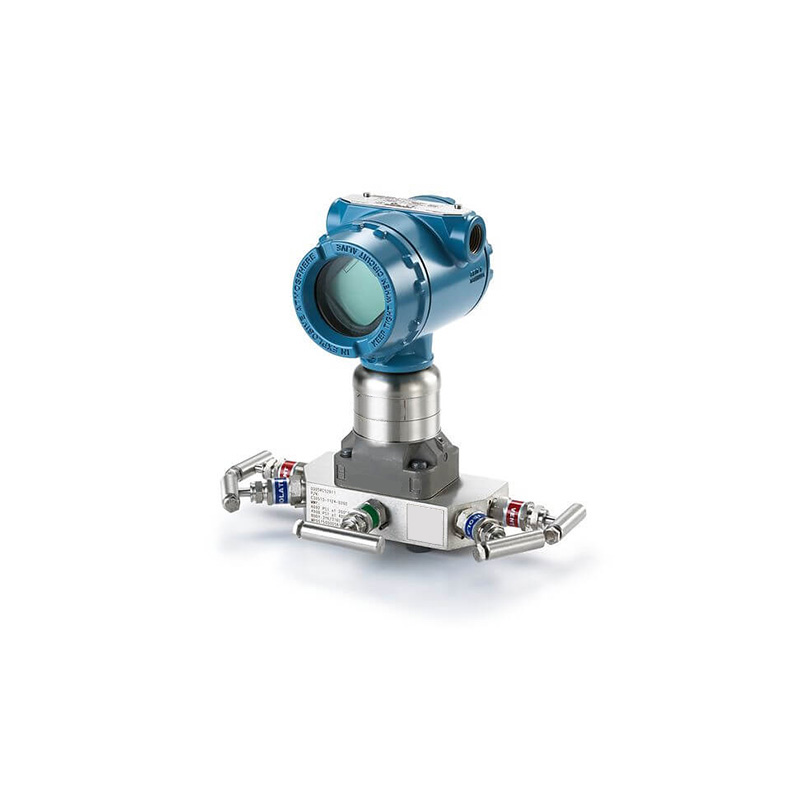
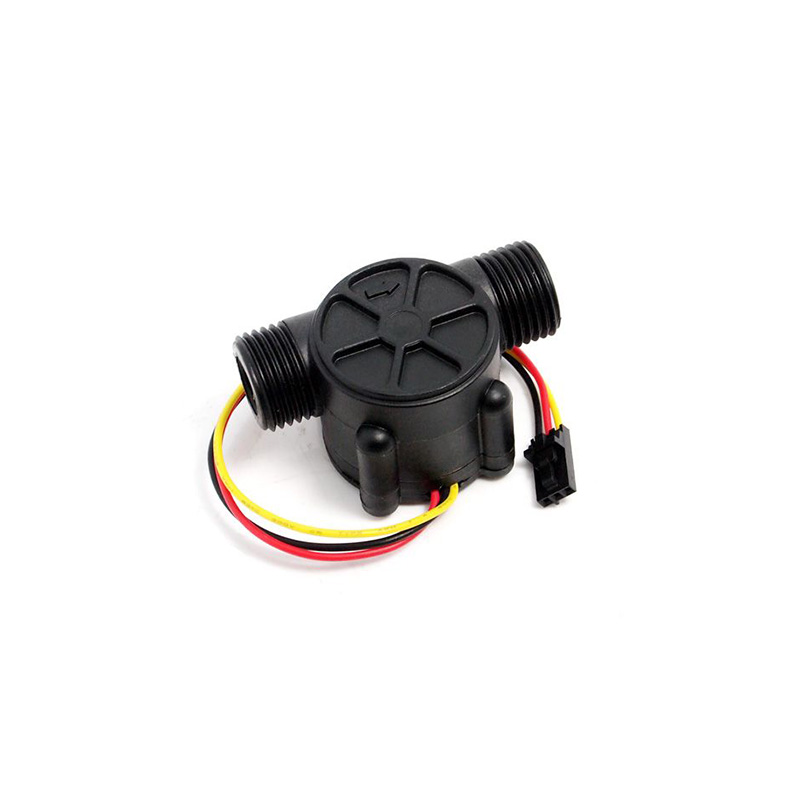
Industrial sensors in power plants are not commodity purchasesA replacement pressure transmitter arrives two days before a turbine restarts, but the supplier cannot confirm the output signal, hazardous-area approval, or calibration traceability. The part looks close enough on the datasheet, yet the controls engineer will not release it for installation because the loop cannot be validated.That is the real buying environment for industrial sensors in power plants. The purchase is not just a part number transaction. It affects starts, trips, derates, safety loops, emissions compliance, maintenance planning and outage duration.Generic sensor selection advice rarely helps procurement teams in that situation. Power-plant buyers need to know what to demand from suppliers before a sensor reaches receiving inspection, not after the maintenance team opens the box. Five qualification gates for every critical industrial sensor supplier should pass before approval.Why power-plant sensor buying is different from general industrial sensor buyingThe buying risk is in the loop, not the deviceIndustrial sensors used in factory automation often support counting, positioning, packaging, or machine guarding. Those applications matter, but the procurement risk profile is different. In a power plant, a pressure transmitter, vibration probe, RTD, thermocouple, flow meter, gas detector, or level transmitter can sit inside a control loop that protects availability.A wrong sensor range creates nuisance alarms. A slow response time affects trip logic. A missing hazardous-area certificate blocks installation near fuel gas equipment. A substitute with the wrong output signal turns a simple MRO purchase into a controls rework request.What procurement must verify before price comparisonPower generation exposes instrumentation to conditions that many catalog pages treat as secondary details. Turbine compartments, generator skids, cooling systems, lube oil systems, transformers and outdoor balance-of-plant areas expose sensors to heat, vibration, moisture, electrical noise, corrosive atmospheres and limited maintenance access.Procurement teams also work under schedule pressure. During an outage, a sensor is not simply backordered. It is a schedule risk. Every missing certificate, unclear cross-reference or unsupported alternate consumes engineering review time that the outage plan did not reserve.The practical question is not only whether the industrial sensor measures the right variable. The better question is whether the supplier can prove the sensor fits the asset, loop, environment, documentation package, and delivery window.Map sensor requirements to the power-plant asset before evaluating suppliersPower-plant sensor procurement should start with the asset, not the sensor family. A pressure sensor on a fuel gas skid, a differential pressure transmitter across an air filter and a cooling water pressure transmitter all measure pressure. They do not carry the same installation risk, documentation burden, or failure consequence.Asset mapping forces procurement and engineering teams to define the service before requesting a quote. The RFQ should identify the equipment package, tag number, process media, normal operating range, alarm or trip function, required output, environmental exposure, and existing control-system interface.This matters because suppliers often quote from a product category, while plants buy a loop. A part that satisfies the measurement range still fails the application if the process of connection, response time, enclosure rating, hazardous-area approval or calibration data does not match the installed requirement.Asset-level mapping prevents procurement from treating every pressure, flow or temperature sensor as interchangeable.Gas turbine and steam turbine sensor requirementsGas turbine and steam turbine sensor requirements start with reliability under heat, vibration and fast transient conditions. Turbine packages use sensors for bearing temperature, vibration, exhaust temperature, speed, lube oil pressure, fuel gas pressure, enclosure temperature, inlet conditions and start permissive.For LM2500, LM6000, heavy-duty gas turbines and steam turbine trains, procurement should demand more than a matching part number. Suppliers should confirm measurement range, response time, probe length, mounting interface, cable specification, connector type, shielding and compatibility with the installed monitoring or control system.A substitute vibration probe or speed sensor that physically fits the mounting location still needs verification against the existing monitor, extension cable, calibration standard and trip logic. Equivalent is not acceptable unless the supplier proves form, fit, function, and signal behavior.Generator, transformer, and electrical-system sensor requirementsGenerator and transformer sensors introduce different sets of requirements. Winding temperature, bearing vibration, generator ventilation, current sensing, voltage sensing, transformer oil temperature, oil level, dissolved gas monitoring and excitation feedback all support electrical reliability.The supplier must confirm electrical compatibility, insulation environment, enclosure rating, grounding requirements, and output signal. In areas near generator switchgear or excitation equipment, electromagnetic compatibility is not optional. Sensor electronics and signal wiring must tolerate switching transients, ground potential differences and electrical noise.For digitally integrated electrical assets, procurement should also ask for communication details. A device that advertises Modbus, HART or Ethernet support still needs to register maps, configuration files, firmware details and commissioning instructions.Balance-of-plant, cooling, fuel, lube oil, and environmental systemsBalance-of-plant equipment creates many sensor purchases that delay maintenance work. Cooling water flow transmitters, lube oil temperature sensors, fuel gas pressure switches, differential pressure transmitters, level sensors, air intake filtration sensors, humidity sensors, gas detectors and emissions-related instruments all sit outside the turbine core but still affect availability.These applications often combine ordinary measurements with difficult conditions. A cooling water sensor faces moisture and corrosion. A lube oil skid sensor faces vibration, heat, and contamination. A fuel gas sensor or gas detector enters hazardous-area review.Procurement should not let those sensors move through a generic buying path. The asset service should decide the documentation package, inspection requirement, spare strategy, and supplier response expectation.Demand operating-environment proof, not just a datasheet claimA datasheet operating range is a starting point, not proof of field suitability. Power-plant buyers should demand evidence that the sensor survives the actual installation environment, including ambient temperature, process temperature, humidity, ingress exposure, vibration, shock, corrosion, dust, washdown and electromagnetic disturbance.IEC 60529 defines IP ratings for enclosure protection against dust and liquids. That rating does not replace installation reviews. A device rated for liquid ingress still needs proper glands, cable entries, mounting orientation and installation discipline. NEMA enclosure types add another layer for North American projects, especially where corrosion, oil, coolant or outdoor exposure is part of the service.Power plants expose sensors to conditions that rarely appear together in basic automation examples. A sensor mounted on a turbine skid can face elevated ambient temperature, vibration, oil mist and restricted access. A sensor near the generator switchgear can face surge, electrical noise, and grounding issues.Environmental evidence suppliers should provideSuppliers should provide datasheets showing rated operating temperature, storage temperature, process temperature limits, ingress protection, enclosure material, cable or connector rating, vibration and shock limits and corrosion-resistance information. The buyer should request the actual certificate or test basis when the rating is critical.For outdoor or washdown areas, ask how the rating was achieved. The answer should identify the enclosure, cable gland, connector, and installation requirements. An IP67 sensor body connected through an unapproved cable entry does not deliver an IP67 installation.For turbine compartments, cooling skids, fuel systems, and coastal sites, ask for material compatibility. Stainless steel, coated aluminum, polymer housings, elastomers and connector materials age differently under heat, salt, chemicals, oil and UV exposure.Application conditions that change sensor selectionThe same measurement variable changes specification when the installation moves from a clean panel to a plant asset. A pressure transmitter in a dry instrument rack is not the same procurement decision as a pressure transmitter on a vibrating fuel skid.Wet areas push the review toward ingress protection, cable sealing, drainage, and corrosion resistance. High-vibration skids require mounting integrity, connector retention, and vibration rating. Outdoor substations require temperature range, UV resistance, grounding, surge protection and enclosure suitability.Turbine enclosures and acoustic packages add serviceability concerns. A sensor that requires frequent calibration or difficult access should be reviewed against outage intervals and maintenance windows, not only purchase price.Demand measurement performance and calibration evidenceSensor performance claims must be tied to the plant control needs. Accuracy, repeatability, resolution, response time, drift, hysteresis, and measurement range do not carry equal weight in every loop. A cooling water trend sensor, a permissive switch and a trip-related transmitter require different scrutiny.Calibration evidence matters because a sensor is only useful if the plant can trust the measurement. A supplier should identify the calibration method, test points, tolerance, reference standard, calibration date, serial number and measurement uncertainty where applicable.For accredited calibration, ISO/IEC 17025 is the recognized laboratory competence standard for testing and calibration laboratories. NIST describes metrological traceability as an unbroken chain of calibrations to specified reference measurement standards. Both concepts belong in critical sensor procurement files when measurement confidence drives plant decisions.Minimum calibration documents to requestFor critical industrial sensors, request a calibration certificate that identifies the sensor's serial number, calibration date, calibration procedure, reference standard, test points, measured results, tolerance, uncertainty, and calibration status. The certificate should match the device being shipped, not a generic production batch.For pressure, temperature, flow, and vibration instruments, ask for as-found and as-left data when the device is repaired or recalibrated. This helps maintenance teams understand drift and decide whether the instrument should remain in the same service.Procurement should also request the recommended calibration interval and field calibration instructions. A sensor that needs calibration equipment the plant does not own creates a hidden maintenance cost.Performance questions suppliers should answer before approvalThe supplier should answer specific performance questions before the purchase order is released. What is the calibrated range? What is the maximum process pressure or temperature? What is the response time? What is the long-term drift? What happens if the sensor exceeds its overpressure or temperature limit?Ask how the sensor behaves at the edges of the measurement range. A device that performs well at mid-scale can still be unsuitable near alarm or trip setpoints.For replacement sensors, ask whether the quoted range, output scaling and damping match the installed loop. A mismatch forces controls changes, field recalibration or alarm rationalization work during a maintenance window.Demand control-system and signal compatibility before purchaseControl-system compatibility should be confirmed before sourcing, not during commissioning. Power plants still use a mix of DCS, SCADA, PLC, relay panels, turbine control systems, vibration monitors, and standalone skid controllers. Industrial sensors must fit that installed architecture.The basic output signal is only the first checkpoint. Procurement should confirm 4-20 mA, 0-10 V, relay output, RTD, thermocouple, pulse, frequency, HART, Modbus, Profibus, Profinet, OPC-UA, IO-Link or Ethernet communication as required by the loop. The supplier should also confirm input card compatibility, power requirements, wiring method, grounding, and shield termination.A common outage problem starts with a physically correct sensor that has the wrong electrical personality. The maintenance team receives a replacement transmitter with the right process connection and range, but the output is 0-10 V instead of loop-powered 4-20 mA. The part is not defective, but it does not belong in that loop.Supplier proof for DCS, PLC, and SCADA integrationThe supplier should provide wiring diagrams, loop-power requirements, signal scaling, communication protocol details, configuration files, and commissioning instructions. For digital devices, the buyer should request to register maps, device description files, firmware version and diagnostic data availability.For PLC and DCS integrations, confirm the input card type before quoting. Two-wire loop-powered transmitters, four-wire devices, dry contacts, NAMUR sensors, RTDs, thermocouples, and pulse outputs create different wiring and configuration requirements.Procurement should also ask who supports commissioning questions. If the supplier cannot answer wiring, scaling, and configuration questions, the plant absorbs that burden during installation.Why protocol support alone is not enoughProtocol support is not the same as usable integration. A device that says Modbus still needs the register map, baud rate, parity, addressing, data type, scaling and exception behavior. A HART device still needs device description support and loop access.Firmware matters as much as the protocol label. Plants with validated configurations should know whether the supplier is shipping the same firmware revision or an updated version. An undocumented revision change can affect diagnostics, scaling or configuration tools.Cybersecurity also enters the review for networked devices. Ethernet-connected sensors and gateways should be evaluated against the plant network architecture, access controls, patching process, and vendor support model.Demand certifications, compliance, and hazardous-area documentationCertifications should match the installed location, not the supplier's default catalog offering. Power plants contain ordinary locations, wet areas, outdoor areas, battery rooms, fuel gas areas, turbine compartments, chemical storage areas, and electrical rooms. Each location changes the compliance question.For hazardous areas, procurement should request the actual certificate, not only a catalog mark. ATEX Directive 2014/34/EU covers equipment and protective systems intended for use in potentially explosive atmospheres. OSHA 1910.307 covers electrical equipment and wiring in hazardous classified locations in U.S. workplaces.Safety-related loops need a separate review. IEC 61508 addresses functional safety for electrical, electronic and programmable electronic safety-related systems. A sensor used in a safety function should be evaluated as part of that safety lifecycle, not as a standalone commodity.Hazardous-area and safety-related applicationsFuel gas skids, turbine enclosures, gas detection points, hydrogen systems, chemical feed areas and battery rooms require location-specific review. The supplier should confirm whether the sensor is intrinsically safe, explosion-proof, non-incentive, or suitable for the classified area defined by the plant.For safety instrumented functions, the buyer should ask for the safety manual, SIL capability information, proof test interval, failure rates, diagnostic coverage, and restrictions on use. A generic transmitter installed inside a safety loop does not become safety-rated because it measures the right variable.The plant engineering authority should verify that barriers, isolators, wiring methods, and installation practices match the certified protection concept. Procurement should never treat the device certificate as a whole safety case.Compliance documents procurement should requestRequest the certificate of compliance, declaration of conformity, hazardous-area certificate, safety manual, installation manual, material certificate where applicable and factory test report. For safety-related sensors, ask for SIL documentation and proof-test guidance.The document package should identify the exact model, option codes, firmware revision, enclosure, connection type, and approval markings. A certificate for a related model of family is not enough unless the quoted configuration is clearly covered.Procurement should also confirm country or regional acceptability. ATEX, IECEx, UL, CSA and local electrical code requirements are not interchangeable by default.Demand reliability, failure-mode, and lifecycle informationReliability questions should come before price comparison. In a power plant, sensor failure rarely stays inside the instrument. It travels into alarms, permissives, trips, maintenance decisions, outage planning and operator confidence.A failed temperature sensor can block a start permissive. A drifting pressure transmitter can create false low-pressure alarms. A vibration probe with intermittent signal loss can generate nuisance turbine trips. A level sensor with poor repeatability can cause unnecessary pump cycling or missed inventory warnings.Suppliers should provide lifecycle information, not just availability on the day of quote. Ask for service life, warranty history, installed base, failure history, recommended maintenance, spare availability, repair options and obsolescence status.Failure consequences suppliers rarely disclose unless askedSuppliers often describe what the sensor measures. Procurement should also ask what happens when it fails. Does it fail high, fail low, freeze the last value, generate a fault output or disappear from the network?Those details matter during plant operation. A false high temperature signal can derate or trip equipment. A false low-pressure signal can block startup. A missed gas detection alarm creates safety exposure. A bad vibration signal forces operators to choose between protecting equipment and maintaining dispatch.Ask the supplier to describe diagnostics, fault indication, failure behavior, and recommended maintenance response. That answer should be documented before the sensor becomes a critical spare.Reliability questions to include in supplier evaluationAsk MTBF data if available, but do not stop there. Request the installed base, service history, warranty process, common failure modes, maintenance interval, and expected lifecycle status. A supplier with no service history for the application should not be treated like an approved source for critical loops.Ask whether the device is active, mature, restricted, last-time-buy or obsolete. Lifecycle status changes the stocking decision.Also ask how the supplier handles warranty replacements during outages. A warranty of credit after a forced outage does not recover lost generation or restart time.Demand replacement equivalency and obsolescence supportReplacement sensor sourcing is where many industrial buyers lose time. The original part is obsolete, the OEM package documentation is incomplete, or the installed sensor has a superseded model number. A supplier then offers an equivalent part without proving equivalency at the loop level.Equivalency must cover form, fit, function, approvals, signal behavior and documentation. Form means physical dimensions, mounting, process connection, connector and cable routing. Fit means the device can be installed without mechanical or electrical modification. Function means it performs the same measurement role with acceptable accuracy, response, output, diagnostics, and environmental suitability.Obsolescence support should include cross-reference discipline. A capable supplier can explain why the alternate is acceptable, what changed, and which plant conditions still require engineering approval.What suppliers must prove before offering an alternateSuppliers must prove the same measurement range, output signal, process connection, enclosure rating, approvals, wiring method, response time, calibration basis, and environmental rating. They should also identify every difference between the original and proposed alternate.The alternate should come with a datasheet, certificate package, wiring diagram, calibration document, and cross-reference statement. If the supplier cannot explain the difference between replacement, equivalent, and recommended substitute, the buyer should escalate the review.For high-risk loops, require engineering approval before purchasing. Procurement should not accept a substitute solely because it fits the thread and appears in stock.When a cheaper substitute creates plant riskA cheaper substitute creates risk when the saving comes from missing documentation, unclear origin, incomplete approvals, weak calibration evidence or unsupported compatibility. Counterfeit and gray-market sensors create the same problem: the plant cannot verify what it is installing.A low-cost sensor is not a low-cost decision if it causes a failed start, commissioning delay or trip investigation. For critical applications, authenticity, traceability and supplier accountability matter as much as unit price.The right comparison is total procurement risk, not line-item cost.Demand availability, lead-time, and critical-spares supportAvailability is a technical issue when the sensor protects a critical asset. A sensor with perfect specifications and a 16-week lead time does not help a plant facing a forced outage, hot-gas-path inspection, data center generator test or urgent restart.Critical-spares planning should identify which sensors deserve stock review before failure. Prioritize instruments tied to startup permissives, turbine protection, generator availability, lube oil systems, fuel systems, cooling systems, emissions compliance and safety alarms.Procurement should ask suppliers for current stock, production lead time, minimum order quantity, expedited options, replacement availability and documentation turnaround. The supplier's ability to ship the part is only one part of readiness. The ability to ship the correct documents matters just as much.Sensor spares that deserve critical-spares reviewPower plants should review spares for vibration probes, speed sensors, pressure transmitters, differential pressure transmitters, RTDs, thermocouples, level transmitters, gas detectors, flow meters, temperature switches, pressure switches and generator monitoring sensors.The review should consider asset criticality, failure history, supplier lead time, installed base, interchangeability and documentation requirements. A common sensor used across multiple skids deserves different stocking logic than a one-off legacy device.For high-consequence loops, stock the sensor with the required certificate package, not just the hardware.Supplier commitments to demand before an outageBefore an outage, ask suppliers to confirm lead time, stock status, quote validity, documentation availability, warranty handling, emergency support, and approved alternates. The confirmation should be written into the procurement file.Ask whether the quoted sensor ships configured or requires field setup. Configuration time belongs in the outage schedule.Also ask who answers technical questions during installation. A distributor that can only forward emails to a factory after the outage starts is not a response plan.Build the supplier RFQ around acceptance criteria, not product names aloneA strong industrial sensor RFQ tells the supplier how the plant will judge acceptability. A weak RFQ only lists the product name, manufacturer, and quantity. That approach works for low-risk consumables, but it fails critical instrumentation.The RFQ should include tag number, service description, asset name, process media, measurement range, output signal, power requirement, process connection, enclosure rating, hazardous-area classification, calibration requirement, documentation requirement, delivery date and approved alternate rules.The buyer should also state whether substitutes are allowed. If alternates are allowed, the supplier must provide a cross-reference sheet and identify every difference from the requested model.Technical fields the RFQ should includeThe technical RFQ should include the tag number, equipment package, service description, process media, normal and maximum operating conditions, measurement range, calibrated range, output signal, process connection, wetted material, enclosure rating, ambient conditions, cable or connector type and hazardous-area requirement.For control-system integration, include the DCS, PLC, SCADA, turbine control, or skid controller interface. Include input card type if known.For documentation, specify datasheet, wiring diagram, calibration certificate, certificate of compliance, test report, safety manual, installation manual and cross-reference statement for alternates.Commercial and support fields the RFQ should includeThe commercial RFQ should request stock status, production lead time, shipping origin, country of origin, warranty period, return policy, minimum order quantity, expedited shipping option, and quote validity.Support questions also belong to the RFQ. Ask whether the supplier provides configuration support, documentation support, startup assistance, or direct factory escalation.For obsolete or hard-to-find sensors, ask for lifecycle status and replacement path. The supplier should identify whether the part is active, superseded, repaired, refurbished, surplus or unavailable.Common mistakes when buying industrial sensors for power plantsMistakes that delay installationThe most common mistake is buying part numbers without verifying the installed service. Part numbers drift through revisions, option codes, firmware changes, process connections and approval packages. A copied part number from an old purchase order does not always define the current requirement.The second mistake is treating output compatibility as an installation detail. It is a procurement requirement. A 4-20 mA transmitter, RTD, thermocouple, relay output, Modbus device and HART-enabled transmitter all create different loop requirements.The third mistake is separating documents from delivery. Calibration certificates, compliance documents, wiring diagrams, and installation manuals should be part of the order requirement.Mistakes that create plant riskThe highest-risk mistake is accepting alternates without a cross-reference review. A cheaper equivalent with the wrong range, slower response, missing approval or different connector becomes expensive when maintenance discovers the mismatch in the field.Another mistake is ignoring lead time until failure. Sensors that support start Permissives , trips, emissions, gas detection, cooling, fuel and lube oil systems deserve critical-spares review before the next outage.Procurement should treat those mistakes as process failures, not individual oversights. A better RFQ template and supplier scorecard prevent most of them.Quick checklist: what to demand from industrial sensor suppliersSupplier evidence to requestAsset-level fit: equipment package, service, process media, operating range, installation environment and control-system interface.Measurement proof: accuracy, repeatability, response time, calibrated range, drift information and calibration certificate details.Environmental proof: IP rating, NEMA enclosure type where required, temperature limits, vibration rating, material compatibility, connector suitability and installation requirements.Compliance documentation: hazardous-area certificates, declarations of conformity, safety manuals, installation manuals, material certificates and test reports where applicable.Integration evidence: wiring diagrams, output signal confirmation, input card compatibility, communication details, register maps, configuration files, and firmware information.Commercial commitments to confirmReliability and lifecycle data: service life, failure history, recommended maintenance, warranty, repair options, installed base and obsolescence status.Replacement discipline: form-fit-function comparison, approval coverage, range match, output match, connection match and written difference disclosure for alternates.Outage readiness: stock status, lead time, expedited shipping, documentation turnaround, technical support and emergency sourcing options.Supplier accountability: the supplier should prove the sensor is correct before shipment. Otherwise, the risk of transfers to the plant.The right supplier reduces sensor risk before the part reaches your plantThe best sensor procurement decision is made before the quote is approved. Once the wrong device reaches the receiving dock, the plant has already lost time. Engineering must recheck the datasheet; maintenance must delay installation, and procurement must reopen the supplier's conversation under schedule pressure.A stronger decision framework starts with five gates: asset fit, measurement proof, control-system compatibility, compliance documentation, and lead-time readiness. If a supplier cannot pass those gates before shipment, the sensor is not ready for a critical power-plant application.Partner with eINDUSTRIFY for Industrial Sensors for Power PlantsFor hard-to-source industrial sensors, obsolete replacements, critical spares or outage-driven requirements, we can help align the RFQ around the right technical and commercial details. Submit the tag number, measurement range, output signal, application, documentation requirements and lead-time target through eINDUSTRIFY Request a Quote process so the sourcing review starts with the information suppliers need.FAQs about industrial sensors for power plantsWhat industrial sensors are most important in a power plant?The most important industrial sensors are the ones tied to equipment protection, startup permissives, safety alarms, emissions, and plant availability. Common examples include pressure transmitters, temperature sensors, RTDs, thermocouples, vibration probes, speed sensors, flow meters, level transmitters, gas detectors, and generator monitoring sensors.Criticality depends on the asset and loop. A standard HVAC temperature sensor does not carry the same risk as a turbine vibration probe or fuel gas pressure transmitter.What documents should a supplier provide with industrial sensors?For critical applications, suppliers should provide a datasheet, calibration certificate, certificate of compliance, applicable hazardous-area certificate, installation manual, wiring diagram, warranty terms and test report where required.The documents should match the exact model and configuration shipped. For calibrated instruments, the certificate should identify serial number, calibration date, test points, tolerance, uncertainty, and reference standard.How do you know if a replacement sensor is truly equivalent?A replacement sensor is equivalent only when it matches the original requirement at the application level. That includes measurement range, calibrated range, output signal, process connection, mounting, enclosure rating, approvals, wiring, response time and documentation.A supplier should provide a written cross-reference and identify every difference. If the sensor supports a trip, safety alarm, startup permissive or hazardous-area service, engineering approval should come before purchase.Do power-plant sensors need hazardous-area certifications?They need hazardous-area certifications when installed in classified locations, such as areas with flammable gases, vapors, combustible dusts, or other explosive atmosphere risks. Fuel gas skids, turbine enclosures, hydrogen systems, chemical areas, and battery rooms often trigger this review.The required approval depends on the plant location, area classification, protection method, and governing code. Procurement should request the actual certificate, not only a catalog description.Why should lead time matter when buying industrial sensors?Lead time matters because many sensors support critical plant functions. A failed sensor can block startup, delay an outage, force temporary controls work or keep equipment unavailable while the plant waits for a replacement.For high-risk loops, plants should review spare stock before failure. The right spare strategy includes the sensor, calibration certificate, compliance documents, and verified replacement path.Can industrial sensors cause a forced outage?Yes. A failed, drifting, misconfigured or incompatible sensor can cause a forced outage when it feeds trip logic, startup permissive, safety alarms or equipment protection systems. A false signal can be as disruptive as a real process upset.The risk increases when suppliers provide substitutes without proving range, output, response time, compatibility, and documentation. Sensor procurement should treat critical loops as reliability decisions, not simple catalog purchases.
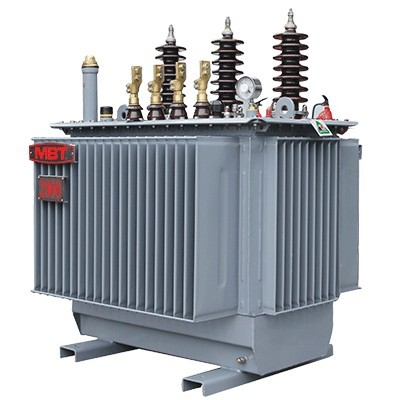
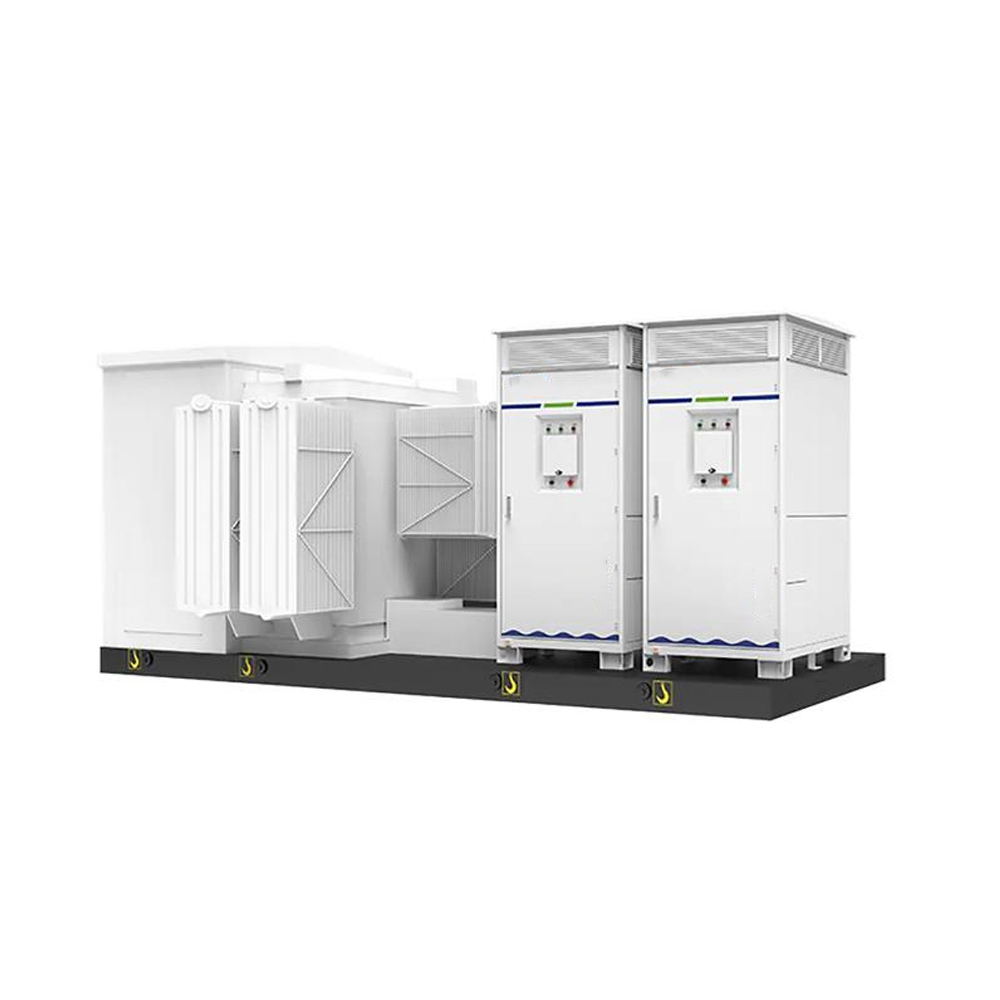
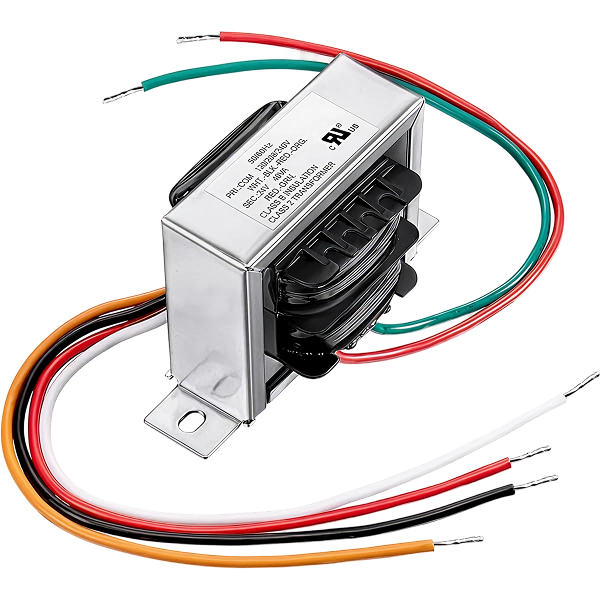
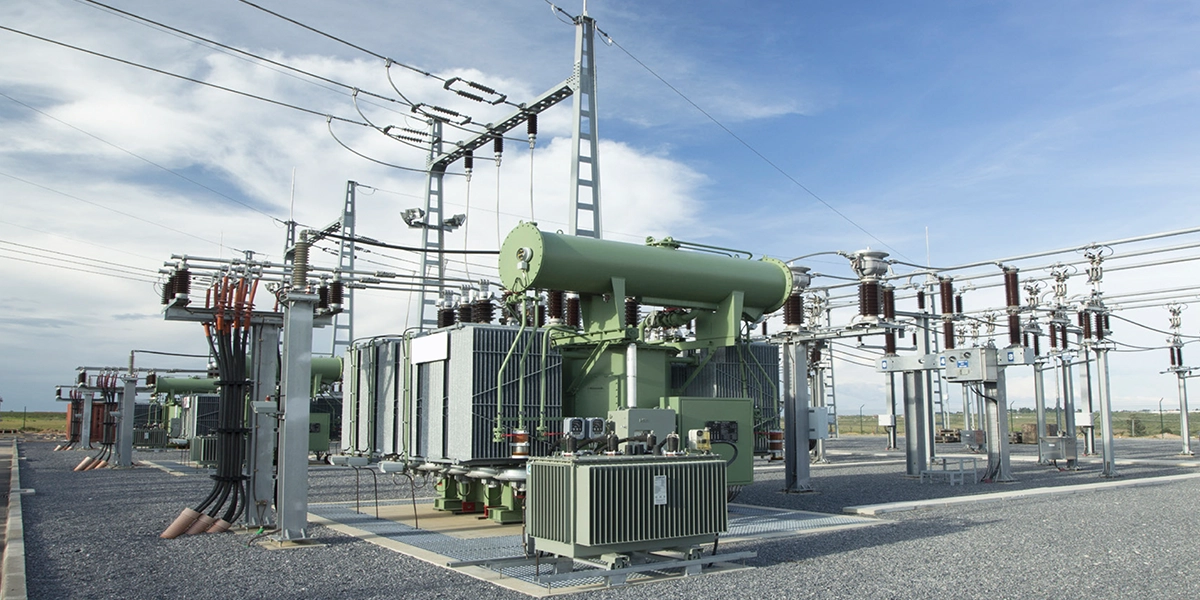
A combined-cycle plant completed a major outage on schedule, until the replacement distribution transformer failed to load acceptance testing three days before restarting. Root cause is dielectric insulation rated for 60 Hz installed in a 50 Hz grid environment. A competent factory acceptance test would have caught it. The cost of re-sourcing, re-shipping, and extending the outage window exceeded the original transformer budget by a factor of three. That scenario repeats itself across power generation, industrial facilities, and utility networks every year. Not because engineers do not understand transformers, but because cost pressure compresses the qualification process at precisely the moment when technical rigor matters most. This blog addresses specific decision points in the procurement cycle where cost and quality diverge, and where the right technical framework keeps them aligned. Core Electrical Parameters That Cannot Be Negotiated Down Four parameters are non-negotiable on any power grid transformer specification: rated MVA capacity, voltage ratio, impedance percentage, and insulation class. Rated MVA capacity: It must be specified at maximum continuous load, not average load. IEC 60076-1 defines rated power as the apparent power the transformer can supply continuously without exceeding temperature rise limits. Per the Montsinger rule in IEEE C57.91, insulation life drops by roughly 50% for every 8 degrees Celsius sustained above the rated temperature. Impedance Percentage: It directly affects fault current contribution and voltage regulation. A distribution transformer with 4% impedance on a bus designed around 5% increases fault current to downstream equipment by approximately 20%, a figure that can exceed the interrupting capacity of installed breakers. This parameter must be coordinated with the protection study, not selected independently. Insulation class: It is where gray-market units most commonly deviate from specifications. IEC 60085 classifies electrical insulation by thermal endurance. Class F is rated at 155 degrees Celsius and Class H at 180 degrees Celsius. A unit marked Class F assembled with Class B materials (130 degrees Celsius) passes visual inspection and initial testing. The failure surfaces under sustained high-load conditions. Specification Gaps That Create Field Problems Three factors are routinely omitted from transformer specifications because they require site-specific engineering input: cooling class, altitude derating, and harmonic load profile. Cooling class, per IEC 60076-2, uses a four-letter designation (ONAN, ONAF, OFAF, OFWF) describing the cooling medium and circulation method. An ONAN transformer rated at 30 MVA installed in an enclosure without adequate ventilation clearance can derate to 24 MVA at the same ambient temperature, a 20% capacity reduction. Altitude derating applies above 1,000 meters for air-cooled units. IEC 60076-1 Section 6 requires reduced permissible temperature rise at 2,000 meters, which effectively reduces capacity. Industrial sites in mountainous regions, including mining operations and high-altitude power plants, regularly see transformer failures that trace back to this omission. Harmonic distortion from variable frequency drives, rectifiers, and switched-mode power supplies increases effective transformer loading beyond what the fundamental frequency current suggests. IEEE C57.110 provides the K-factor calculation methodology. A transformer procured without K-factor specification for a facility running a significant VFD load is operating outside its thermal design envelope from day one. Total Cost of Ownership: Why Acquisition Price Is the Wrong Number to Optimize The purchase price of an industrial transformer represents 15 to 25% of total cost of ownership across a 25-to-35-year service life. Procurement decisions made on acquisition cost alone are optimizing the least significant cost variable. Building a TCO Model Before the RFQ A transformer TCO model has three major cost components: acquisition cost, no-load loss cost, and load loss cost. Load losses are typically the largest over the operating life. No-load losses occur continuously whenever the transformer is energized, regardless of load. A distribution transformer with 500 W of no-load loss running 8,760 hours per year consumes 4,380 kWh annually in core losses alone. At USD 0.08 per kWh, that is USD 8,750 over 25 years from one transformer, before load losses are calculated. Load losses scale with the square of the current. For a 1,000 kVA transformer with 10 kW rated load losses at 70% average load factor and USD 0.08 per kWh, annual load loss cost equals USD 3,426. Over 25 years, that is USD 85,650 from one unit. Specifying transformers to IEC 60076-20 efficiency tiers typically adds 5 to 12% to acquisition cost while reducing lifetime energy cost by 20 to 35%. The payback period on the efficiency premium, in most industrial applications, is 2 to 4 years. Three Procurement Practices That Create Hidden Liability Waiving factory acceptance testing: IEC 60076-1 Clause 11 defines the routine tests every transformer must pass before shipment: ratio measurement, vector group verification, no-load loss measurement, impedance voltage measurement, and AC voltage test. Waiving FAT to save the cost of a witness engineer (typically USD 3,000 to 8,000) removes the only independent verification that the transformer matches its test certificate. Single-source procurement without a competitive baseline: Establishing a minimum three-vendor qualified list creates price competition without sacrificing technical qualification standards. Single-source procurement is often a matter of established practice rather than a technical necessity. Deferring vendor qualification until after purchase order issuance: Verify before the PO is placed: winding material (copper versus aluminum), core material grade (M2, M3, or M4 grain-oriented silicon steel per ASTM A876), insulation drying process, and post-winding test protocols. Voltage Transformer Specifications in Mixed-Frequency and Variable-Load Environments The term voltage transformer covers both instrument transformers used for metering and protection (per IEC 61869-3) and voltage-ratio power transformers used in transmission and distribution. Confusion between these two categories produces specification errors that affect both safety system performance and power quality. Instrument Voltage Transformers in Protection Circuits IEC 61869-3 defines accuracy classes 0.1, 0.2, 0.5, 1, 3, and 5 for metering VTs, and classes 3P and 6P for protective VTs. A class 3P protective VT has an acceptable voltage error of plus or minus 3% at 2% to 100% of rated voltage. For differential protection on generator step-up transformers, 3P class VTs can introduce false operating conditions during external faults. VT accuracy specifications apply only at or below the specified accuracy burden. A 15 VA accuracy burden VT connected to a relay scheme with 30 VA actual burden operates outside its accuracy specification from day one of service. Tap Changers and Voltage Regulation On-load tap changers (OLTCs) are specified on industrial transformers where supply voltage variation exceeds plus or minus 5%. IEC 60214-1 covers OLTC application requirements for international applications; IEEE C57.12.10 is the North American equivalent. Specifying an OLTC at initial procurement adds 8 to 15% to transformer acquisition cost. Retrofitting an OLTC to a fixed-tap transformer after installation requires transformer replacement. This decision must be made at the specification stage, informed by a power quality study of the supply point. Qualifying Transformer Vendors in a Global Supply Market The transformer supply market spans North America, Europe, India, China, South Korea, and Brazil. Quality levels range from ISO-certified facilities with type-tested designs to workshops with no third-party quality oversight. Price differentials between the extremes can reach 40 to 60%. What Factory Qualification Actually Requires Factory qualification means physically visiting the facility or engaging with a third-party inspection agency. Four components cannot be evaluated from a vendor questionnaire alone. Winding shop practice: Coil winding should be performed on precision winding machines with tension control. Electrical clearances between HV and LV windings must meet IEC 60076-3 minimum clearance requirements for the specified voltage class. Core assembly quality: Grain-oriented silicon steel laminations must be cut on precision laser or CNC shears to minimize burr formation that increases inter-laminar eddy current losses. Step-lap joints at core corners reduce no-load losses compared to butt-lap joint construction. Drying and impregnation process: Transformer insulation must be dried to below 0.5% moisture content before oil filling, per IEC 60076-1 Annex A. Facilities relying only on oven drying without vacuum oil impregnation produce units with residual moisture that accelerates insulation aging. Test laboratory calibration: The instruments used for routine and type testing must carry calibration certificates traceable to a national metrology standard. Reading Type Test Certificates Correctly A type of test certificate, per IEC 60076-1 Section 10.2, documents dielectric tests, temperature rise tests, and lightning impulse tests performed on a prototype unit. The certificate is only valid for transformers built to the same design. Three verification steps: confirm the test was performed by an accredited independent laboratory (not the vendor's own facility), confirm the tested unit parameters match the quoted unit, and confirm the certificate date. Most standards bodies recommend repeat type testing every 5 to 7 years. Type test certificates from accredited independent laboratories such as KEMA (DNV), CESI, or PEHLA provide a verification chain that is not subject to commercial pressure. Industrial Transformer Applications: Matching the Design to the Environment Three environments consistently produce specifications of mismatches: oil and gas processing facilities, mining operations, and manufacturing plants with high harmonic content. Hazardous Area Transformer Requirements: Oil and gas facilities requiring transformers installed in Zone 1 or Zone 2 in hazardous areas per IEC 60079-10-1 area classification cannot use standard liquid-filled designs. Cast-resin dry-type transformers to IEC 60076-11 are the appropriate technology for indoor hazardous area installation, eliminating the mineral oil ignition risk. IEC 60076-11 Clause 12 requires short-circuit withstand testing at 1.2 times rated current for 2 seconds, eliminating designs that rely on external protection to clear faults before thermal damage occurs. A gas compression station that replaced liquid-filled pad-mounted transformers with correctly specified cast-resin units eliminated the oil containment berm requirement, reduced insurance premium classification, and reduced maintenance intervals from annual oil sampling to five-year visual inspection. The capital cost premium for cast-resin was recovered in containment infrastructure savings within 18 months. Mining Applications and Mechanical Robustness: Open-cut and underground mining operations subject transformers to vibration, dust, temperature cycling, and power quality disturbances that standard distribution transformer specifications do not address. Key additions for mining specifications: seismic and vibration certification, IP65 minimum enclosure protection for outdoor surface installations, tropical climate insulation treatment per IEC 60076-1 if the site has annual average relative humidity above 75%, and overload capability per IEC 60076-7 to accommodate haul truck charging stations, shovel drives, and crusher motors operating at 150 to 200% of rated current during startup. A transformer installed at an underground copper mine portal in South America failed within 14 months, not from electrical overload but from resonant vibration between the transformer tank and the compressor room structure at 25 Hz. A vibration isolation analysis at the specification stage, including anti-vibration mounting feet rated for the expected g-load, would have added less than USD 800 to the unit cost and prevented a USD 140,000 unplanned replacement. Transformer Coils, Windings, and the Quality Indicators Most Buyers Miss Transformer coils are the wound copper or aluminum conductors that constitute the HV and LV windings. They are where manufacturing quality has the most direct impact on transformer life and loss of performance. They are also invisible to receive inspection once the transformer is assembled and sealed. Copper Versus Aluminum Windings: Aluminum has approximately 61% copper electrical conductivity, requiring larger cross-sectional area for equivalent resistance, producing larger transformers for the same rating. Aluminum costs roughly 20 to 30% of copper per unit weight, but the larger cross-section required reduces the economic advantage significantly. Copper has significantly better creep resistance than aluminum at elevated temperatures reached during short-circuit current flow. The short-circuit withstand test per IEC 60076-5 exposes this difference. Aluminum-winding transformers are acceptable in low-fault-probability applications with stable load profiles. In industrial applications with frequent motor starting events or frequent fault exposure, copper windings reduce the probability of winding deformation and connection failure over the service life. Winding Insulation Condition and End-of-Life Assessment: The degree of polymerization (DP value) of paper insulation is the primary indicator of remaining insulation life. New Kraft paper has a DP value of approximately 1,000 to 1,200. At DP 200, the insulation is at end of mechanical life and will fracture under the mechanical stress of a through-fault event. IEC 60422 and IEC 60599 together provide the framework for assessing transformer insulation condition from oil samples. The difference in price between a surplus transformer with documented dissolved gas analysis history and one without is typically 10 to 15%. Acquiring without documentation is a risk of acceptance without quantification, not cost reduction. Distribution Transformer Procurement for Grid-Connected Industrial Facilities Distribution transformers represent the largest volume of transformer procurement activity in industrial facilities. They are also the segment where procurement teams most commonly treat the equipment as a commodity, with predictable quality outcomes. Efficiency Standards: What the Regulations Actually Require In the United States, distribution transformer efficiency requirements are codified in DOE 10 CFR Part 431, covering liquid-immersed units from 10 kVA to 2,500 kVA and dry-type units from 15 kVA to 2,500 kVA. The European equivalent, EU Regulation 548/2014, establishes Tier 2 efficiency levels effective July 2021 requiring further reduction of no-load and load losses. International procurement requires explicit verification that the specified unit meets the regulatory efficiency requirements of the installation country. Customs clearance does not verify efficiency compliance; that obligation falls on the importer of record. Pad-Mounted Versus Unit Substation: The Configuration Decision Pad-mounted transformers per IEEE C57.12.26 are cost-effective for facilities with multiple distributed load centers and available outdoor space. Unit substations per IEEE C57.12.28 integrate incoming switchgear, transformer, and outgoing distribution in a single factory-assembled package. The unit's substation premium over separate components is typically 15 to 25%, but labor savings on large installations frequently make it the lower total-installed-cost option. Substituting pad-mounted unit substation late in the procurement cycle to achieve cost savings creates engineering rework that typically costs more than the substitution saves. Power Grid Transformer Procurement: Transmission-Class Considerations Procurement of large power transformers for transmission-class applications, units above 10 MVA at voltages of 69 kV and above, involves lead times of 26 to 52 weeks for standard designs and up to 18 months for custom units. Prices range from six to eight figures. The consequence of specification error is measured in years of service interruption. Why Lead Times Are Structural The long lead times for large power grid transformer procurement reflect physical manufacturing constraints of units weighing 50 to 500 metric tons. Core steel must be cut, annealed, and laminated before winding begins. Windings must be dried and impregnated before core assembly. IEC 60076-1 Annex C provides guidance on the minimum manufacturing and test cycle. The minimum is a physically lower bound, not a target. Emergency procurement of a spare transmission transformer from a rental provider while the permanent unit is manufactured typically costs USD 15,000 to 50,000 per month in rental and logistics fees, before installation and energization costs. Factory Acceptance Testing for Transmission-Class Units The standard test scope per IEC 60076-1 Section 10.2 includes routine tests and should include special tests for critical applications. Partial discharge measurements per IEC 60076-3 Annex A are particularly significant. PD levels exceeding 100 picocoulombs at operating voltage indicate insulation voids that will propagate under service conditions. PD failures at the factory stage are recoverable. PD failures in service on an energized transmission transformer are not. The procurement contract should specify in the technical appendix the required test scope, the acceptance criteria for each test, the right to witness testing, and the consequences for test failures. Leaving these terms to be negotiated after a failure consistently favors the manufacturer. Outage Spares and Emergency Replacement Transformers Planned spare transformer procurement, acquiring identical or interchangeable spare units before the installed unit fails, is the only reliable way to manage transformer failure risk in facilities where failure means production loss. Universal Transformer Programs Several electric utilities and large industrial operators have standardized transformer specifications across a fleet so that a single spare unit can serve multiple locations. Research published in IEEE Transactions on Power Delivery documents that utilities operating standardized transformer fleets achieved 30 to 60% reductions in spare transformer inventory value while improving mean time to restoration after transformer failure. Asset Documentation That Enables Future Procurement The minimum documentation package for each installed transformer should include: The original specification The factory test certificate with actual test results, not just pass or fail notation The as-built nameplate data, which may differ from specified data if the manufacturer adjusted the design during production Commissioning test results including initial oil sample analysis Facilities with this documentation can issue an exact-replacement RFQ to multiple vendors simultaneously when a transformer fails. Facilities without it must engage an engineer to re-derive the specification from the installed unit, adding 4 to 8 weeks to the procurement cycle at a time when production is waiting for the replacement unit. The Decision Framework Before the First RFQ Every technical framework from TCO modeling to IEC and IEEE specification compliance to vendor qualification to FAT requirements, is a pre-RFQ activity. The procurement outcome is largely determined before the first quotation is received, not by the commercial negotiations that follow. This is where eINDUSTRIFY adds value by helping industrial buyers treat transformer procurement as a strategic asset acquisition decision, not a routine purchasing transaction. While purchasing often focuses on upfront cost, asset acquisition considers useful life, total cost of ownership, residual value, maintenance exposure, compliance risk, lead time reliability, and the operational impact of failure. Partner with eINDUSTRIFY for Efficient Power Transmission Procurement For procurement teams managing transformer requirements across power generation, data centers, or industrial applications, eINDUSTRIFY connects you to a verified network of qualified transformer suppliers with the technical procurement support to match specifications to the right source. Explore the Transformers category at eindustrify.com or submit a Request for Quotation to receive structured quotes from qualified vendors aligned to your exact specification.
A Peaker plant can lose a startup window because condensation inside a poorly specified panel trips a protection circuit before the turbine reaches synchronization speed. For procurement engineers, plant managers, and EPC contractors, that is not a cabinet problem. It is an uptime, safety, and commissioning risk. An electrical enclosure protects the devices that allow power generation assets to start, operate, trip, isolate, communicate, and recover. The enclosure around a relay panel, PLC system, terminal block, breaker assembly, or network rack determines how well those devices survive heat, dust, moisture, vibration, corrosion, and maintenance activity. In power generation facilities, enclosure selection is a project control decision. One wrong rating or material can turn a minor environmental exposure into a forced outage. Power Generation Sites Create Harsher Enclosure Conditions Power plants combine heat, vibration, conductive dust, chemical exposure, cable density, and outdoor equipment areas. Gas turbine packages add intake and exhaust airflow effects. Balance-of-plant areas add pumps, skids, cooling systems, transformers, and auxiliary electrical rooms. Substations and yard equipment face wind-driven rain, solar loading, ice, and airborne contaminants. Select an enclosure from the installation environment, not from the equipment list. An enclosure in a clean MCC room faces a different risk profile than one mounted near a cooling tower, turbine skid, fuel handling area, or outdoor controls station. Before purchasing, define five conditions for each enclosure location: indoor or outdoor exposure, washdown or splash risk, dust level, ambient temperature range, and corrosion source. These conditions guide material selection, NEMA rating, gasket type, cable entry design, thermal management, and inspection access. NEMA Ratings Turn Site Exposure into a Procurement Specification A NEMA enclosure rating gives buyers and engineers a common language for environmental protection. Type 1 suits basic indoor protection. Type 3R is used outdoors where rain and sleet protection are required. Type 4 adds protection against splashing and hose-directed water. Type 4X adds corrosion resistance. Type 12 is used indoors where dust, falling dirt, and dripping non-corrosive liquids are concerns. NEMA 250 covers enclosure requirements for electrical equipment rated 1,000 volts or less. The critical mistake is assuming that a higher number automatically means better protection for every application. NEMA types are application-specific, not a simple hierarchy. A procurement package should name the required type, installation location, certification expectations, material, finish, and any site-specific accessories such as drip shields, sun shields, drains, heaters, or ventilation. For power generation projects, the target is not over-specification. It is a defensible specification. If an enclosure protects turbine controls, excitation equipment, protection relays, or auxiliary power circuits, the rating must match the consequence of exposure and the cost of downtime. Steel Enclosures Protect Against Impact, Cable Stress, and Installation Abuse Steel is often selected for power generation applications because it offers rigidity, grounding continuity, mechanical strength, and predictable fabrication. In electrical rooms, skid-mounted packages, and maintenance-heavy areas, steel resists deformation from cable pulling, tool contact, door cycling, conduit load, and panel-mounted component weight. Painted carbon steel works well in many indoor electrical spaces when the coating system matches the environment. Stainless steel is preferred where corrosion, washdown, chemical exposure, or coastal conditions threaten the enclosure of body and hardware. Galvanized or coated steel can suit utility areas where durability and cost control both matters. Procurement teams should confirm material grade, wall thickness, paint or coating specifications, gasket material, door hardware type, gland plate details, and back panel load capacity. Those details determine whether the enclosure remains square, sealed, grounded, and serviceable after installation. Junction Boxes Protect Cable Terminations from Becoming Failure Points A junction box does more than house wire connections. It protects terminations, splices, terminal blocks, shield drains, and field cable transitions from mechanical strain and environmental exposure. In power plants, junction points often sit between equipment packages and field devices including sensors, solenoids, actuators, motors, heaters, and local instruments. Poor junction box selection creates predictable problems: overcrowded terminals, tight bend radius, difficult megger testing, unclear labeling, cable gland leaks, and mixed signal and power wiring that complicates troubleshooting. A correct box gives technicians enough room to land cables, separate voltages, read labels, isolate circuits, and reseal entries after maintenance. For EPC packages, specify spare terminals, grounding bars, gland plate material, cable entry direction, internal labeling, voltage segregation, and terminal numbering format. These details reduce commissioning delays because loop checks and continuity tests move faster when the enclosure layout supports the work. Panel Enclosures Protect Devices That Must Operate Under Fault and Load Conditions A panel enclosure supports breakers, disconnects, fuses, meters, relays, contactors, terminal strips, and other distribution or protection components. In power generation facilities, these devices support auxiliary systems, motor circuits, heater circuits, lighting panels, battery systems, UPS feeders, generator auxiliaries, and package controls. Protection depends on more than the box shell. Internal spacing affects heat rise, wiring access, arc-flash boundaries, device replacement, and future expansion. Door-mounted devices need sufficient depth and wiring protection. Cable entry locations must support feeder routing without forcing tight bends or field modifications. The enclosure must also allow safe inspection, lockout, and labeling. During procurement, review the general arrangement of drawing before release. Confirm usable internal depth, component spacing, breaker handle access, door swing clearance, short-circuit rating documentation, and field wiring zones. A panel that looks acceptable on a bill of materials can fail the project once conduits, cable trays, and maintenance access are factored in. Control Cabinets Protect the Logic Layer of Power Generation Assets A control cabinet houses the automation hardware that turns equipment into an operating system: PLCs, I/O cards, relays, marshalling terminals, network switches, power supplies, protocol converters, fiber equipment, and human-machine interfaces. In a turbine package, BOP skid, water treatment system, or data center backup power system, control hardware needs stable temperature, clean wiring, and predictable access. The primary design concern is separation. Low-voltage control wiring, Ethernet, analog signals, and instrumentation loops must not be crowded against power conductors or noisy switching devices. Poor segregation increases troubleshooting time and can introduce communication instability, nuisance alarms, or intermittent signal behavior. A useful procurement review checks DIN rail space, wire duct capacity, grounding architecture, shield termination method, cabinet cooling, filter access, service lighting, network cable bend radius, and spare I/O capacity. Effective control layouts are not the densest layouts. They are the layouts a technician can safely diagnose during a startup hold point. Weatherproof Enclosures Prevent Outdoor Exposure from Triggering Outages A weatherproof enclosure protects equipment installed in outdoor or semi-outdoor locations including turbine packages, fuel systems, cooling systems, substations, containerized power modules, pump skids, transformer yards, and remote monitoring stations. Rain protection alone is not enough. Outdoor cabinets must also address condensation, UV exposure, gasket aging, wind-driven dust, temperature cycling, ice, and solar heat gain. The most common outdoor failure pattern is moisture entering through cable penetrations, door seals, or poorly restored access points after maintenance. Once moisture is inside, terminal corrosion, insulation tracking, relay issues, and nuisance trips follow. Specify outdoor cabinets with the full installation reality in mind: sun shields for high solar load, anti-condensation heaters where temperature swings are severe, breather drains where appropriate, stainless hardware in corrosive areas, sloped tops where water pooling is a concern, and gland plates that allow clean cable entry without field cutting. Rack-Mount Enclosures Protect Plant Communications and Monitoring Networks A rack-mount enclosure is used for network switches, SCADA servers, communications gateways, fiber patch panels, monitoring equipment, protection communication devices, and control room electronics. These systems do not carry the same current as power equipment, but they carry operational visibility and control. Generation facilities now depend on communications infrastructure for remote monitoring, alarms, historian data, plant controls, dispatch coordination, and condition-based maintenance. A poorly specified rack creates airflow restrictions, cable congestion, grounding issues, poor fiber management, and service delays during network faults. For rack procurement, confirm rack unit capacity, mounting depth, front and rear access, fan or cooling requirements, cable management, grounding bus, seismic or vibration expectations, power strip configuration, and fiber bend protection. A communications rack should be specified as operating infrastructure, not office furniture. Thermal Management Keeps Devices Inside Their Operating Limits Heat accelerates insulation of aging, weakens electronics reliability, and shortens the service life of power supplies, relays, drives, communication devices, and control modules. Enclosures trap heat from internal components while also receiving heat from ambient conditions, nearby equipment, solar exposure, and poor room ventilation. The target is to keep every enclosed device inside its rated operating temperature while preserving the environmental rating of the enclosure. That requires a thermal calculation, not guesswork. Fans, filters, heat exchangers, vortex coolers, enclosure air conditioners, passive vents, sun shields, and anti-condensation heaters all solve different problems. The wrong solution can break the seal, pull dust into the cabinet, or create maintenance burdens. Ask suppliers for internal heat load assumptions, maximum ambient temperature, ventilation method, filter maintenance requirements, cooling capacity, thermostat settings, and whether the cooling approach preserves the specified rating. For critical controls, include thermal checks during FAT, commissioning, and the first seasonal operating cycle. Cable Entry Design Determines Whether the Enclosure Remains Protected After Installation Many enclosure failures start after the product leaves the factory. Field-cut holes, mismatched conduit hubs, overloaded cable glands, and unsealed penetrations reduce the protection level that was originally specified. The cable entry plan must be developed before the enclosure arrives on site. Cable entry affects water ingress, grounding, strain relief, bend radius, segregation, and future maintenance. Bottom entry can reduce water exposure but complicate access to some skid layouts. Side entry can simplify routing but increase exposure to impact and weather. Top entry demands careful sealing and drip management. Procurement documents should include gland plate drawings, conduit entry zones, cable schedule references, spare penetration strategy, sealing method, grounding requirements, and field modification restrictions. This prevents the site team from solving cable conflicts with quick cuts that compromise reliability. Maintenance Access Is Part of the Protection Strategy An enclosure that is hard to inspect will not stay protected for long. Gaskets need inspection. Filters need replacement. Door hardware needs tightening. Ground straps need verification. Terminals need torque checks. Labels need to remain legible. Moisture indicators, drain points, and space heaters need functional checks. Access issues turn routine maintenance into deferred maintenance. If a cabinet is blocked by piping, opens into a cable tray, lacks clearance for a technician, or requires removing live-adjacent covers for simple inspection, the enclosure becomes a reliability of liability. For retrofit projects, select an enclosure that technicians can inspect without disrupting nearby systems. Specify the maintenance envelope early. Confirm door swing, removable panels, hinge side, lock type, filter access, lighting, document pockets, spare parts, and clearance around live equipment. For brownfield plants, verify the actual site condition rather than relying only on drawings. Documentation Reduces Commissioning Risk Enclosure documentation is not paperwork after the fact. It is the information that lets EPC teams install, inspect, test, and hand over systems without confusion. Missing drawings or incomplete documentation can delay cable pulling, protection testing, loop checks, energization, and O&M acceptance. A complete submittal should include dimensional drawings, internal layouts, material specifications, rating details, wiring diagrams, nameplate schedules, heat calculations, installation instructions, certification documents, spare parts lists, and maintenance instructions. For panelized equipment, include device schedules and terminal plans that match the as-built wiring. The procurement requirement should state when documentation is due, which documents require approval before fabrication, and which documents must be included in the turnover package. This prevents a common project problem: the enclosure ships on time, but the information needed to install and commission it arrives late. How to Specify Enclosures for Power Generation Procurement The fastest way to reduce enclosure-related risk is to standardize the procurement checklist. Each request should answer questions that affect safety, installation, commissioning, and lifecycle performance. Use this checklist before issuing an RFQ: Installation location: indoor, outdoor, skid-mounted, wall-mounted, floor-standing, control room, substation, or turbine package Environmental rating: NEMA type, IP rating if required, corrosion resistance, dust exposure, washdown exposure, and hazardous area classification if applicable Material and finish: painted steel, stainless steel, galvanized steel, aluminum, coating system, gasket material, and hardware material Mechanical design: dimensions, depth, mounting method, door swing, gland plates, back panel, lifting provisions, and access clearance Electrical design: voltage segregation, grounding, bonding, short-circuit documentation, terminal layout, wire duct space, and spare capacity Thermal design: heat load, ambient temperature, cooling method, heater requirements, filter access, and solar exposure Documentation: drawings, certifications, wiring diagrams, nameplates, maintenance instructions, and turnover requirements Commercial factors: lead time, approved manufacturers, warranty, spare parts availability, replacement compatibility, and site delivery conditions A well-written RFQ saves time because suppliers can quote the correct enclosure instead of guessing incomplete requirements. It also helps procurement compare bids on technical equivalence, not price alone. Choose Enclosures from Failure Consequence Backward The next procurement decision should start with one question: what happens if the equipment inside this enclosure fails during startup, operation, shutdown, or emergency response? If failure only creates a minor maintenance task, a standard specification can be enough. If failure blocks synchronization, trips to auxiliary systems, disables control visibility, damages protection equipment, or delays outage recovery, the enclosure deserves a higher level of technical review. Match the enclosure to the operational consequences. Then validate rating, material, thermal design, cable entry, documentation, and maintainability against that consequence. Where eINDUSTRIFY Fits into Enclosure Sourcing Power generation buyers often need more than a catalog. They need verified components, alternate sourcing, brand comparison, emergency replacement options, and supplier coordination. eINDUSTRIFY supports procurement reality through industrial supply sourcing, RFQ support, product inquiries, seller vetting, and Procurement-as-a-Service. Specifications vary by rating, material, size, mounting style, and installed environment. A buyer searching for a replacement panel, custom cabinet, outdoor terminal box, or critical spare needs confidence that the product matches the operating requirement and that supplier information is complete before purchase. For projects, outages, and maintenance programs, use eINDUSTRIFY to source enclosure options, compare alternatives, and submit RFQs for technically aligned products.Need electrical, control, or power generation enclosure options for a project, outage, or replacement requirement? Submit your RFQ through eINDUSTRIFY and source vetted industrial components with procurement support built for critical operations.
A feeder trip during a turbine restart. The standby generator fails to carry expected loads. The root cause is not the motor, transformer, or switchgear; it is a protection device that did not match the fault conditions of the system. One underrated breaker, misapplied fuse, failed fuse holder, uncoordinated relay, damaged surge protector, or missing lightning arrester is enough to turn a controlled interruption into a forced outage. For power generation facilities, data centers, utilities, manufacturing plants, and EPC-managed projects, circuit protection devices are uptime assets not basic electrical accessories. They determine whether an abnormal electrical event stays local or becomes equipment failure, arc flash hazard, commissioning delay, or emergency procurement problem.How Circuit Protection Devices Control Fault Energy Circuit protection devices detect abnormal current or voltage conditions and interrupt, isolate, or divert the fault before damage spreads. The real target is fault energy, the energy that overheats conductors, damages insulation, deforms busbars, ruptures components, and trips upstream systems. Common fault conditions in industrial facilities carry distinct risk profiles: Overloads slowly overheat equipment over time. Short circuits release destructive energy in milliseconds. Transient voltage spikes damage control electronics without stopping production immediately. Arc faults create intense heat and ignition risk inside panels, raceways, or degraded wiring systems. Selecting a breaker, fuse, relay, arc fault protector, surge protector, or safety switch by amp rating alone ignores interrupting capacity, trip curve, voltage class, coordination requirements, environmental rating, available fault current, and system criticality. Each factor determines whether a device performs correctly under the specific failure mode it is expected to control. Circuit Breakers: Ratings and Trip Behavior Must Match the System Circuit breakers protect switchboards, motor control centers, feeders, branch circuits, transformers, generator auxiliaries, pumps, compressors, HVAC loads, and control panels. A 400 A breaker with the wrong interrupting rating, mismatched trip curve, or incompatible accessories is still the wrong device regardless of how familiar the frame size looks.Selection Factor Why It Matters Interrupting capacity Confirms the breaker can safely clear available fault current Trip curve Determines reaction speed under overload and short-circuit conditions Voltage rating Ensures suitability for the system voltage class Frame and mounting style Confirms physical and switchgear compatibility Trip unit type Affects adjustability, diagnostics, and coordination Short-time withstand rating Supports selective coordination in larger systems Certifications Supports inspection, compliance, and project acceptance Lead time and lifecycle status Reduces outage and obsolescence risk Fuses, Fuse Holders, and Safety Switches: More Than the Circuit Element Fuses Fuses limit fault current before peak energy fully develops, making them effective in systems where short-circuit energy must be controlled aggressively. They commonly protect transformers, drives, motor circuits, control panels, capacitor banks, semiconductor equipment, and power distribution assemblies. A fuse must match the application's voltage, current, interrupting rating, time-current characteristics, load profile, and inrush behavior. Motor circuits, transformers, and power electronics often require different fuse classes because normal startup behavior can resemble a fault if the wrong fuse is installed. Fuse Holders The supporting hardware matters as much as the fuse element. A degraded fuse holder creates heat, poor contact pressure, nuisance trips, and voltage drops inside a panel. In high-duty industrial environments, fuse clips, terminals, insulation condition, enclosure rating, and replacement compatibility should be inspected with the same discipline as the fuse itself. A fuse holder must match fuse class, current rating, voltage rating, mounting style, and environmental conditions. Safety Switches Safety switches provide visible disconnection for maintenance, fault isolation, and load control for motors, transformers, HVAC units, pumps, and auxiliary systems. A safety switch must match the load type, enclosure requirement, duty rating, and installation environment. Treated as generic hardware, it becomes a liability in isolation safety, duty performance, and recovery time. Surge Protectors and Lightning Arresters: Preventing Silent Electrical Damage Not every power failure comes from sustained overcurrent. Transient voltage events damage sensitive electronics before a visible outage occurs, weakening insulation, degrading control boards, corrupting signals, and shortening component life. The system may continue operating until a later restart or transfer event exposes the damage. Surge Protectors Surge protectors defend PLCs, turbine controls, SCADA systems, protection relays, UPS systems, VFDs, metering devices, and data center power infrastructure from voltage spikes caused by utility switching, capacitor bank operations, generator switching, motor starts, load rejection, and internal plant disturbances. Lightning Arresters Lightning arresters serve a distinct role in systems exposed to lightning-induced surges. They divert high-voltage surge energy to ground, reducing risk of insulation breakdown, transformer damage, switchgear stress, and control system failure on outdoor or utility-connected assets. Surge protection strategy must be layered not a single device in the electrical room. Main service entrances, distribution panels, control panels, generator systems, UPS input/output points, transformer connections, outdoor assets, and critical automation cabinets each require evaluated protection coverage based on exposure level and equipment sensitivity. Arc Fault Protectors: Addressing Fire Risk Before It Becomes Equipment Loss Arc faults occur when damaged insulation, loose connections, degraded wiring, vibration, contamination, or mechanical stress creates unintended arcing. The consequence in industrial environments is not only nuisance tripping; it is heating concentration, ignition risk, enclosure damage, and personnel exposure. Arc fault protectors detect arcing signatures that do not behave like traditional overloads or bolted short circuits. They are especially relevant in control panels, auxiliary systems, aging wiring, temporary power arrangements, modular infrastructure, and facilities where vibration or environmental exposure degrades terminations over time. Device compatibility, nuisance-trip behavior, voltage class, load type, enclosure environment, and coordination with other protective devices must be evaluated before specification. Arc fault protection is not a generic add-on. Short-Circuit Protectors: Matching the Device to Available Fault Current A short-circuit protector must safely interrupt high fault current without rupturing, welding contacts, damaging enclosures, or allowing fault energy to spread upstream. This function may be performed by a circuit breaker, fuse, current-limiting device, motor protection device, or coordinated protection assembly. The critical parameter is available at fault current at the point of installation. If that current exceeds the device's interrupting rating, the protection system carries unacceptable risk; the device may fail violently, damage connected equipment or expose personnel to hazardous energy.Requirement Procurement Question Available fault current What fault current can appear at the installation point? Interrupting rating Can the device safely clear that current? Current limitation Does the device reduce let-through energy? Coordination Will the correct upstream or downstream device operate first? Equipment SCCR Does the device preserve the panel or assembly rating? Replacement equivalency Does the substitute match the original protection function? Protective Relays: Containing Faults to One Zone Protective relays monitor electrical conditions and command breakers to trip when specific fault thresholds are reached. In medium-voltage systems, generator protection schemes, transformer protection, substations, and large industrial distribution networks, relays provide precision that standard thermal-magnetic devices cannot deliver. Common relay functions include overcurrent, ground fault, differential, under/over-voltage, reverse power, under/over-frequency, motor protection, feeder protection, generator protection, and transformer protection. The value of relays comes from selectivity identifying the faulted zone and removing only that section from service. In a power plant, that means isolating one feeder rather than tripping an entire auxiliary system. In a data center, it means protecting a downstream distribution path without compromising upstream UPS or generator-backed loads. Selective Coordination: Ensuring the Right Device Trips First Selective coordination ensures the protective device closest to the fault operates before upstream devices trip. Without it, a local branch's fault can take down multiple feeders, stop production, and force a broader restart sequence. Coordination depends on the combined behavior of breakers, fuses, relays, switchgear, transformers, motors, surge protectors, safety switches, and available short-circuit current. It is not achieved by sourcing high-quality components in isolation; the devices must work together as a protection system. For procurement teams, this directly affects substitution decisions. A lower-cost alternate that meets basic electrical ratings may still undermine coordination. Any proposed substitute should be reviewed against time-current curves, interrupting ratings, short-time withstand requirements, relay settings, OEM compatibility, and the original coordination philosophy. Circuit Protection in Power Generation Facilities Gas turbines, steam turbines, generators, transformers, excitation systems, lubrication systems, ventilation systems, anti-icing systems, control panels, and balance-of-plant equipment all depend on reliable electrical protection. A protection failure in this environment can trigger a forced outage, generator trip, transformer damage, MCC failure, or emergency replacement requirement. Protection devices must be evaluated by the operational consequence of the asset they support, not treated as interchangeable components. A breaker on a lube oil pump carries a different consequence than one on a non-critical lighting panel. A lightning arrester on outdoor transformer equipment carries a different risk profile than general-purpose branch protection. Procurement Errors That Create Protection Failures Most circuit protection failures trace back to sourcing decisions made under schedule pressure, a substitute offered by a distributor, an amp rating that matched, a project that moved forward. Technical equivalency was assumed rather than verified.Procurement Error Failure Risk Buying by amp rating only Device may not safely clear available fault current Accepting unverified substitutes Trip behavior, fitment, or certification may differ from original Ignoring trip curves Protection may nuisance trip or fail to coordinate Missing SCCR impact Panel or assembly rating may be compromised Overlooking environmental conditions Heat, dust, moisture, or corrosion reduces reliability in service Replacing a fuse holder without checking class compatibility Poor contact, overheating, or incorrect protection may result Installing a surge protector without layered protection planning Sensitive controls remain exposed to damaging transients Treating a safety switch as generic hardware Isolation, duty rating, or enclosure suitability may be compromised Not checking obsolescence Future replacement unavailable during an outage Skipping documentation Engineering, inspection, and commissioning approval delayed Procurement teams reduce these risks by requiring datasheets, certifications, time-current curves, compatibility notes, OEM cross-reference data, enclosure ratings, and lead-time confirmation before issuing purchase orders. Maintenance: Keeping Protection Calibrated Over Time Circuit protection devices age. Heat, vibration, dust, corrosion, load cycling, and mechanical wear reduce performance. A device correct at installation can become unreliable without disciplined maintenance. O&M programs should include: Infrared inspections and torque checks Breaker and relay testing Fuse verification and fuse holder inspection Surge protector and lightning arrester condition checks Safety switch operation checks Enclosure and insulation resistance testing Nuisance trip reviews and documentation updates Repeated trips are not operational noise; they signal overload, poor coordination, insulation degradation, motor issues, loose connections, harmonic effects, arc fault activity, or an incorrectly selected device. Maintenance data must feed procurement decisions. If a specific breaker family, fuse class, relay, surge protector, arc fault protector, or safety switch repeatedly causes issues, the replacement strategy must address root cause, not simply restock the same component. Pre-Purchase Evaluation Checklist Before sourcing any circuit protection device, procurement engineers and EPC teams should verify: Requirement Practical Question Voltage rating Does the device match the system voltage class? Current rating Does it match load demand and conductor ampacity? Interrupting rating Can it safely clear available short-circuit current? Trip curve / relay settings Will it coordinate with upstream and downstream devices? SCCR impact Does it preserve the rating of the panel or assembly? Fuse holder compatibility Does the holder match fuse class, rating, and enclosure conditions? Surge protection rating Is the SPD suitable for the exposure point and equipment sensitivity? Lightning protection role Is a lightning arrester required for outdoor or utility-connected assets? Arc fault protection Is arc fault detection appropriate for the circuit risk profile? Safety switch duty Does the switch match the load, enclosure, and isolation requirements? OEM compatibility Will it physically and electrically fit the equipment? Certification / listing Will it satisfy inspection and project requirements? Environmental rating Can it withstand site heat, dust, moisture, or corrosion? Documentation Are datasheets, curves, manuals, and test records available? Lead time Can it support outage schedules or emergency replacement needs? This checklist converts protection sourcing from a purchasing task into a reliability decision. Key Takeaway: Rank Protection Devices by Consequence, Not Category The right circuit protection strategy does not begin with buying better breakers, fuses, relays, surge protectors, lightning arresters, arc fault protectors, short-circuit protectors, fuse holders, or safety switches. It begins with ranking every protection device by the consequence of its failure. A protection device tied to a turbine auxiliary, generator system, transformer feeder, UPS path, switchgear lineup, cooling system, or critical control panel deserves tighter sourcing control than a low-consequence branch circuit. That means stronger documentation, verified compatibility, confirmed lead times, reliable supplier vetting, and a clear spare strategy before the next outage or commissioning window.Source Circuit Protection Devices Through eINDUSTRIFY eINDUSTRIFY helps industrial buyers' source trusted circuit protection devices, switchgear components, generators, transformers, turbine-related spares, and mission-critical power infrastructure through vetted suppliers and RFQ-based procurement support. For hard-to-find parts, bulk electrical requirements, emergency replacements, or technically sensitive substitutes, it provides Procurement-as-a-Service with documentation, cross-referencing, and lead-time transparency built in.
Every megawatt of electricity your plant produces depends on precision-engineered mechanical components working in perfect synchrony. In the power generation industry, components such as belts, chains, and gears are far more than commodity hardware; they are mission-critical systems that determine plant efficiency, uptime, and operational lifespan. Unplanned downtime in power generation costs the energy sector billions annually. A worn belt, misaligned gear, or a fatigued shaft coupling can cascade into full-system shutdowns. That's why plant operators, procurement teams, and maintenance engineers need both a deep understanding of these components and a reliable sourcing partner. The Role of Mechanical Components in Power Generation SystemsPower plants are complex ecosystems of rotating, vibrating, and heat-generating machinery. Mechanical transmission components such as belts, chains, and gears form the interconnective tissue of these systems. They transmit energy between components, regulate speed and torque, synchronize motion, and absorb the mechanical stresses that would otherwise damage more expensive assemblies. Understanding their function is the foundation of smart procurement and predictive maintenance. Belts: Efficient, Low-Vibration Power Transfer Drive belts are a primary method of transferring rotational energy between shafts and pulleys across a power plant. Their applications range from connecting cooling fans and hydraulic pumps to driving auxiliary systems that support turbine and generator operation. Key advantages of industrial drive belts in Power plants: Vibration damping: Belts absorb shock loads that rigid mechanical couplings cannot, protecting downstream components such as generator rotors and exciter systems. Misalignment tolerance: High-quality V-belts and synchronous belts accommodate minor shaft misalignments, reducing wear on bearings and housings. Energy efficiency: Modern synchronous (timing) belts offer near-frictionless energy transfer with minimal slippage, maintaining consistent power delivery to driven equipment. Low maintenance cost: Compared to chain drives, belts require less lubrication and generate less noise, reducing maintenance labor in continuous-duty environments. Always specify the belt load rating, temperature resistance, and compatibility with your existing pulley geometry. eINDUSTRIFY's catalog includes industrial belts rated for the demanding thermal and mechanical environments typical of gas turbine and steam turbine facilities. Chains: High-Torque Power Transmission for Heavy-Duty Applications Where belts reach their limits under extreme torque or heavy cyclic loading, roller chains and engineering-class chains take over. Chains provide positive, slip-free power transmission, and a non-negotiable requirement in applications where synchronization and reliability are paramount. Critical applications of chains in power generation: Driving large rotating assemblies: Chains transmit high torques to generator rotors, auxiliary drives, and cooling system components where belt drives would stretch or slip. Synchronization of timing-critical systems: In turbine systems, chains maintain precise timing between rotating elements, ensuring optimal combustion cycles and energy conversion efficiency. Heavy-duty conveyance: Chains move fuel, ash, and other materials through coal-fired and biomass power plants, withstanding abrasive and high-temperature conditions. Selection considerations: Chain pitch, material (stainless steel vs. carbon steel), coating (nickel-plated for corrosion resistance), and lubrication requirements all influence service life. In environments where chain failure means unplanned outage, specifying OEM-grade or certified replacement chains is essential. Gears: Precision Speed and Torque Management Gearboxes and individual gear sets are among the most mechanically sophisticated components in a power plant. They perform two primary functions, i.e. speed reduction (converting high-speed turbine output to the lower RPM required by generators) and torque multiplication (amplifying rotational force for driven loads). Where gears are critical in power generation: Turbine-to-generator speed matching: Gas and steam turbines spin at speeds far exceeding standard generator synchronous speeds. Reduction gearboxes bridge this gap, enabling efficient energy conversion without compromising rotational precision. Exciter systems: Gear-driven exciters control the field current supplied to the generator rotor, directly influencing output voltage stability and reactive power capacity. Cooling and auxiliary drives: Gearboxes drive large cooling fans, pumps, and compressors, often operating continuously for thousands of hours between maintenance intervals. Quality matters enormously with gears. Substandard gear materials, improper heat treatment, or incorrect tooth geometry cause premature wear, noise, and ultimately gear failure taking critical plant systems offline. Sourcing gears from verified manufacturers such as those available through eINDUSTRIFY's supplier network ensures dimensional accuracy and material traceability. Critical Power Generation Parts: A Component-by-Component Guide Belts, chains, and gears don't operate in isolation. They integrate with a broader ecosystem of power generation parts. Here's how each major component contributes to overall plant performance: Turbine Blades Turbine blades are the primary energy-capture components in gas, steam, and aeroderivative turbines. They convert the kinetic and thermal energy of high-velocity fluid into rotational mechanical energy. Blade geometry, metallurgy (typically nickel-based superalloys), and surface coatings (thermal barrier coatings) are engineered to withstand extreme temperatures and centrifugal forces. Turbine blades interact directly with gearing systems and shaft couplings to transfer harvested energy downstream to the generator. Blade degradation through erosion, oxidation, or creep reduces turbine efficiency and increases fuel consumption, making regular inspection and timely replacement essential. Generator Rotor The generator rotor is the rotating heart of electrical power production. Spinning within the stator's magnetic field, it generates electromagnetic induction that produces AC electricity. Rotor integrity depends on precision balancing, winding insulation condition, and the mechanical interfaces of shaft couplings, bearings, and gearboxes that deliver rotational input. Generator rotors for GE LM2500, LM6000, and heavy-duty frame turbines are among the most frequently sourced components. Alternator Stator The stator is the stationary counterpart to the rotor, housing the three-phase winding conductors in which electrical current is induced. Stator condition directly determines output voltage quality and generator capacity. Stator rewinds, insulation upgrades, and replacement stator assemblies are high-value procurement decisions that require precise specification of matching. Cooling system parts including stator cooling water systems and hydrogen cooling equipment work in close partnership with the stator to maintain operating temperatures within design limits. Cooling System Parts Thermal management is one of the most demanding engineering challenges in power generation. Cooling systems prevent overheating in generators, transformers, and turbine components that would otherwise suffer accelerated degradation or catastrophic failure. Key cooling system components include: Heat exchangers: Transfer thermal energy from closed-loop cooling circuits to ambient air or cooling water Cooling fans and blowers: Maintain airflow through generator housings, transformer radiators, and enclosure cooling systems Pumps: Circulate cooling fluids through closed-loop systems; pump selection depends on flow rate, head pressure, and fluid compatibility Thermostatic valves and sensors: Monitor and regulate cooling circuit temperatures in real time. eINDUSTRIFY supplies cooling equipment across categories including HVAC and refrigeration components, DC cooling fans, and PT shaft cooling fans suited to power generation environments. Exciter PartsThe excitation system provides the DC field current that magnetizes the generator rotor, enabling it to produce output voltage. Modern brushless exciter systems use rotating rectifiers and permanent magnet generators (PMGs) to supply this current without slip rings or brushes, dramatically reducing maintenance requirements. Exciter rotors, stators, rectifier assemblies, and automatic voltage regulators (AVRs) are precision components that must match OEM electrical and mechanical specifications. Incorrect exciter sizing or mismatched AVR settings directly compromise generator voltage regulation and grid stability. Shaft Couplings Shaft couplings connect the rotating output shaft of one machine to the input shaft of another most critically, connecting the turbine output to the generator input. They transmit torque while accommodating minor angular, parallel, and axial misalignments that inevitably occur in large rotating machinery. Types relevant to power generation: Flexible disc couplings: Preferred in turbine-generator sets for their torsional stiffness and misalignment tolerance without requiring lubrication Gear couplings: Used where high torque transmission is required, with lubricated gear teeth providing the flexibility interface Fluid couplings: Enable soft-starting of large driven loads such as fans and pumps, protecting both the driver and driven equipment from startup shock loads Coupling failure is among the leading causes of forced outages in rotating machinery trains. Specifying the correct service factor and material grade is critical. Regulator Parts Voltage regulators, speed governors, and load controllers maintain operational parameters such as frequency, voltage, and load balance that define power quality. In grid-connected plants, these systems respond within milliseconds to maintain synchronization and comply with grid codes. AVR modules, governor actuators, speed sensors, and control cards are electronic-mechanical hybrid components that must be sourced to exact OEM part numbers or certified equivalents. The Interdependence of Power Generation Components No single component operates independently. Consider a typical gas turbine power plant: Air intake filters protect the turbine compressor from particulate ingestion. Turbine blades convert combustion energy into shaft rotation. Gear couplings and shaft couplings transmit torque from the turbine to the generator. The generator rotor spinning within the stator produces three-phase electricity. The exciter system maintains stable field current and output voltage. Cooling systems such as fans, heat exchangers, and pumps keep all major components within thermal operating limits. Voltage regulators and governors ensure output quality meets grid and customer specifications. Why Preventive Maintenance and Quality Parts Procurement Matter? A structured approach to component lifecycle management tracking operating hours on turbine blades, monitoring vibration signatures on generator bearings, scheduling belt and chain replacements before failure significantly reduces total cost of ownership. Key maintenance best practices: Establish baseline vibration and thermal signatures for all rotating machinery Replace belts and chains at manufacturer-recommended intervals, not at failure Conduct annual borescope inspections of turbine blade condition Test exciter and AVR systems under simulated load conditions Keep critical spare parts such as shaft couplings, exciter rotors, cooling pump assemblies, on-site or pre-ordered to reduce mean-time-to-repair eINDUSTRIFY's Procurement-as-a-Service model supports power plant operators who need end-to-end sourcing support, from vendor qualification to delivery tracking, for both routine consumables and critical capital spares. At the Bottom Line Mechanical components such as belts, chains, gears, turbine blades, generator rotors, cooling system parts, and more are not interchangeable commodities. They are precision-engineered assets whose performance directly determines your plant's reliability, efficiency, and profitability. Partner with eINDUSTRIFY for Premium Power Generation Parts eINDUSTRIFY is more than a parts catalog. It is a comprehensive B2B industrial marketplace combining global supplier relationships, technical procurement expertise, and digital efficiency tools to streamline how power plants source components. To address project-specific requirements in power generation, please submit your technical specifications, load details, or bill of materials (BOM) via our RFQ system. This will facilitate the provision of precision-engineered sourcing solutions, specifically tailored to your operational needs for mechanical components such as belts, chains, and gears. Browse our full catalog of power generation parts and request a quote at eindustrify.com.
In power generation facilities, where every second of uptime directly impacts revenue, selecting the right industrial power supply is not just an engineering decision; it is a critical procurement priority. From turbine control panels and protection relay systems to distributed control systems (DCS), every layer of operation depends on a stable and precisely regulated power architecture. A poorly specified power supply can lead to voltage instability, control system failures, and unplanned downtime. This makes it essential for procurement teams and engineers to align technical specifications with real operating conditions, load demands, and long-term reliability requirements. The right industrial power supply ensures system stability, protects high-value equipment, and supports uninterrupted plant operations under demanding conditions. Industrial Power Supply Requirements in Power Generation Systems In power generation environments, industrial power supplies are not generic conversion devices; they are mission-critical components engineered to meet strict operational and reliability standards. Unlike standard applications, power generation systems require power supplies that can: Maintain stable output under fluctuating grid conditions Support continuous 24/7 operation with high MTBF Operate reliably in high-temperature, high-vibration turbine environments Provide clean and regulated DC power for control systems, relays, and instrumentation These requirements make specification-driven selection essential, particularly for applications such as turbine control panels, excitation systems, and substation automation. Types of Industrial Power Supplies Explained for Power Generation Engineers Industrial power supplies in power generation include AC-DC converters, DC-DC converters, and UPS systems, all designed to ensure stable, efficient, and uninterrupted power for critical operations. Linear Regulated Power Supply A linear regulated power supply uses a transformer and linear regulator to provide a stable, low-noise DC output. It is known for simplicity and high output purity. How it works: It steps down AC voltage using a transformer, rectifies it into DC, and then regulates the voltage through a linear regulator. Excess energy is dissipated as heat to maintain stability. Switch Mode Power Supply (SMPS) An SMPS is a high-efficiency AC/DC converter that uses high-frequency switching to regulate output voltage. How it works: It converts AC to DC, then switches it at high frequency through transformers and filters to produce regulated output with minimal energy loss. SMPS dominates modern gas turbine BOP systems due to efficiency and scalability. Programmable Power Supply A programmable power supply allows users to control voltage, current, and output parameters digitally for dynamic applications. How it works: It integrates microcontrollers or software interfaces to adjust output in real time based on system requirements or test conditions. Unregulated Power Supply An unregulated power supply provides DC output without precise voltage control, resulting in fluctuating output under varying loads. How it works: It converts AC to DC using a transformer and rectifier but lacks regulation circuitry, so output varies with input and load. How to Choose the Right Industrial Power Supply for Power Generation When selecting an industrial power supply, engineers must evaluate: Load Requirements: Ensure capacity for peak and continuous loads. Undersized power supplies can lead to system instability and unexpected downtime in critical operations. It is essential to perform accurate load calculations to match system demand and future expansion needs. Environmental Conditions: Temperature, dust, vibration, and humidity. Selecting rugged, industrial-grade power supplies ensures reliable performance in harsh operating environments. Efficiency Ratings: Lower energy loss reduces operational costs. High-efficiency units also minimize heat generation, improving system longevity, and reducing cooling requirements. Redundancy & Reliability: Implementing redundant systems such as N+1 configurations ensures continuous operation even during component failure. Compliance: UL, CE, IEC standards for safety and performance. Adhering to these certifications ensures that the power supply meets global safety, quality, and regulatory requirements. At the Bottom Line Selecting the right industrial power supply is a critical engineering and procurement decision that directly impacts system reliability, operational efficiency, and long-term maintenance costs in power generation environments. At eINDUSTRIFY, we provide application-aligned industrial power supply solutions tailored for turbine systems, control infrastructure, and mission-critical operations. Partner with eINDUSTRIFY for the Right Industrial Supply for Power Generation Applications Source industrial-grade power supplies designed for power generation, turbine applications, and critical infrastructure systems. Our platform connects you with vetted suppliers and high-performance components that meet strict industrial standards. For project-specific requirements, share your technical specifications, load details, or bill of materials (BOM) through our RFQ system to receive precision-matched sourcing solutions aligned with your operational needs.
Houston, TX - April 1, 2026 - Prismecs, a global leader in energy solutions, is set to attend WTUI 2026 at the Long Beach Convention Center, California, from April 7–10, 2026. Our team, including John Hardy and Mina George, will engage with industry leaders, innovators, and partners to explore solutions in energy, engineering, and digital transformation. WTUI brings together suppliers, operators, and engineers to address turbine and power generation challenges.At the event, Prismecs will highlight innovative solutions and advanced maintenance strategies designed to improve operational efficiency, reliability, and sustainability across the energy sector.Discover how Prismecs is shaping the future of energy at WTUI 2026.About eINDUSTRIFYeINDUSTRIFY, a Prismecs company, is a global B2B e-commerce platform that streamlines procurement, reduces lead times, and connects buyers with top distributors to showcase industrial products. To learn more about eINDUSTRIFY services, visit www.eindustrify.com.
An overload relay is a motor-protection device that continuously monitors current and disconnects the motor when it draws sustained overcurrent for too long, preventing winding insulation from burning out. It protects against the chronic 115 to 150 percent overcurrent that fuses and breakers ignore, using an inverse-time trip curve set by class (Class 10, 20, or 30). Correct selection turns a destructive thermal event into a controlled, recoverable stop.Power generation plants, data center generator halls, and large-scale process facilities share a common vulnerability: motor failure at the wrong moment costs not just the motor, but every part of the process that motor was keeping alive. Inside every starter protecting those assets sits a device that procurement routinely treats as a commodity, the overload relay. That classification is where motor fleet reliability quietly erodes.When correctly selected and calibrated, an overload relay converts a destructive thermal event into a controlled stop. When it is wrong for the application, whether through a mismatched trip class, an incorrect current setting, or a thermal design in a high-ambient enclosure, the motor runs until it cannot.The failure mode is rarely sudden. A process pump develops bearing drag over weeks, drawing higher current on every shift. A cooling fan in a gas turbine inlet picks up contamination and runs above the nameplate before anyone notices. A compressor auxiliary operates against a partially closed valve for months. Each condition is survivable if overload protection responds correctly, and each becomes an unplanned outage if it does not.What does an overload relay actually do?An overload relay continuously tracks what the motor actually draws against what its nameplate says it should carry, and acts when that gap stays open too long. What distinguishes it from a fuse or breaker is the time element. The table below shows where each device sits.DeviceProtects againstResponse timeCurrent levelFuse / circuit breakerShort-circuit faultsMillisecondsThousands of ampsOverload relaySustained overcurrentSeconds to minutes115 to 150% of FLCMPCB (motor protection breaker)Both, in one frameBothBoth rangesFuses and breakers clear fault-level currents in milliseconds before arc damage occurs. An overload relay is calibrated for a different threat: sustained overcurrent at 115 to 150 percent of nameplate, the kind that never triggers instantaneous protection but destroys winding insulation over minutes of accumulated thermal stress.When the relay detects that condition persisting beyond its trip curve, it opens an auxiliary contact that drops out the contactor coil and disconnects the motor. That separation between the relay's thermal-detection role and the contactor's power-switching role is the architecture that keeps a controlled shutdown from escalating into a contact-welding fault. Adjustable current settings let teams align protection to each motor's nameplate rather than applying a blanket value that either nuisance-trips light loads or permits excess thermal stress.Why is motor overload such a big problem?Overloading is one of the leading causes of motor failure in industry. Overload protection exists to protect motor windings, because overload protection is about motor temperature, not conductor protection, which upstream devices handle. When a motor runs above rated current, copper losses increase, winding temperature rises, and insulation life shortens with each overheating event. MCR SafetyReal-world overload conditions come from many sources. Common examples include jammed pumps in water and wastewater plants, misaligned couplings on compressors, fouled fan blades in HVAC systems, and motors undersized for the loads they now drive. In three-phase systems, single-phasing or severe phase imbalance can force the remaining phases to carry excessive current, pushing the motor into dangerous thermal stress.For procurement and reliability teams responsible for motor fleets, these are hard costs. Each burned-out motor means replacement cost, labor, potential secondary damage to pumps or conveyors, and unplanned downtime that can reach hundreds of thousands of dollars per event in high-throughput facilities.How do overload trip units and trip classes work?Overload relays use the inverse-time principle: the higher the current above the setting, the faster they trip. This behavior is expressed through trip classes, which define how quickly the relay operates at a defined multiple of motor current. Time as well as current matters for AC induction motors because they draw significantly more than full rated current, often 600 percent or more, during startup.Trip classMax trip time at ~600% FLCTypical loadsClass 55 secondsFast-response, submersible pumpsClass 1010 secondsStandard motors, pumps, fansClass 2020 secondsGeneral-purpose, longer startsClass 3030 secondsHigh-inertia: conveyors, compressors, mixersClass 10 suits standard industrial motors and general applications, Class 20 is common for general-purpose motors, and Class 30 suits high-inertia loads like large fans, flywheels, or centrifugal equipment. Trip classes are defined in IEC 60947-4-1 and used across manufacturer catalogs.In the United States, NEC Article 430 governs overload sizing. Typical practice sets the overload at 125 percent of full-load current for motors with a 1.15 service factor, and 115 percent for those without that margin. Adjustable settings let you align protection to the nameplate and starting characteristics rather than a single fixed value.What makes electronic overload relays a better fit for critical loads?Electronic overload relays use current transformers and microprocessor logic instead of mechanical bimetal strips. They calculate true RMS current and model motor heating in software, measuring each phase independently. This digital approach provides much higher measurement accuracy, typically around plus or minus 2 to 5 percent, and ensures consistent performance regardless of ambient temperature changes. FactorThermal (bimetallic)ElectronicSensingHeat from bimetal stripCT + microprocessor, true RMSAccuracyAffected by ambient temp±2 to 5%, ambient-independentPhase loss detectionLimitedFast, per-phaseExtra functionsNoneJam, ground-fault, underloadData outputNone%TCU, %FLA, fault historyResetManual / autoManual, auto, remoteBecause they monitor each phase separately, electronic relays detect phase loss and severe imbalance quickly, often before the motor overheats. Electronic relays can provide data such as percentage of thermal capacity utilization, percentage of full-load amps, time-to-trip, RMS current, and ground-fault current, which helps operators run diagnostics and predict when a relay is at risk of tripping. Many add jam detection and underload protection for pumps running dry or conveyors losing load.Modern units feature adjustable current settings, selectable trip classes, and password-protected configuration. For procurement teams standardizing across sites, that flexibility means fewer part numbers, better coverage of motor sizes, and protection that adapts as processes change.Where do overload relays sit across industrial facilities?Overload relays are installed inside motor control centers or individual starters, alongside the contactor they control and the upstream devices that handle fault-level events. The motors they protect, including auxiliary cooling fans, process pumps, compressor drives, conveyors, and mixers, are rarely the headline equipment on a plant's asset register. Their failure consequences are not modest.A cooling fan motor failure in a gas turbine auxiliary system does not damage the turbine directly. It can, however, force a derating or unit trip that costs orders of magnitude more than the motor itself. A process pump motor that fails during peak production does not just stop that pump; it stops everything downstream that pump was feeding. These risks sit squarely in the Power Generation and Data Centers facilities eINDUSTRIFY serves.This is why overload protection in low-voltage motor circuits cannot be treated as a lower tier of the protection philosophy simply because the voltage is lower. Fuses and breakers clear short-circuit faults upstream. Specialized protection relays guard medium-voltage switchgear. Overload relays handle the specific, chronic risk of sustained overcurrent in the motors that keep critical processes running.How are smart overload relays changing motor protection?Smart, networked overload relays extend the same core protection into connected automation and Industry 4.0. Advanced electronic modules share real-time data on individual phase currents, average load, thermal capacity used, and fault history over industrial networks such as EtherNet/IP, Modbus TCP, and PROFIBUS.This connectivity enables predictive maintenance. Teams can trend running current, detect slowly increasing load on pumps and fans, or spot frequent near-trip conditions that point to worn bearings, fouled filters, or partially blocked lines. In modern plants, these parameters flow into SCADA systems or historians, where they feed asset-health dashboards and scoring models.The market is moving in this direction. Industry analysis indicates electronic and smart overload relays now account for more than half of the global overload relay segment and are growing faster than traditional thermal units. For new MCCs, large retrofits, and mission-critical assets in power generation, oil and gas, and large-scale manufacturing, electronic overloads are increasingly the default rather than a premium option.How should procurement think about adjustable overload settings?For teams standardizing protection across large fleets, the adjustable current setting is the most operationally significant specification on the relay. It defines the thermal boundary the motor may operate within. Set it too conservatively and nuisance trips interrupt production; set it too liberally and the protection no longer restrains the damage it exists to prevent.A well-specified adjustable relay lets one part number protect motors across a range of ratings within the same frame size, directly reducing stocked SKUs across a multi-site inventory. That is a procurement efficiency that compounds at fleet scale. Trip class adds a second dimension, and the two cannot be treated independently.Load typeStarting profileRecommended classCentrifugal pumps, axial fansFast to full speed, stable currentClass 10General-purpose motorsModerate accelerationClass 10 or 20Loaded conveyors, reciprocating compressors, mixersHigh inertia, long accelerationClass 20 or 30For pumps and fans that reach full speed quickly, Class 10 provides tight, responsive coverage. For high-inertia conveyors, compressors, or mixers, that same Class 10 setting will trip on a perfectly healthy start because acceleration current exceeds the threshold longer than the relay tolerates. Specifying Class 20 or 30 for those loads allows the start to complete while still responding decisively to real overloads at running speed.Applying a single default trip class across a mixed fleet, as happens when relays are treated as a commodity purchase, is one of the more consistent sources of unexplained nuisance trips in industrial motor circuits, and one of the easier to eliminate with application-specific selection at the procurement stage.Why overload relays matter for safety and fire riskThe protection function extends well beyond the motor itself. Sustained overcurrent generates heat not only in the windings but in every conductor, termination, lug, and busbar between the motor and its protective devices. In the densely wired environment of an MCC, that heat accumulates in spaces with limited thermal dissipation. A relay that trips at the correct threshold limits how long those conductors operate above rated temperature, directly reducing the chance that an overloaded termination transitions from a thermal problem into an ignition source.NFPA 70E, the standard governing electrical safety in the workplace, treats thermal hazards in energized equipment as a defined arc flash and fire risk, not a hypothetical one. NEC Article 430 establishes motor overload protection as a mandatory element of the branch circuit, specifically because thermal failure modes in unprotected motor circuits have a documented path to electrical fires.Industrial insurance underwriters have followed that logic. Many now require documented evidence that motor branch circuits are protected within NEC-compliant overload settings as a condition of coverage, and incident investigations after MCC fires routinely identify absent or incorrectly set overload protection as a contributing factor. For plant safety officers and EHS teams involved in procurement, the overload relay carries simultaneous implications for asset protection, NFPA 70E compliance, and the facility's insurance position. It is one of the few line items in a starter specification that touches all three at once.Bringing it together: overload relays as a reliability decisionWhen a starter or MCC lineup is specified or retrofitted, the overload relay is the component most consistently treated as an afterthought: sized by habit, ordered at the lowest price, and set to a default carried forward from the previous project. That habit is where motor fleet reliability erodes without a clear cause, because the failures appear as maintenance events rather than procurement decisions.The choice between thermal and electronic designs, the trip class matched to each load, and the current setting aligned to each motor's nameplate determine how motors behave under the stress conditions guaranteed to occur: process upsets, phase disturbances, mechanical wear, and unplanned load changes. Those decisions compound across a fleet of hundreds or thousands of motors.Frequently Asked Questions1. What does an overload relay do?An overload relay continuously monitors motor current and disconnects the motor when it draws sustained overcurrent beyond its trip curve. It protects winding insulation from the chronic 115 to 150 percent overcurrent that fuses and breakers ignore, opening an auxiliary contact that drops out the contactor.2. What is the difference between an overload relay and a circuit breaker?A circuit breaker or fuse clears short-circuit faults in milliseconds at thousands of amps. An overload relay handles sustained overcurrent over seconds to minutes, protecting against motor overheating rather than conductor faults. A motor protection circuit breaker (MPCB) combines both functions in one frame.3. What is a trip class on an overload relay?Trip class defines how fast the relay trips at a defined overcurrent, usually about 600 percent of full-load current. Class 10 trips within 10 seconds, Class 20 within 20, and Class 30 within 30. Higher classes allow longer motor starts before tripping.4. Which trip class should I use?Use Class 10 for pumps and fans that reach speed quickly, and Class 20 or 30 for high-inertia loads such as conveyors, large compressors, and mixers that need longer acceleration. Applying one default class across a mixed fleet is a common cause of nuisance trips.5. What is the difference between thermal and electronic overload relays?Thermal relays use a bimetallic strip heated by current and are affected by ambient temperature. Electronic relays use current transformers and a microprocessor for true-RMS, ambient-independent accuracy of about ±2 to 5 percent, plus per-phase monitoring, jam and ground-fault detection, and diagnostic data.6. How do I size an overload relay per the NEC?NEC Article 430 typically sets the overload at 125 percent of full-load current for motors with a 1.15 service factor, and 115 percent for those without. The relay's adjustable setting is then aligned to the motor nameplate and starting characteristics.Source overload relays through eINDUSTRIFYeINDUSTRIFY carries overload relay product lines from Eaton, Schneider Electric, Siemens, and ABB, the manufacturers whose components are already specified in the motor control standards your engineering teams work to. Browse the Industrial Control and overload relay range to review designs by trip class, current range, and network protocol, along with related Motors and Electrical categories.If you are working from a motor list or a starter schedule across multiple sites, submit your requirements through the RFQ form. A focused application review, aligned to your load types, criticality tiers, ambient conditions, and network integration requirements, can turn overload relay procurement from a commodity line item into a documented lever for fleet uptime, electrical safety compliance, and long-term asset health. Call 1-888-774-7632 or email info@eindustrify.com to get started.
Specifying the wrong power supply system rarely announces itself on commissioning day. It shows up later, as a trip coil that fails to energize during a switching sequence, a UPS battery string that delivers forty minutes of runtime instead of ninety, or a DC supply that sags under pulse load and corrupts a protection relay's memory. By that point, the procurement decision is months old and the correction costs significantly more than better specification would have.Most sourcing errors in this category share a common root: The selection process focused on nominal ratings rather than on how the equipment actually behaves under the load profiles, environmental conditions, and failure scenarios present in the specific installation.Undersized capacity for peak-demand profiles, incorrect environmental ratings, and topology mismatches between the power supply architecture and the load type account for the majority of problems that show up in the field.This guide works through each major system type (AC power units, DC power supplies, UPS systems, voltage regulator supplies, and backup power units) from the perspective of what the selection decision actually requires. It is written for plant engineers and procurement teams who need to move from a requirements brief to a defensible, source able specification.Types of Power Supply Systems Used in Industrial Power Generation A plant's power architecture is not a single system; It is a layered set of equipment, each handling a distinct part of the electrical supply problem. Understanding where each type fits, and what its selection actually depends on, is the prerequisite for a specification that holds up in practice.AC Power UnitsIn most industrial control environments, the AC power unit is where grid power becomes usable control-circuit power. The procurement decision here is more nuanced than it appears because two fundamentally different design philosophies (linear and switched-mode) coexist in the market, and the right choice depends heavily on what the supply is feeding. Linear AC power supplies produce low-ripple, low-noise output. They are the correct choice for sensitive laboratory instrumentation, precision calibration equipment, and signal-conditioning circuits where output cleanliness directly affects measurement accuracy. The tradeoff is efficiency and footprint: linear units run hotter and occupy more panel space per watt than switched-mode alternatives. For the 24 VDC rails that power PLCs, safety relays, and HMI panels, which is where most of the volume demand in a modern plant sits, switched-mode power supplies are now the industrial standard. They offer better efficiency, a smaller footprint, and wide input voltage tolerance, typically 85–264 VAC, which matters in environments where grid quality is variable during large motor starts and load cycling. For DIN rail applications, specify units certified to IEC 61558 with clearly rated short-circuit and overload protection. The input range is the specification that gets overlooked most often: a unit rated for 100–240 VAC performs differently from one rated 85–264 VAC when supply voltage sags during a heavy inductive load switching event.One sourcing consideration that is frequently addressed too late is redundancy. For critical control circuits, N+1 configurations using decoupling modules must be designed in from the outset, not added as a retrofit. Panel layouts that were not dimensioned for redundant current paths are difficult and expensive to modify after installation.DC Power SuppliesDC power supplies are not interchangeable across applications in the way the terminology sometimes implies. The difference between a 24 VDC instrumentation supply and a 110 VDC protection system supply is not merely voltage; it represents an entirely different class of performance requirement, and confusing the two at the sourcing stage creates problems that are difficult to correct in the field.In substations, generation control rooms, and industrial protection panels, the DC system feeds trip coils, relay panels, and emergency shutdown systems. These loads draw modest steady-state current but demand high pulse currents during coil energization, and the supply must hold output through grid disturbances without sagging below the threshold that ensures reliable coil operation. Battery-backed DC systems at 110 VDC or 125 VDC are standard in these environments. The supply specification must be compatible with the battery charger's float voltage, not just the nominal bus voltage, and this detail creates incompatibility when equipment from different manufacturers is combined without checking the charging parameters.For 24 VDC instrumentation and field device circuits, the critical features are well-documented short-circuit protection and diagnostic outputs that can flag supply faults before they cause unannounced process upsets. A DC supply failure in a field instrument loop can take a measurement offline without triggering any obvious alarm. This is typically a problem discovered during an investigation into unexplained process deviation, not during routine monitoring. Plants that have experienced this typically specify supplies with status contacts or network monitoring outputs as standard. The cost difference is marginal. The operational benefit of detecting supply degradation before it causes a process event is not.UPS Power SystemsThe selection error that appears most often in UPS specifications is topology mismatch, meaning the wrong fundamental architecture applied to the load, either by over-specifying for non-critical equipment or by under-specifying for loads that require genuine power conditioning. Standby UPS units switch to battery when input power fails. The transfer time, typically 4 to 10 milliseconds, is acceptable for office-grade computing and most standard IT equipment, but it is not acceptable for motion control systems, SCADA servers without local ride-through, or any load that requires a continuous, conditioned supply. Selecting a standby unit for a PLC-based control system because it carries a lower initial price is a common mistake. The first grid disturbance that causes a controller reboot makes the savings irrelevant.Line-interactive units handle the disturbances that actually occur most frequently in light to medium industrial settings: voltage sags, swells, and sustained over- or under-voltage. The automatic voltage regulation stage corrects these without drawing on the battery, which extends battery service life considerably compared to an online unit operating under the same grid conditions. For facilities with chronic voltage quality issues but without critical uptime requirements, line-interactive topology offers a practical balance of protection and capital cost. Online double-conversion UPS systems provide zero transfer time and full isolation from grid disturbances because the load runs from the inverter continuously. The grid feeds a rectifier-charger, the battery maintains the DC bus, and the inverter reconstructs clean AC output regardless of input conditions. This is the correct architecture for DCS, SCADA, safety instrumentation, and any control system where a momentary supply interruption has production or safety consequences. In oil and gas, UPS coverage for safety and control systems is a life safety infrastructure decision, not a cost optimization exercise.Battery runtime sizing deserves more attention than it typically receives. Regulatory requirements in some sectors specify minimum autonomy, commonly 30 minutes to 2 hours, and achieving that runtime in practice depends on battery configuration, ambient temperature, and actual discharge rate, none of which match the assumptions embedded in nameplate ratings tested under ideal conditions. Specifying autonomy at actual expected load, in the actual installation temperature, avoids the gap between what the datasheet implies and what the system delivers during a real outage.Voltage Regulator SuppliesVoltage regulators address a different class of problem from the other equipment in this category. Their role is to protect existing equipment from grid voltage instability rather than to enable new functionality. The justification for specifying them is almost always a documented operational problem: chronic motor overload trips, nuisance PLC resets, or process quality rejects that correlate with known grid voltage events. The practical choice in most industrial applications is between ferro resonant transformers, servo-controlled electromechanical regulators, and static electronic regulators. Each has a distinct performance profile that suits different installation requirements.Ferro resonant transformers require no active components and are robust in harsh environments, but their output quality degrades significantly at load levels below their rated capacity, and the output waveform produces harmonic distortion that affects some switched-mode power supplies downstream. Servo-controlled units handle a wide input voltage range, typically ±20% of nominal, and produce accurate, stable output, but they contain moving parts and respond more slowly than static designs. They are appropriate where load varies slowly and mechanical reliability in a controlled environment is not a concern.Static electronic regulators offer the fastest response time and highest reliability for most industrial loads, including CNC machines, variable frequency drives, and motor control centers where loads cycle frequently. Where tight output regulation and fast response to rapidly varying loads are both required, static designs are generally the correct starting point. A note on scope: automatic voltage regulators tied to generator excitation systems operate at the plant distribution level and are governed by generator specifications. They are not a substitutable alternative for load-side voltage regulation. They control a different variable at a different point in the power architecture.Backup Power UnitsGenerator-based backup power is well understood in heavy industry, but the procurement decisions around it involve more variables than the selection process for most other equipment in this category, and the consequences of errors are severe enough to warrant detailed specification work before going to market. Fuel type is the first variable. Diesel generators dominate in most industrial applications because diesel offers high energy density, established supply infrastructure, and well-understood regulatory treatment. Gas-fueled units have grown in application where continuous, reliable natural gas supply is available and where emissions regulations restrict diesel operation hours, which is an increasingly common constraint on urban and near-urban industrial sites. The fuel type affects not only the generator unit itself but fuel storage design, bunding and containment requirements, and the maintenance schedule.Sizing is where most procurement errors occur. A generator specified for average running load frequently fails to start large motor loads without visible voltage dip and frequency excursion. Direct-on-line motors draw starting currents commonly three to seven times their running current, and the generator must source that pulse without the output voltage dropping below the threshold that allows the motor to accelerate. The specification should capture peak kVA demand, the largest individual motor start, and the planned load-step sequencing, not just total average kW demand. A generator that meets the steady-state load requirement but cannot support the starting sequence is the wrong selection regardless of nameplate ratings.For facilities where the cost of extended outage is significant, including continuous process plants, data centers, and critical infrastructure sites, N+1 generator configurations have become baseline practice rather than a premium option. The incremental capital cost of a redundant unit is modest relative to the risk exposure during a single-unit failure coinciding with a grid outage. Fuel management, testing regimes, and load transfer schemes for parallel configurations add operational complexity, but that complexity is a predictable, manageable operating cost. An unplanned production stop is not.How to Specify Power Supply Systems for Your FacilitySelecting power supply equipment is fundamentally a risk management exercise, not a catalog search. The specification has to work under the actual conditions of the installation, not the idealized conditions implied by a datasheet. Moving through a structured set of requirements in sequence prevents the errors that typically appear later.Start With Load Characterization, not with Equipment SelectionMap out total power requirements at the load level, not the facility level. Identify peak demand, not average demand. These numbers diverge significantly in environments where large motors start under load, where process equipment cycles frequently, or where inrush currents are high relative to steady-state draw. Separate continuous loads from short-duration surges. Confirm whether the supply will be single-phase or three-phase at each distribution point, and define the acceptable voltage tolerance and ripple for each major load group, particularly where sensitive electronics or protection systems are involved.Assess the Operating Environment before Shortlisting ProductsAn industrial power supply that performs within specification in a temperature-controlled electrical room may fail prematurely in the same application in a hot, dusty, or chemically aggressive environment. Confirm ambient temperature range at the installation location. If that location sees seasonal or process-related temperature peaks, spec to the peak, not the average. Humidity, dust loading, corrosive gas presence, and vibration levels all affect component life and should be part of the environmental brief that goes to equipment selection.Where the installation involves areas classified for flammable gases or combustible dust, ATEX (IECEx) certification is a non-negotiable requirement, not an option. Confirming the area classification before shortlisting equipment avoids the problem of identifying suitable products and then discovering that the leading candidates are not rated for the installation zone.Determine Compliance Requirements Before PricingThe certifications required for a given installation depend on the jurisdiction, the industry, and the specific application. UL, CE, IEC, and hazardous-area standards are not interchangeable, and different clients or site standards will specify different requirements. Confirming the compliance requirements up front prevents late-stage substitutions that delay delivery or require re-engineering. The following table covers the key selection criteria and what each requires in practice:Criterion What to Look At Power requirements Total watts, peak current, diversity factors for mixed loads Input and output specs AC or DC, phase count, voltage range, acceptable ripple, and regulation band Load characteristics Mix of resistive, inductive, and capacitive loads, motor start demands Environmental conditions Temperature extremes, dust, moisture, chemicals, and mechanical vibration Compliance and safety UL, CE, IEC, and hazardous area approvals where required Efficiency Conversion efficiency, heat output, impact on enclosure design Protection features Overvoltage, overcurrent, short circuit, and thermal protections Redundancy needs N plus one or modular redundancy for critical paths and control systems Power Supply Systems Across Industrial Sectors Sector context shapes power strategy. A refinery, a mining operation, and a data center all rely on power supply systems, but the risks and constraints differ significantly across the three cases. In oil and gas, safety and explosion risk dominate. Electrical rooms and field equipment near flammable gases must meet strict hazardous area standards. UPS power system coverage for control and safety systems is treated as life safety infrastructure rather than convenience. Main and standby transformers, redundant feeds, and automatic transfer schemes are normal practices. Manufacturing and industrial automation environments focus on continuity and product quality. AC power units and DC power supplies feed long chains of PLCs, drives, and sensors. Even small voltage dips can upset motion control, robotics, or process tuning. Voltage regulator supply equipment becomes a quiet insurance policy against rejections and downtime. Mining operations stretch power systems across harsh and remote locations. Dust, vibration, and mechanical shock challenge both industrial power supply hardware and enclosures. Backup power units are vital, especially for ventilation, hoisting, and communications that cannot be allowed to fail suddenly. Response times for service are longer, so robustness counts. Data centers and telecom infrastructure live and die by their UPS power systems. As AI workloads increase, power density and cooling loads rise together, putting greater pressure on both AC and DC distribution systems. Backup power units and battery systems are sized to satisfy strict uptime commitments and regulatory expectations. Renewable energy sites add their own twist. DC power supplies and AC-to-DC conversion equipment link variable generation and storage to the grid. Protection and control systems still rely on the same principles as traditional plants, but must deal with more dynamic operating profiles.Moving From Specification to Sourcing A complete power supply specification covering load characterization, environmental brief, compliance requirements, and redundancy provisions is the document that makes procurement straightforward. Without it, sourcing becomes a process of filtering out-of-scope options after the fact, which wastes time and increases the risk of accepting a technically marginal product because it was available and priced attractively. The equipment categories covered in this guide (AC power units, DC power supplies, UPS systems, voltage regulator supplies, and backup power units) are all available through eINDUSTRIFY's Electrical and Energy Storage categories. Every supplier on the platform is vetted before listing. Stock availability is live. For standard catalog items, procurement teams can compare options and move directly to order. For non-standard requirements, high-voltage configurations, or ATEX-rated equipment, the Request a Quote function routes specifications to suppliers with the relevant product expertise. If you are specifying for a new project or replacing aging equipment that has been causing operational problems, the starting point is a brief that captures actual load requirements and installation conditions, not nominal ratings from an old nameplate. Bring that brief, and the sourcing side becomes a much shorter process. Browse eINDUSTRIFY's industrial power supply equipment: Need a specific configuration or large-quantity sourcing? Request a Quote
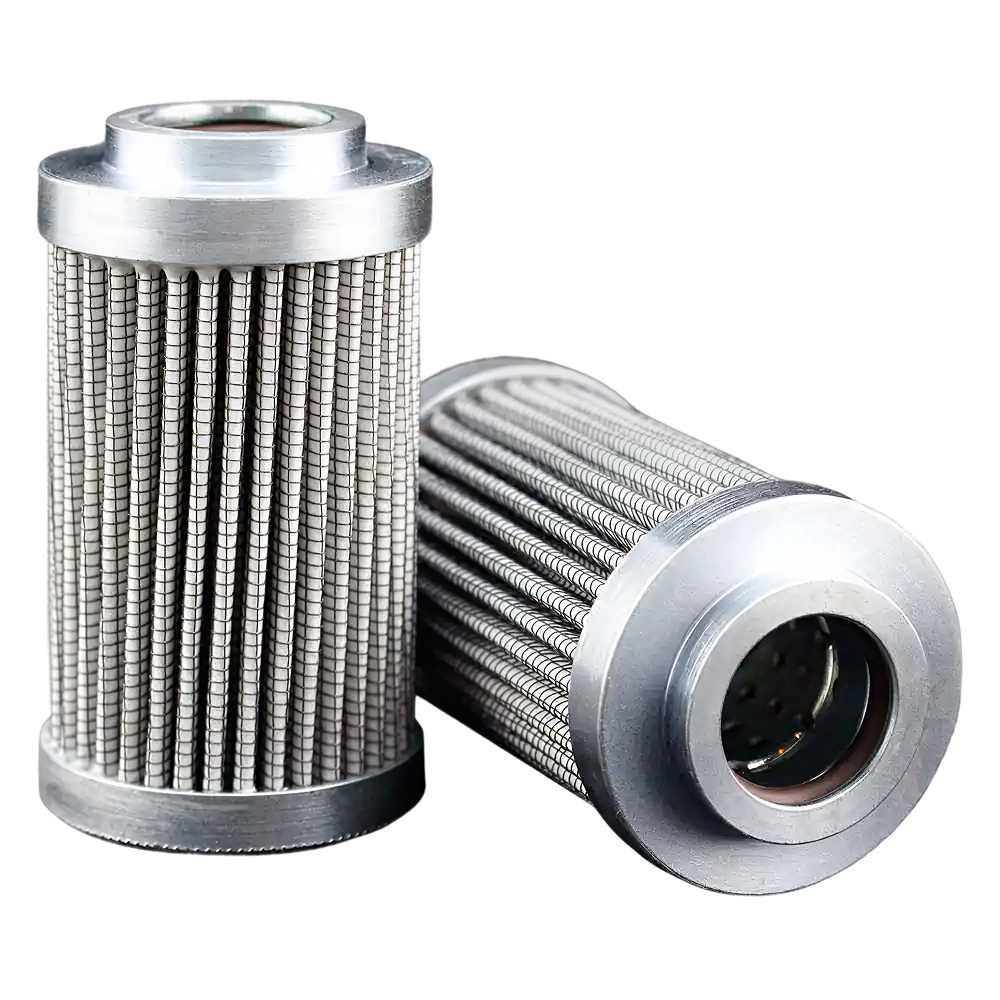
B2B eCommerce platform designed specifically for industrial businesses