Data Center Generator Lead Times in 2026: What's Realistic and What Your Alternatives Are
A procurement team releases a PO for six 2.5 MW standby gensets against a construction schedule that assumes 30-week delivery. The OEM's confirmation arrives quoting week 74, with an uncapped escalation clause and allocation language nobody saw in 2019. The building will be finished, fitted, and dark for almost a year.
That sequence is now the default experience for data center backup power procurement, not the exception. This guide gives the reconciled numbers, explains why published figures disagree by 40 weeks or more, and maps every alternative path when the factory quote does not fit the energization date.
Data Center Generator Lead Times in 2026: The Short Answer
Data center generator lead times in 2026 range from 12 weeks for small standby diesel units to more than 105 weeks for data-center-scale gensets in the Americas, with medium-voltage switchgear and transformers often gating the project even when the generator itself is available. Tested used and surplus units remain the fastest path at 1 to 4 weeks from dealer stock.
Equipment (new)
Realistic 2026 range
Why the range is this wide
25–400 kW standby diesel
12–26 weeks
Standard configs ship faster; Tier 4 packages slower
500–1,000 kW standby diesel
12–52 weeks
Depends on OEM allocation status and brand (see below)
Published 44-week averages blend commodity classes
3-phase padmount transformer (data center class)
40+ weeks
Blended 30-week averages include residential units
Large 3-phase UPS with batteries
26–52 weeks
Monolithic frames and lithium cabinets run longest
Natural gas gensets (70–500 kW)
26–39 weeks
Configuration-dependent
Tested used/surplus genset (in stock)
1–4 weeks
Inventory-dependent, not queue-dependent
One number matters more than any figure in that table: factory lead time is not time to power. Plan for a commissioning-ready date 20 to 40 percent beyond the quoted production window. The full sequence is broken down later in this guide.
Why Generator Lead Time Quotes Disagree by 40+ Weeks (And Whose Numbers to Trust)
Generator lead time quotes disagree because published figures measure different supply positions, not because anyone is lying. For the same 750 to 1,000 kW standby diesel class, dealer-published data currently spans 12 to 39 weeks on one dataset and 26 to 52 weeks on another, while consultancy data from Linesight puts large data center gensets in the Americas at 100 to 105 weeks. All three numbers are simultaneously true for different buyers.
Six variables determine where a specific project lands inside that spread.
Allocation status. A quote backed by a confirmed production slot behaves differently from a build estimate. Major OEM large-frame slots are reportedly allocated into 2028, and Caterpillar's total order backlog reached roughly $63 billion. If the quote is not slot-confirmed, the number on the page is an opening position, not a delivery date.
Brand and order book. Cummins, Caterpillar, Kohler, and MTU carry the deepest hyperscaler-dominated backlogs. Second-tier manufacturers with open order books quote materially shorter windows on comparable frames, which is a trade discussed in the alternatives section below.
Emissions configuration. An EPA Tier 4 Final package under 40 CFR Part 60 Subpart IIII, with aftertreatment and strict air district paperwork, adds queue time over a standard Tier 2 emergency-use unit. The engine platform is often identical; the certification path is not.
Customization. Sound-attenuated enclosures, extended sub-base fuel tanks, and non-standard voltages each pull the unit off the fast production line. Every deviation from a stock configuration is queue time.
Buyer size. Multi-unit campus orders get factory attention that a two-unit colo order does not. Allocation flows toward volume in a rationed market.
Quote age. Wood Mackenzie's analysts have tracked equipment lead times moving quarter over quarter throughout this cycle. The lead time quoted 60 days ago is stale. Treat any published number, including the ones in this article, as a dated midpoint requiring live validation.
The practical rule: read the low end of any dealer's published range as marketing, read the high end as the planning number, and read Linesight's Americas figure as the ceiling case for large frames bought without allocation protection. Comparing live quotes across multiple vetted suppliers simultaneously through a structuredRFQ is the only reliable way to see where the real market sits for a specific spec on a specific date, because the spread itself is the information.
2026 Lead Times by Equipment Class: The Full Backup Power Chain
Backup power for a data center is a chain of long-lead equipment, and the site energizes at the speed of the slowest link. A genset delivered in week 40 behind switchgear delivered in week 60 produces a week-60 project. This section covers the full chain: gensets, transfer switches, UPS systems, and the switchgear and transformer co-dependencies most generator-focused planning misses.
Standby Diesel Generators by kW Class
Standby diesel generator lead times in 2026 scale sharply with frame size, because AI data center demand concentrates in the 1,250 kW and larger classes where near-1:1 backup ratios drive dozens of units per campus.
kW class
2026 realistic range
Pre-2020 norm
What moves you within the range
25–400 kW
12–26 weeks
4–8 weeks
Enclosure and tank customization
500–600 kW
12–30 weeks
10–16 weeks
Brand order book, Tier package
750–1,000 kW
12–52 weeks
10–16 weeks
Allocation status is decisive here
1,250–3,250 kW
52–105+ weeks
16–24 weeks
Hyperscaler allocation, region
NG gensets 70–500 kW
26–39 weeks
shorter
Fuel train configuration
Units in the largest class should be specified against ISO 8528-5 transient performance requirements early, because changing the alternator or governor spec after order release resets the queue position in many factories. UL 2200 listing is standard for North American installations; export projects certified to IEC equivalents follow a different production line at some OEMs, which affects the date.
Automatic Transfer Switches
ATS lead times scale with amperage and must be procured in the same release as the genset, not after it. Current ranges run from roughly 7 weeks at 250 to 400A, through 14 weeks at 800 to 1600A, 20 weeks at 2000A, and up to 31 weeks at 4000A. Large bypass-isolation switches for concurrently maintainable designs sit at the long end, 20 to 40 weeks.
An ATS ordered when the genset ships arrive months after the genset. On an NFPA 110 Level 1 system, the facility cannot pass commissioning without it, so a cheap component becomes the critical path through simple sequencing error.
UPS Systems and Battery Cabinets
UPS lead times for data-center-scale systems run 26 to 52 weeks in 2026 for large monolithic 3-phase frames in the 500 kVA to 1.5 MW class, with modular scalable architectures typically quoting shorter because frames ship from standardized production lines. The UPS is the ride-through layer that carries critical load during the roughly 10-second gap before generators accept transfer, so it commissions on the same critical path as the genset, not after it.
Batteries are the quiet second queue inside the UPS order. Lithium-ion cabinets, now the default for new deployments on footprint and cycle-life grounds, require UL 1973 cell-level and UL 9540 system-level listings plus NFPA 855 siting compliance, and lithium cell allocation competes directly with the BESS and EV supply chains. VRLA strings remain faster to source in many cases; the trade is weight, footprint, and replacement interval. Ordering the UPS without confirming the battery cabinet date is the same sequencing error as ordering the genset without the ATS.
Two procurement notes carry real schedule weight. First, integrated systems testing cannot begin until UPS, batteries, ATS, and gensets are all on site, so the latest of the four dates is the project date. Second,UPS and battery cabinet availability varies more by seller and configuration than genset availability does, which makes multi-seller stock checks worth doing before the electrical package is released rather than after.
Switchgear, Transformers, and Breakers: The Co-Dependencies That Gate Your Genset
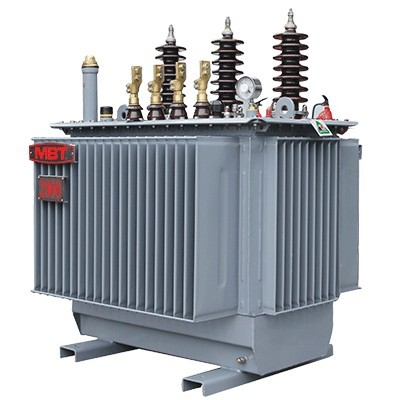
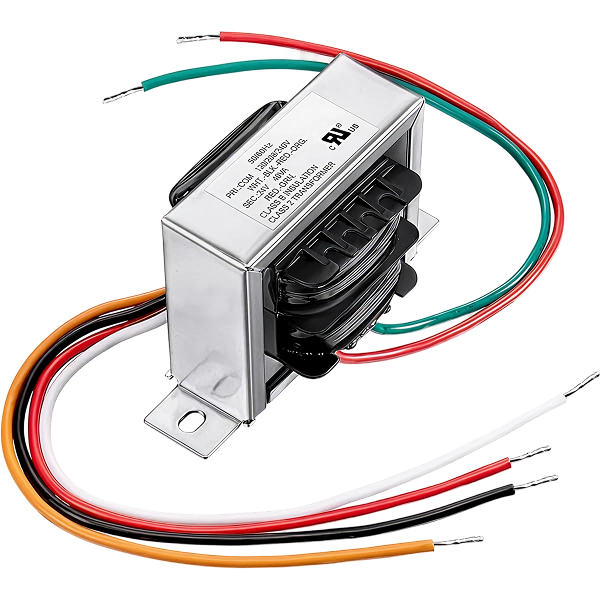
Switchgear and transformers now gate data center backup power projects as often as the generators themselves. Data-center-class medium-voltage switchgear quotes at 52 to 84+ weeks against a published all-class average of 44 weeks, and paralleling switchgear for multi-genset plants sits at the long end of that range. Three-phase padmount transformers in data center sizes quote at 40+ weeks, even though blended distribution transformers averages near 30 weeks, because those averages include residential pole-top units that share nothing with a hyperscale feeder.
Upstream, the numbers get worse. Generator step-up transformers surpassed 160 weeks by Q1 2026 perWood Mackenzie's supply chain analysis of the electric T&D sector, high-voltage circuit breakers reached 125 weeks, andNERC's Summer Reliability Assessment now flags transformer lead times as a bulk power system reliability concern. Transformer prices have risen 77 to 95 percent since 2019, with copper tariffs adding further pressure.
The planning discipline this forces is simple: build the schedule as a critical-path diagram of every long-lead package, identify the longest bar, and release that order first. On many current projects the longest bar is not the generator. Live availability acrosstransformers,switchgear and electrical distribution, andgensets shifts seller by seller, which is why stock position checks belong in site diligence, not in the construction phase.
Factory Lead Time Is Not Time to Power: The Real Timeline From PO to Energization
The lead time on a generator quote measures order to factory shipment, not order to load-bearing power, and the gap between those two dates routinely runs 20 to 40 percent of the production window. A 2 MW unit quoted at 52 weeks is realistically a 65 to 75 week path to a commissioned system carrying critical load. Teams that plan against the factory number alone miss their energization date by a quarter or more without a single factory delay.
Work the sequence backward from the target energization date:
Engineering and submittals: 4 to 8 weeks. Submittal drawings, one-line diagrams, and utility coordination happen before or immediately after order release. Late submittal approval stalls the factory slot at some OEMs.
Air and emissions permitting: 8 to 26 weeks, partially parallel. Stationary engine permits under 40 CFR Part 60 Subpart IIII, air district review in non-attainment areas, fuel storage approvals, and local noise ordinances each carry their own clock. In strict air districts, permitting can exceed production time for large diesel plants; this is a documented driver behind natural gas selection on constrained sites.
Factory production: the quoted lead time.
Factory witness testing: 1 to 2 weeks. Load, transient, and protection testing at the factory, witnessed for mission-critical projects. Skipping FAT to save a week transfers the risk to the site.
Freight and rigging: 2 to 6 weeks. Units above roughly 2 MW ship as oversize loads requiring route surveys, permits, and crane scheduling. Coastal port congestion and escort availability are real variables, not contingency padding.
Installation and site acceptance testing: 3 to 8 weeks. Fuel systems, exhaust, controls integration, and initial start.
Integrated systems testing and commissioning: 2 to 6 weeks. Pull-the-plug testing of the full UPS, ATS, and genset chain, plus NFPA 110 acceptance testing. Uptime Institute Tier III and IV certification adds documented concurrent maintainability demonstrations.
One pattern shows up repeatedly in post-mortems on late projects: every package was individually on time, and the project was still late, because commissioning windows were planned against shipment dates rather than site-ready dates. Procurement teams that manage the full sequence as one program, the wayProcurement-as-a-Service engagements structure it, compress the gaps between steps rather than hoping the factory recovers the schedule.
The Cost of Waiting: What a Year of Lead Time Actually Costs You
A year of generator lead time carries a quantifiable cost that most procurement analyses never model, and that cost usually dwarfs the price difference between sourcing options. Three frames make the math concrete. All figures are illustrative ranges for modeling, not quotes.
Delayed revenue. Wholesale colocation rates in major markets run in the low-to-mid six figures per MW per year. A six-month energization slip on a 10 MW deployment therefore represents a seven-figure revenue deferral, before lease penalties or tenant walk-away rights are counted. Against that exposure, a five-figure premium for faster equipment is rounding error.
The used premium, priced correctly. Low-hour large gensets that historically sold at 40 to 50 percent of new now command 60 to 75 percent when new delivery is a year out. That premium is not price gouging; it is the market pricing time. A buyer who models slip cost per month against the premium usually finds the tested used unit is the cheapest total-cost option available this quarter.
Uncapped escalation exposure. A 52-week order carrying an uncapped escalation clause is an unpriced liability on the balance sheet. New-unit pricing has escalated well above general inflation since 2021, with raw-material surcharges now routine. An escalation cap negotiated at PO is worth real money by delivery; the negotiation questions appear later in this guide.
Your Alternatives When the OEM Quote Says 2027: A Decision Framework
When the new-unit quote lands beyond the project's survivable date, six alternative paths exist, and each wins under specific conditions. The mistake is treating them as a fallback list. They are a decision framework, and the right answer depends on load size, redundancy target, air permitting environment, and how many weeks the schedule can absorb.
Tested Used and Surplus Units
Tested used and surplus gensets deliver in 1 to 4 weeks from dealer stock, making them the fastest permanent-equipment path in the current market. The same data center boom driving the shortage is feeding refresh-cycle units into the secondary market, so low-hour inventory quality is unusually good.
The discipline is documentation, not brand. Demand a recent load-bank report at rated kW, verified hour-meter records, and inspection access before wire transfer. A unit without a load-bank report is priced as a gamble regardless of what the listing says. Availability is inventory-dependent rather than queue-dependent, which means stock status across multiple verified sellers matters more than any single dealer's list; browsing livegenerator inventory across sellers is the honest version of "checking the market."
Choose this if: the load fits available stock, and documentation checks out. Disqualifier: projects requiring uniform new-unit fleets for warranty or financing covenants.
Paralleling Smaller Units
Paralleling two 500 kW units in place of one 1,000 kW unit exploits the fact that smaller frames carry shorter queues, and it buys N+1 redundancy a single large unit cannot provide. Modern paralleling controls make mixed-vintage plants workable when alternator pitch, voltage, and governor response are matched.
The trade is the paralleling switchgear itself, which adds cost, integration engineering, and its own lead time from the constrained switchgear market covered earlier. Adding a 52-week switchgear package to solve a 70-week genset problem solves nothing. Run the chain math before committing.
Choose this if: switchgear is sourceable inside the genset saving. Disqualifier: sites without physical space for additional units and gear.
Natural Gas Gensets
Natural gas gensets quote shorter queues than large diesel in many frames, and they permit faster in strict air districts, which makes them the default answer on emissions-constrained sites. Current lead times run 26 to 39 weeks for 70 to 500 kW configurations.
Two trade-offs are non-negotiable engineering facts. Pipeline dependence means a regional disaster that takes the grid down has a meaningful probability of disrupting gas pressure too, which is why NFPA 110 Level 1 designs historically defaulted to on-site diesel fuel. And gas engines carry derated transient pickup versus diesel, so block-loading behavior against ISO 8528-5 classes needs verification for UPS-buffered data center loads.
Choose this if: air permitting is the binding constraint. Disqualifier: sites where fuel-supply independence is a design requirement.
Rental and BESS Bridging
Rental gensets and battery energy storage bridge the gap between occupancy and permanent equipment delivery, and they should be budgeted as insurance, not as the plan. Rental rates have climbed with the same demand wave, and multi-month rentals of MW-class units accumulate cost fast.
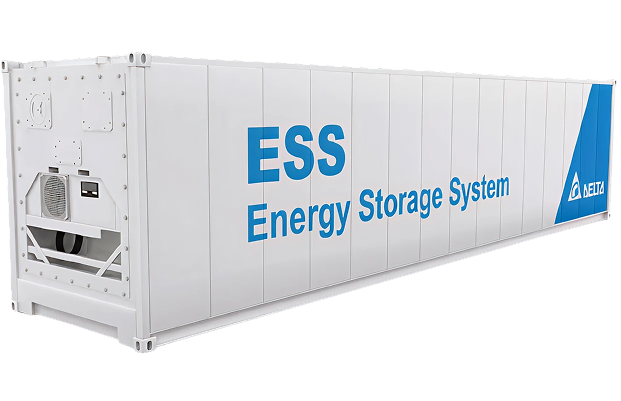
BESS bridging is the newest option and the least covered anywhere: containerized storage carrying partial load or ride-through duty while permanent gensets are in transit. It sidesteps engine permitting entirely and redeploys after the bridge period. Fit depends on load profile and duration, andenergy storage availability moves quarter to quarter as manufacturing capacity comes online.
Choose this if: the gap is defined and under 12 months. Disqualifier: open-ended gaps, where rental economics collapse.
Alternative and Second-Tier OEMs
Second-tier and international OEMs with open order books quote sub-12-month delivery on frames the majors have allocated into 2028, and they are the most underused path in the market. The trade is frame size (more units to reach the same MW), less familiar North American service networks, and parts logistics that require diligence before order, not after failure.
For a mid-size developer locked out of hyperscaler-dominated allocation, this is frequently the only new-equipment path that fits the schedule. The sourcing mechanics deserve their own treatment, covered in the next section.
Choose this if: allocation at the majors is the binding constraint. Disqualifier: operators contractually tied to a single-OEM fleet standard.
When Prime-Power Tech (Fuel Cells, Recips, Turbines) Is, and Isn't, Your Answer
Fuel cells, large reciprocating engine plants, and gas turbines solve a different problem than standby generators: they solve grid interconnection delay, not backup power procurement. Current deployment timelines run 16 to 18 months for solid oxide fuel cells and linear generators, 24 to 30 months for large recip plants, and 2 to 4 years for gas turbines, against grid interconnection at 3 to 7 years in major markets.
If the actual problem is that the utility cannot deliver megawatts, behind-the-meter prime power is the conversation to have. If the problem is backing up utility power that exists, these technologies are the wrong tool: a fuel cell is a baseload asset, not an NFPA 110 emergency system. Confusing the two wastes a year of evaluation. Standby procurement and prime-power strategy run on separate tracks with separate teams.
The decision table:
Your situation
Strongest path
Watch out for
Need MW-class backup inside 3 months
Tested used/surplus
Documentation quality, matching specs
Air district blocks large diesel
Natural gas gensets
Transient pickup, pipeline dependence
Majors quote 2028, schedule says 2027
Second-tier/international OEMs
Service network, parts logistics
Defined gap until permanent units arrive
Rental or BESS bridge
Rental cost accumulation
Need 1 MW, only 500 kW frames available
Parallel smaller units
Switchgear lead time and cost
Utility says 5 years to interconnect
Prime-power evaluation (separate track)
Not a standby substitute
One structuredRFQ describing the spec once returns comparable quotes across new, used, and alternative-brand supply simultaneously, which is the only way to price these paths against each other on the same date rather than serially over months.
The Global Sourcing Escape Hatch: Buying Outside the Constrained US Allocation
The 100 to 105 week lead times reported for the Americas are a regional figure, not a global one, and buyers who source across regions consistently find shorter queues than buyers who wait in the domestic line. European and Asian manufacturing bases serve different demand pools, and the hyperscaler allocation squeeze concentrates hardest on the North American order books of the major OEMs. International sourcing is the least discussed and most structurally available escape hatch in this market.
It is also the path with the most ways to fail on technical detail, so the diligence list matters more than the discount.
Frequency and voltage. North American facilities run 60 Hz; most of Europe, Africa, and large parts of Asia manufacture for 50 Hz. A genset built for 50 Hz operates at different rated speed and output, and re-rating is not a paperwork exercise. Confirm 60 Hz build, nameplate voltage, and alternator winding configuration before anything else, because this single trap accounts for a disproportionate share of failed import purchases.
Certification translation. North American installations expect UL 2200 listed gensets, UL 891 or UL 1558 switchboards, and CSA equivalents in Canada. Equipment certified to IEC standards is not automatically acceptable to a US authority having jurisdiction, and field evaluation to close that gap costs weeks and money. Emissions compliance translates the same way: an engine certified to EU Stage V is not thereby EPA Tier 4 certified.
Freight and tariff exposure. Ocean freight, import duties, and the current tariff environment on electrical equipment and copper-intensive components all land in the delivered cost and the delivered date. Price the landed unit, not the ex-works unit.
The gray-market trap. Shortages breed exactly the conditions where counterfeit and misrepresented equipment thrives: urgent buyers, unfamiliar brokers, and paperwork nobody has time to verify. Rebuilt units sold as low-hour, ghost serial numbers, and counterfeit branded components all spike in rationed markets. The defense is structural, not heroic: buy only through channels where seller identity is verified and documentation is auditable. Marketplace models thatvet every seller before listing exist precisely because individual buyers cannot perform that verification under schedule pressure, and thedata center category is where that verification carries the most consequence.
When international sourcing does not save time. A shorter factory queue loses its value if the service network cannot support the unit. An operator without regional parts availability and trained technicians for the brand has bought a lead time saving and a maintenance liability in the same crate. Check parts stocking and service coverage in the operating region before order release; if the answer is weak, the domestic queue is the better trade.
Submitting a spec through a globalRFQ that reaches vetted sellers across regions turns this entire section into a single comparable quote set instead of a research project.
The 5–50 MW Buyer's Playbook: Getting Equipment When You're Not a Hyperscaler
Buyers deploying 5 to 50 MW face a specific structural problem: hyperscaler reserve OEM production slots in bulk, years ahead, which leaves allocation-only availability for everyone else. The published lead times describe the market hyperscalers created; the mid-size colo, enterprise, or edge operator lives in the residue of it. Six practices consistently separate the mid-size buyers who energize on schedule from the ones explaining slips to their lenders.
Target manufacturers whose allocation is not hyperscaler-dominated. The open-order-book OEMs covered above are disproportionately valuable at this deal size, because a 10-unit order is meaningful volume to them and invisible to a major.
Order at design stage, 12 to 18 months out, not at construction. Waiting for financial close before releasing equipment orders adds most of a year to energization without changing a single construction assumption. Sophisticated buyers now treat equipment optionality the way they have always treated land optionality: worth paying for early.
Monitor cancelled-order inventory systematically. Project delays and cancellations periodically release nearly-new units into dealer stock, combining new condition with used-market delivery. Being on flag lists for a defined size class costs nothing and occasionally saves a year. A marketplace with live multi-seller stock visibility makes this monitoring continuous instead of dependent on one dealer remembering to call.
Standardize to stock configurations. Every custom enclosure and non-standard voltage is queue time. At 5 to 50 MW scale, the schedule value of a stock configuration usually beats the engineering value of the perfect one.
Release the full electrical package as coordinated orders. Genset, ATS, UPS, and switchgear procured in one release, sequenced against the critical-path chain covered earlier. Thebackup power infrastructure category spans that full package for exactly this reason.
Phase deployment against load ramp. Matching genset increments to actual tenant ramp, rather than day-one full build, converts one impossible large order into several manageable ones and defers capital besides.
Replacing a Failed or Aging Generator at an Operating Data Center
Replacing a failed generator at a live data center is a fundamentally different procurement problem from new construction, because the facility is running at reduced redundancy for every week the replacement takes. A site designed N+1 that loses one unit is operating at N; a single further failure during that window puts critical load on UPS autonomy measured in minutes. The procurement clock and the risk clock run together, and a 52-week factory quote is not an answer anyone can accept.
The expedited paths are the ones with inventory rather than queues. A rental unit on site inside days caps the exposure immediately while the permanent replacement is sourced. A tested used or surplus unit from verified stock closes the permanent gap in weeks. Theoutage and emergency response equipment category exists for precisely this scenario, and 24/7 sourcing support matters here in a way it does not for planned projects.
Replacement into a paralleled plant carries a technical trap that pure speed-buying misses. The incoming unit must match the surviving fleet on voltage, alternator pitch, and governor and AVR response characteristics, or the plant will not load-share correctly under ISO 8528 paralleling behavior. A mismatched bargain unit that cannot parallel is a second outage waiting for commissioning day. Specify the compatibility envelope before shopping, not after delivery.
The quieter version of this same problem is parts. Engines, alternators, radiators, and control modules for existing fleets now carry their own queues, and a genset down for a controller is exactly as dark as a genset that does not exist. Critical spares for the installed fleet, held or verifiably sourceable, are cheap insurance against joining the replacement market involuntarily. Lead times on spares vary sharply by seller and by platform age, which is why verified-seller stock status on a specific part number is worth checking before the failure, not during it.
How to Pressure-Test Any Lead Time Quote: 9 Questions Before You Sign
A quoted lead time is a claim, not a fact, and nine questions separate confirmed delivery positions from optimistic estimates. Suppliers with real positions answer these quickly and in writing. Evasion on any of them is itself the answer.
Is this a confirmed production slot or a build estimate, and can you document the slot? A good answer names a slot window and puts it in the order confirmation. An evasive answer says the factory "typically" delivers in that range.
What is the escalation clause, and will you cap it? Uncapped escalation on a 52-week order is an open liability. Caps are negotiable at PO and nearly impossible afterward.
What protects my slot if a larger buyer bids for it? Allocation-protection language exists; ask for it. Silence here means the slot is protected until someone pays more.
What are my cancellation rights, and what do I forfeit? Deposit forfeiture terms tell you how confident the seller is in reselling the slot, which tells you how real the demand behind the quote is.
Are liquidated damages available for delivery slippage? Most OEMs resist; some will trade LDs against payment terms. Even a token LD converts the date from aspiration to obligation. Is the quoted date ex-works or delivered to site? A 40-week ex-works date on an oversize load is not a 40-week site date, per the freight and rigging math covered earlier.
For used units: recent load-bank report at rated kW, verified hours, and inspection access? Documentation separates premium units from gambles. No report, no wire. What does the deposit actually secure? A deposit that holds a slot is different from a deposit that starts engineering. Get the distinction in writing.
When was this lead time last validated with the factory? Utilities are now pre-paying to hold long-lead equipment positions, which is reshaping queues in real time. A quote validated last quarter describes last quarter's market.
Pre-payment deserves one clarification, because it is spreading from utilities into data center procurement. Pre-payment buys queue position; it does not buy schedule certainty unless the contract language converts the position into a committed date with remedies. Standard purchase order terms rarely do this by default, which is why reviewingPO terms and conditions against these nine questions before signature is procurement work, not legal formality.
Will Generator Lead Times Improve? The Honest 2027–2028 Outlook
Generator lead times will ease from the middle of the market outward, not from the top down, and large-frame constraints will persist through at least 2027 to 2028. OEMs are expanding capacity, including engine plant investments announced across major manufacturers, but engine plants take years to build and qualify, and the announced data center pipeline extends past 2030. New capacity is arriving into a market that is already structurally short.
The realistic sequence: mid-size classes (500 to 1,000 kW) ease first as expanded capacity lands, small standby normalizes toward historical ranges, and 1,250 kW-plus frames remain allocation-constrained while hyperscaler ordering continues. Planning assumptions should treat extended lead times as the operating environment, not a disruption awaiting recovery. Buyers holding 2027 energization dates should be in the queue now; the 2028 window is where relief becomes plausible, not promised.
FAQ: Data Center Generator Lead Times
What is the current lead time for a data center generator?
Data center generator lead times in 2026 run 12 to 26 weeks for 25 to 400 kW standby diesel units, 12 to 52 weeks for 500 to 1,000 kW, and 52 to more than 105 weeks for 1,250 to 3,250 kW data-center-scale units, depending on OEM allocation and region. Tested used units from dealer stock deliver in 1 to 4 weeks. Switchgear and transformers frequently gate the project beyond the genset date.
Why do generator lead time quotes vary so much between suppliers?
Generator lead time quotes vary because they measure different supply positions: confirmed production slots versus build estimates, allocated major OEMs versus open-order-book manufacturers, and Tier 4 custom packages versus stock configurations. Quote age matters too, since queues move quarterly. The same 1 MW unit can legitimately quote at 12 weeks and 52 weeks on the same day from different sellers, which is why multi-supplier comparison on a single date beats any published table.
How long does permitting and commissioning add beyond the factory lead time?
Permitting, freight, installation, and commissioning add 20 to 40 percent beyond the quoted factory lead time for data center generators. Air permits under 40 CFR Part 60 Subpart IIII run 8 to 26 weeks (partially parallel to production), oversize freight adds 2 to 6 weeks, and installation through NFPA 110 acceptance and integrated systems testing adds 5 to 14 weeks. A 52-week factory quote is realistically 65 to 75 weeks to load-bearing power.
What's the fastest way to get 1–2 MW of backup power right now?
The fastest path to 1 to 2 MW of backup power is a load-bank-tested used or surplus genset from verified dealer stock, deliverable in 1 to 4 weeks, or two paralleled smaller used units where a single large frame is unavailable. Rental units bridge shorter gaps within days. Each path depends on live inventory rather than factory queues, so current stock status across multiple sellers determines which is actually available this month.
Are generator lead times shorter outside the US?
Generator lead times outside the Americas are frequently shorter, because the 100 to 105 week figures reported by Linesight are Americas-specific and hyperscaler allocation concentrates on North American order books. European and Asian manufacturers serve different demand pools. International sourcing requires verifying 60 Hz build, UL 2200 or equivalent certification acceptance, EPA emissions compliance, landed cost including tariffs, and regional service support before the queue saving is real.
How often do data centers actually run their backup generators?
Data centers exercise backup generators on a fixed schedule, typically weekly no-load or light-load runs of several minutes plus monthly loaded tests, consistent with NFPA 110 requirements for 30-minute monthly exercising. Loaded testing prevents wet stacking in diesel engines. In service, utility outages beyond a few seconds trigger automatic start, with transfer switches moving full load to generators in roughly 8 to 10 seconds while UPS systems carry the load through the gap.
Do transformers or generators have longer lead times for data centers?
Upstream transformers currently carry longer lead times than generators for data center projects: generator step-up transformers exceed 160 weeks and power transformers average 128 weeks, versus 52 to 105+ weeks for large gensets. At the facility level, data-center-class padmount transformers (40+ weeks) and medium-voltage switchgear (52 to 84+ weeks) can each outrun a genset order. The project energizes at the speed of the slowest package, so the critical path must be checked per project, not assumed.
Should I order my ATS and switchgear at the same time as the generator?
ATS and switchgear should be ordered in the same coordinated release as the generator, because large transfer switches run 20 to 40 weeks and data-center-class switchgear runs 52 to 84+ weeks. An ATS is ordered after the genset ships arrive months late, and an NFPA 110 system cannot be commissioned without it. Sequencing the full electrical package against one critical-path schedule is the single cheapest schedule protection available in this market.
Get Realistic Lead Times for Your Spec, From Vetted Suppliers, Compared in One Place
This market rations by queue position, and queue position is allocated before steel gets cut. The buyers who energize on schedule are the ones comparing the full supply landscape at once, new production, tested used, alternative brands, and international stock, instead of working one quote at a time while the queues move underneath them.
We built eINDUSTRIFY's RFQ process for exactly this: describe your spec once, and receive matched, comparable quotes from vetted sellers across that full landscape, with gray-market stock filtered out before it reaches you.Send your RFQ or browse livedata center backup power equipment to see where the market actually sits for your requirement today.
Tags: data center generator lead times 2026 standby diesel generator procurement data center backup power equipment switchgear and transformer lead times used and surplus generators


















 vs Automatic Transfer Switch (ATS) for Data Centers.png)