Power Transformer Procurement: Cut Costs Without Cutting Quality
A combined-cycle plant completed a major outage on schedule, until the replacement distribution transformer failed load acceptance testing three days before restarting. The root cause was a unit specified for a 60 Hz design installed in a 50 Hz grid environment. A competent factory acceptance test would have caught it. The cost of re-sourcing, re-shipping, and extending the outage window exceeded the original transformer budget by a factor of three.
That scenario repeats across power generation, industrial facilities, and utility networks every year. Not because engineers do not understand transformers, but because cost pressure compresses the qualification process at precisely the moment technical rigor matters most. This guide addresses the decision points where cost and quality diverge, and the technical framework that keeps them aligned.
Core Electrical Parameters That Cannot Be Negotiated Down
Four parameters are non-negotiable on any power grid transformer specification: rated MVA capacity, voltage ratio, impedance percentage, and insulation class. Each ties directly to a standard, and each surfaces as a field failure when compromised. The details follow.
Rated MVA capacity:
Rated MVA capacity must be specified at maximum continuous load, not average load. IEC 60076-1 defines rated power as the apparent power the transformer supplies continuously without exceeding temperature-rise limits. Per the aging model inIEEE C57.91, insulation life roughly halves for every 6 degrees Celsius of sustained hot-spot temperature above its rating.
Impedance Percentage:
Impedance percentage directly affects fault current contribution and voltage regulation. A distribution transformer with 4% impedance on a bus designed around 5% increases fault current to downstream equipment by approximately 20%, which can exceed the interrupting capacity of installed breakers. This parameter must be coordinated with the protection study, not selected independently, see our distribution transformer ratings guide for how impedance, BIL, and cooling class interact on the nameplate.
Insulation class:
Insulation class is where gray-market units most commonly deviate from specification. IEC 60085 classifies electrical insulation by thermal endurance: Class F is rated at 155 degrees Celsius and Class H at 180 degrees Celsius. A unit marked Class F but assembled with Class B materials (130 degrees Celsius) passes visual inspection and initial testing, then fails under sustained high load.
Specification gaps that create field problems
Three factors are routinely omitted from transformer specifications because they require site-specific engineering input: cooling class, altitude derating, and harmonic load profile. Each omission produces a predictable field failure.
Cooling class, per IEC 60076-2, uses a four-letter designation (ONAN, ONAF, OFAF, OFWF) describing the cooling medium and circulation method. An ONAN transformer rated 30 MVA installed without adequate ventilation clearance can derate to 24 MVA at the same ambient temperature, a 20% capacity reduction.
Altitude derating applies above 1,000 meters for air-cooled units, since thinner air reduces cooling. IEC 60076-1 requires reduced permissible temperature rise at 2,000 meters, which effectively reduces capacity. Mining operations and high-altitude power plants regularly see failures that trace back to this omission. Harmonic distortion from variable frequency drives, rectifiers, and switched-mode supplies increases effective loading beyond the fundamental current; IEEE C57.110 provides the K-factor methodology, and a transformer procured without K-factor specification for a VFD-heavy facility runs outside its thermal envelope from day one.
Total cost of ownership: why acquisition price is the wrong number to optimize
The purchase price of an industrial transformer represents 15 to 25% of total cost of ownership across a 25-to-35-year service life. Procurement decisions made on acquisition cost alone optimize the least significant cost variable. The two loss components below usually dominate.
Building a TCO Model Before the RFQ
A transformer TCO model has three major cost components, and load losses typically dominate over the operating life. The table shows the structure, and the worked figures follow.
Cost component
When incurred
Typical share of TCO
Acquisition cost
One-time
15 to 25%
No-load (core) loss
Continuous when energized
Significant
Load (copper) loss
Scales with load squared
Often the largest
No-load losses occur whenever the transformer is energized, regardless of load. A unit with 500 W of no-load loss running 8,760 hours per year consumes 4,380 kWh annually in core losses alone; at USD 0.08 per kWh, that is roughly USD 8,750 over 25 years before load losses.
Load losses scale with the square of the current. For a 1,000 kVA transformer with 10 kW rated load losses at 70% average load factor and USD 0.08 per kWh, annual load loss cost is about USD 3,426, or USD 85,650 over 25 years from one unit. Specifying to IEC 60076-20 efficiency tiers typically adds 5 to 12% to acquisition cost while cutting lifetime energy cost 20 to 35%, a 2-to-4-year payback in most industrial applications.
Three Procurement Practices That Create Hidden Liability
Three procurement practices repeatedly create hidden liability: waiving factory acceptance testing, single-source buying without a competitive baseline, and deferring vendor qualification until after the PO. Each trades a small upfront saving for a large downstream risk.
Waiving factory acceptance testing:
IEC 60076-1 Clause 11 defines the routine tests every transformer must pass before shipment: ratio measurement, vector group verification, no-load loss measurement, impedance voltage measurement, and applied AC voltage test. Waiving FAT to save the cost of a witness engineer, typically USD 3,000 to 8,000, removes the only independent verification that the transformer matches its test certificate.
Single-source procurement without a competitive baseline:
Establishing a minimum three-vendor qualified list creates price competition without sacrificing technical qualification standards. Single-source procurement is often a matter of established practice rather than technical necessity. A competitive baseline also surfaces specification gaps that a sole source has no incentive to raise.
Deferring vendor qualification until after purchase order issuance:
Verify before the PO is placed: winding material (copper versus aluminum), core material grade (M2, M3, or M4 grain-oriented silicon steel perASTM A876), insulation drying process, and post-winding test protocols. Qualification after the PO removes all commercial leverage to correct a deficiency.
Voltage transformer specifications in mixed-frequency and variable-load environments
The term voltage transformer covers two distinct devices: instrument transformers for metering and protection (per IEC 61869-3) and voltage-ratio power transformers for transmission and distribution. Confusing the two produces specification errors that affect both safety-system performance and power quality.
Instrument Voltage Transformers in Protection Circuits
IEC 61869-3 defines metering accuracy classes 0.1, 0.2, 0.5, 1, 3, and 5, and protective classes 3P and 6P. A class 3P protective VT has a voltage error of plus or minus 3% from 2% to 100% of rated voltage, and on differential protection for generator step-up transformers, 3P VTs can introduce false operating conditions during external faults.
VT accuracy specifications apply only at or below the specified accuracy burden. A 15 VA accuracy-burden VT connected to a relay scheme drawing 30 VA actual burden operates outside its accuracy specification from day one of service. Burden matching is as important as the accuracy class itself.
Tap Changers and Voltage Regulation
On-load tap changers (OLTCs) are specified where supply voltage variation exceeds plus or minus 5%. IEC 60214-1 covers OLTC applications internationally, with IEEE C57.12.10 as the North American equivalent.
Specifying an OLTC at initial procurement adds 8 to 15% to acquisition cost, but retrofitting one to a fixed-tap transformer after installation requires replacing the transformer. This decision must be made at the specification stage, informed by a power quality study of the supply point.
Qualifying Transformer Vendors in a Global Supply Market
The transformer supply market spans North America, Europe, India, China, South Korea, and Brazil, with quality ranging from ISO-certified type-tested facilities to workshops with no third-party oversight. Price differentials between the extremes can reach 40 to 60%. Four factory qualities cannot be judged from a questionnaire alone.
What Factory Qualification Actually Requires
Factory qualification means physically visiting the facility or engaging a third-party inspection agency, because four components cannot be evaluated remotely.
Winding shop practice: coil winding should use precision machines with tension control, and HV-to-LV electrical clearances must meetIEC 60076-3 for the voltage class.
Core assembly quality: grain-oriented silicon steel laminations must be cut on precision laser or CNC shears to minimize burr formation that raises inter-laminar eddy losses, and step-lap corner joints reduce no-load losses versus butt-lap construction.
Drying and impregnation process: insulation must be dried below 0.5% moisture before oil filling per IEC 60076-1, since oven drying without vacuum oil impregnation leaves residual moisture that accelerates aging.
Test laboratory calibration: instruments for routine and type testing must carry calibration certificates traceable to a national metrology standard.
Reading Type Test Certificates Correctly
A type test certificate, per IEC 60076-1, documents dielectric, temperature-rise, and lightning-impulse tests performed on a prototype unit, and is valid only for transformers built to the same design. Verify three things: that an accredited independent laboratory performed the test, not the vendor's own facility; that the tested unit parameters match the quoted unit; and the certificate date, since most bodies recommend repeat type testing every 5 to 7 years.
Type test certificates from accredited independent laboratories such as KEMA (DNV), CESI, or PEHLA provide a verification chain not subject to commercial pressure. Insist on the independent certificate rather than a vendor-internal report.
Industrial transformer applications: matching the design to the environment
Three environments consistently produce specification mismatches: oil and gas processing facilities, mining operations, and manufacturing plants with high harmonic content. Each needs additions a standard distribution specification omits.
Hazardous Area Transformer Requirements:
Oil and gas facilities requiring transformers in Zone 1 or Zone 2 hazardous areas per IEC 60079-10-1 cannot use standard liquid-filled designs. Cast-resin dry-type transformers to IEC 60076-11 are the appropriate technology for indoor hazardous-area installation, eliminating the mineral-oil ignition risk. IEC 60076-11 requires short-circuit withstand testing that eliminates designs relying on external protection to clear faults before thermal damage.
A gas compression station that replaced liquid-filled pad-mounted transformers with correctly specified cast-resin units eliminated the oil containment berm, reduced its insurance premium classification, and extended maintenance from annual oil sampling to five-year visual inspection. The capital premium for cast-resin was recovered in containment infrastructure savings within 18 months.
Mining Applications and Mechanical Robustness:
Open-cut and underground mining subjects transformers to vibration, dust, temperature cycling, and power quality disturbances that standard specifications do not address. Key additions: seismic and vibration certification, IP65 minimum enclosure for outdoor surface units, tropical insulation treatment per IEC 60076-1 where annual humidity exceeds 75%, and overload capability per IEC 60076-7 for shovel drives and crusher motors drawing 150 to 200% of rated current at startup.
A transformer at an underground copper mine portal in South America failed within 14 months, not from electrical overload but from resonant vibration between the tank and the compressor room structure at 25 Hz. A vibration isolation analysis at the specification stage, with anti-vibration mounting feet rated for the expected g-load, would have added under USD 800 to the unit cost and prevented a USD 140,000 unplanned replacement.
Transformer coils, windings, and the quality indicators most buyers miss
Transformer coils are the wound copper or aluminum conductors forming the HV and LV windings, and they are where manufacturing quality most directly determines transformer life and performance. They are also invisible to receiving inspection once the transformer is assembled and sealed, which makes vendor qualification the only point of control.
Copper Versus Aluminum Windings:
Copper and aluminum windings differ on conductivity, size, and short-circuit robustness. The table compares them, and the guidance follows.
Factor
Copper
Aluminum
Conductivity
Reference (100%)
~61% of copper
Size for equal rating
Smaller
Larger cross-section
Cost per unit weight
Higher
~20 to 30% of copper
Creep resistance at fault temp
Superior
Lower
Aluminum's larger required cross-section reduces its raw cost advantage significantly. Copper has better creep resistance at the elevated temperatures reached during short-circuit current flow, a difference the short-circuit withstand test per IEC 60076-5 exposes. Aluminum windings suit low-fault-probability applications with stable loads; copper is preferred where frequent motor starts or fault exposure risk winding deformation.
Winding Insulation Condition and End-of-Life Assessment:
The degree of polymerization (DP value) of paper insulation is the primary indicator of remaining insulation life. New Kraft paper has a DP of roughly 1,000 to 1,200, and at DP 200 the insulation reaches the end of mechanical life and fractures under the stress of a through-fault. IEC 60422 and IEC 60599 together frame insulation-condition assessment from oil samples. A surplus transformer with documented dissolved gas analysis history costs 10 to 15% more than one without, and acquiring without documentation is accepting risk without quantification, not reducing cost.
Distribution transformer procurement for grid-connected industrial facilities
Distribution transformers are the largest volume of transformer procurement in industrial facilities, and the segment where teams most often treat the equipment as a commodity, with predictable quality outcomes. Two decisions drive value: efficiency compliance and configuration.
Efficiency Standards: What the Regulations Actually Require
In the United States, distribution transformer efficiency is codified inDOE 10 CFR Part 431, covering liquid-immersed units from 10 to 2,500 kVA and dry-type units from 15 to 2,500 kVA. The European equivalent, EU Regulation 548/2014 (Ecodesign), set Tier 2 levels effective July 2021 requiring further reduction of no-load and load losses.
International procurement requires explicit verification that the specified unit meets the efficiency requirements of the installation country. Customs clearance does not verify efficiency compliance; that obligation falls on the importer of record.
Pad-Mounted Versus Unit Substation: The Configuration Decision
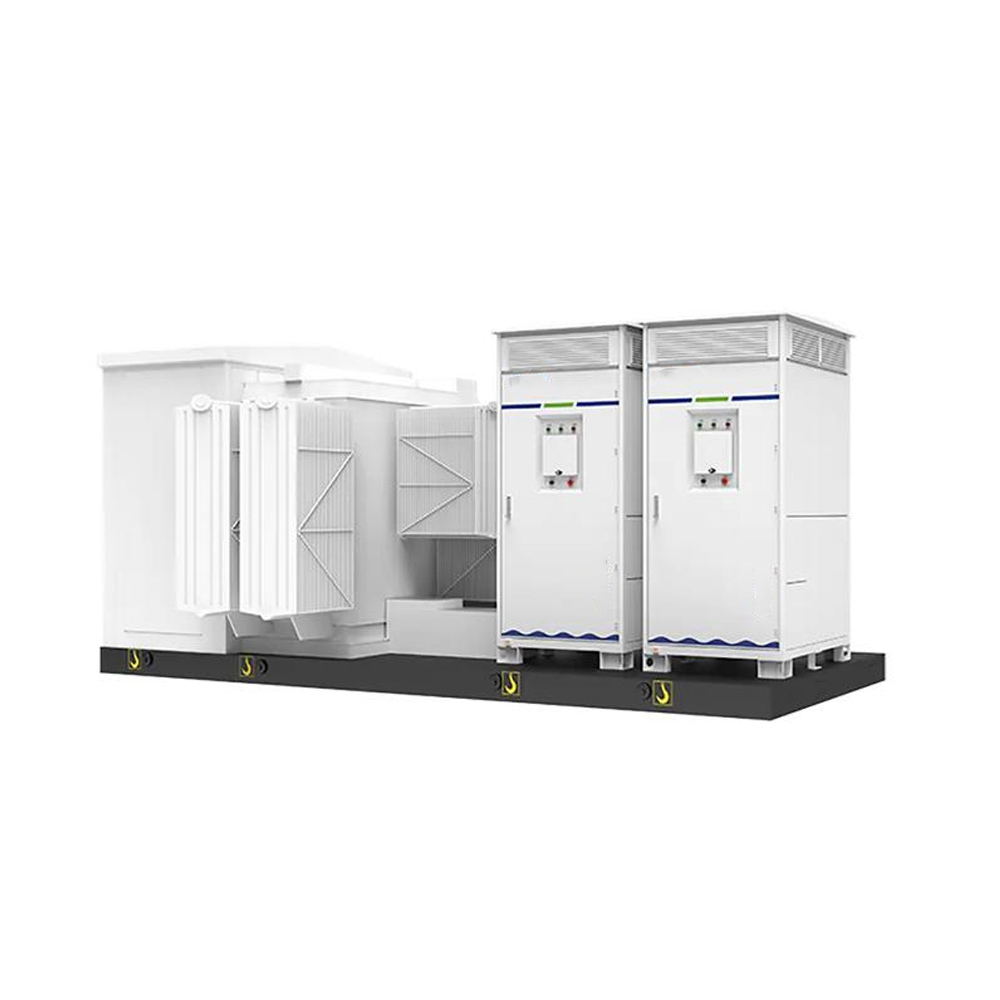
Pad-mounted transformers per IEEE C57.12.26 are cost-effective for facilities with distributed load centers and outdoor space. Unit substations per IEEE C57.12.28 integrate incoming switchgear, transformer, and outgoing distribution in one factory-assembled package. The unit substation premium over separate components is typically 15 to 25%, but labor savings on large installations often make it the lower total-installed-cost option. Substituting one configuration for the other late in the procurement cycle creates engineering rework that usually costs more than the substitution saves.
Power grid transformer procurement: transmission-class considerations
Procurement of large power transformers for transmission-class applications, units above 10 MVA at 69 kV and above, involves lead times of 26 to 52 weeks for standard designs and up to 18 months for custom units. Prices range from six to eight figures, and the consequence of a specification error is measured in years of service interruption.
Why Lead Times Are Structural
Long lead times reflect the physical manufacturing constraints of units weighing 50 to 500 metric tons. Core steel must be cut, annealed, and laminated before winding begins; windings must be dried and impregnated before core assembly. IEC 60076-1 guidance on the minimum manufacturing and test cycle is a physical lower bound, not a target. On data center builds, these transformer queues now gate energization as often as the gensets themselves; our analysis of the full backup power lead-time chain for data center projects maps how transformers, switchgear, and generators sequence against each other.
Emergency procurement of a spare transmission transformer from a rental provider typically costs USD 15,000 to 50,000 per month in rental and logistics fees, before installation and energization.
Factory Acceptance Testing for Transmission-Class Units
The standard test scope per IEC 60076-1 includes routine tests and should add special tests for critical applications. Partial discharge measurements per IEC 60076-3 are particularly significant: PD levels exceeding 100 picocoulombs at operating voltage indicate insulation voids that propagate under service conditions. PD failures at the factory are recoverable; PD failures in service on an energized transmission transformer are not. The procurement contract should specify the required test scope, acceptance criteria, the right to witness testing, and the consequences of test failures, since leaving these to post-failure negotiation favors the manufacturer.
Outage spares and emergency replacement transformers
Planned spare procurement, acquiring identical or interchangeable spare units before the installed unit fails, is the only reliable way to manage transformer failure risk where failure means production loss. The two practices below make it work.
Universal Transformer Programs
Several utilities and large industrial operators standardize transformer specifications across a fleet so one spare can serve multiple locations. Research in IEEE Transactions on Power Delivery documents that utilities operating standardized fleets achieved 30 to 60% reductions in spare inventory value while improving mean time to restoration after a failure.
Asset Documentation That Enables Future Procurement
The minimum documentation package for each installed transformer should include the original specification, the factory test certificate with actual results rather than pass/fail notation, the as-built nameplate data, and commissioning results including initial oil sample analysis. Facilities with this documentation can issue an exact-replacement RFQ to multiple vendors simultaneously when a transformer fails. Those without it must engage an engineer to re-derive the specification from the installed unit, adding 4 to 8 weeks while production waits.
The decision framework before the first RFQ
Every technical framework here, from TCO modeling to IEC and IEEE compliance to vendor qualification to FAT, is a pre-RFQ activity. The procurement outcome is largely determined before the first quotation arrives, not by the commercial negotiations that follow.
This is where eINDUSTRIFY helps industrial buyers treat transformer procurement as a strategic asset acquisition, not a routine purchase. Where purchasing focuses on upfront cost, asset acquisition weighs useful life, total cost of ownership, residual value, maintenance exposure, compliance risk, lead-time reliability, and the operational impact of failure.
Partner with eINDUSTRIFY for efficient power transformer procurement
For procurement teams managing transformer requirements across power generation, data centers, or industrial applications, eINDUSTRIFY connects you to a verified network of qualified transformer suppliers with the technical procurement support to match specifications to the right source. Every seller is vetted, so you source against your exact specification with documentation intact.
Explore theTransformers range, and see related guides on electrical enclosures, circuit protection devices, and power generation parts. These serve the Power Generation and Data Centers sectors directly.Submit an RFQ to receive structured quotes from qualified vendors aligned to your exact specification.
Frequently asked questions
What are the non-negotiable parameters in a transformer specification?
Four parameters cannot be compromised: rated MVA capacity (specified at maximum continuous load per IEC 60076-1), voltage ratio, impedance percentage (which must be coordinated with the protection study), and insulation class (per IEC 60085). Compromising any one produces a predictable field failure, from breaker coordination problems to premature insulation aging under sustained load.
What is factory acceptance testing (FAT) for transformers?
Factory acceptance testing is the set of routine tests every transformer must pass before shipment, defined in IEC 60076-1: ratio measurement, vector group verification, no-load loss, impedance voltage, and applied AC voltage tests. Witnessing FAT costs USD 3,000 to 8,000 but provides the only independent verification that the transformer matches its test certificate before it leaves the factory.
Should I choose copper or aluminum transformer windings?
Copper windings offer superior creep resistance at the high temperatures reached during short-circuit faults, making them preferred where frequent motor starts or fault exposure occur. Aluminum has about 61% of copper's conductivity, needs a larger cross-section, and suits low-fault-probability applications with stable loads. The short-circuit withstand test per IEC 60076-5 exposes the difference in fault robustness.
What is the total cost of ownership for a transformer?
Total cost of ownership combines acquisition cost, no-load (core) losses, and load (copper) losses over a 25-to-35-year life. Acquisition is only 15 to 25% of the total, and load losses usually dominate. Specifying to IEC 60076-20 efficiency tiers adds 5 to 12% to purchase price but cuts lifetime energy cost 20 to 35%, typically paying back in 2 to 4 years.
What efficiency standards apply to distribution transformers?
In the United States, DOE 10 CFR Part 431 sets minimum efficiency for liquid-immersed units from 10 to 2,500 kVA and dry-type units from 15 to 2,500 kVA. The European equivalent is EU Regulation 548/2014, with Tier 2 levels effective July 2021. International buyers must verify the unit meets the installation country's requirements, since customs clearance does not confirm efficiency compliance.
Why do large power transformers have such long lead times?
Transmission-class transformers above 10 MVA take 26 to 52 weeks for standard designs and up to 18 months for custom units, because of the physical manufacturing sequence. Units weighing 50 to 500 metric tons require core steel to be cut, annealed, and laminated, then windings dried and impregnated before assembly. Emergency rental spares cost USD 15,000 to 50,000 per month.
When should a transformer have an on-load tap changer (OLTC)?
An on-load tap changer is specified where supply voltage variation exceeds plus or minus 5%, allowing voltage regulation without de-energizing. Per IEC 60214-1, specifying an OLTC at procurement adds 8 to 15% to acquisition cost, but retrofitting one later requires replacing the transformer entirely. The decision must be made at the specification stage, informed by a power quality study.
Tags: power transformer procurement transformer total cost of ownership factory acceptance testing industrial transformer specification transformer vendor qualification














 vs Automatic Transfer Switch (ATS) for Data Centers.png)