Diesel vs Natural Gas vs BESS Backup Power: A 2026 Data Center Procurement Comparison
A procurement team locks a diesel standby spec in Q1, sizes the fuel yard, and files the air permit. Then the Illinois application date slips past December 1, 2026, the Tier 2 sets they priced are no longer permittable, and the whole package goes back to bid, months lost, and the commissioning date now at risk.
This is the 2026 trap, and it is a procurement problem before it is an engineering one. The diesel vs natural gas vs BESS decision is no longer a fuel-attribute contest. It is a question of what you can permit in your air district, what OEM slot you can actually secure, and what you can commission before your commercial operation date, the three variables that decide whether equipment arrives in your window or your timeline slips with it.
Diesel starts fast and stores its own fuel. Natural gas runs continuously inside an air permit that diesel cannot hold. BESS answers the sub-second AI transients that neither generator can. But the deciding variable is your deployment window, jurisdiction, and Tier level not a spec sheet. This guide compares all three the way a buyer has to: against lead times, permit-ability, and the RFQ you need to issue now to protect a date you cannot move.
Diesel vs Natural Gas vs BESS: The 2026 Decision Snapshot
This head-to-head decides most cases before the prose. Every figure map to a decision a procurement engineer makes on a hyperscale or colocation build.
Attribute
Diesel
Natural Gas
BESS
Start / response
Full load under 10 sec (NFPA 110 Type 10)
Fast-response gensets ~7 sec to full load
Sub-second, effectively instant
Duration
Hours to days, fuel-limited
Continuous via pipeline
1 to 4 hours at rated discharge
Fuel dependency
On-site storage, 12 to 96 hrs
Utility pipeline or on-site LNG/CNG
Grid or on-site generation to recharge
Footprint
Smallest per MW
Larger and heavier for equal output
Container plus thermal management
Emissions
Highest NOx and PM; Tier 4 needed
Lower NOx and CO2 than diesel
Zero direct emissions
Permit friction
Rising in restricted air districts
Easier for continuous run
Fire-code driven (NFPA 855)
CAPEX band
~$1,000/kW
20 to 30% above diesel
~$1,300/kW (4-hour)
Lead time
Long; secondary market can hedge
OEM slots booking into 2027-2028
Shorter, scaling fast
Best-fit role
Emergency standby, Tier III/IV autonomy
Prime, bridge, speed-to-power
Transient buffer, peak shaving, hybrid
Diesel energy density near 129,000 BTU per gallon against roughly 37,000 BTU per equivalent gas unit drives its footprint and fuel-autonomy edge. The table decides most cases. The constraints below decide the rest.
The Four Constraints That Actually Decide Your 2026 Backup Power
Ranking the three technologies on merit is useless if you cannot take delivery, cannot permit the unit, or cannot energize before tenant load arrives. Four constraints govern the decision, in order.
Grid interconnection queues and speed-to-power
On-site generation has moved from exception to design assumption because of the interconnection queue. Utility load studies on gigawatt-scale campuses run years, and FERC's large-load rulemaking has not cleared the backlog.
Natural gas earns its 2026 momentum here. A gas plant running continuously inside an air permit lets a site reach commercial operation independent of the queue. BESS attacks the same constraint by flattening the load a campus presents to the grid, which can shorten interconnection timelines.
OEM lead times and slot-locking
U.S. data center equipment lead times have run near 42 weeks against a 33-week global average, and major OEMs are booking power-generation slots into 2027 and 2028. A new order placed in 2026 will miss most near-term commissioning dates.
The disciplined response is to reserve generator capacity at land control, not at building permit, and to treat the secondary market as a hedge when a permittable unit exists in stock. The full 2026 numbers by kW class, and every alternative path when the factory quote misses your date, are covered in our breakdown of data center generator lead times in 2026.
Jurisdictional permit-ability
The same diesel set is a clean spec in one air district and a dead spec in another. Illinois requires many new diesel emergency generators to meet EPA Tier 4 for applications filed after December 1, 2026. California SB 978 targets new diesel installations in certain high-pollution zones.
Permit-ability is a county-level and air-district-level fact. Confirm it before any set is priced.
Your commissioning date, working backward
Start at the commercial operation date and work backward through commissioning, permit approval, and OEM lead time. Whatever technology clears, that timeline in your jurisdiction is your shortlist. eINDUSTRIFY's procurement-as-a-service through Prismecs exists to compress exactly this problem: locating permittable, in-window equipment across multiple vendors when one OEM cannot hold your date.
Diesel Backup Generators in 2026: Still the Default, Now the Most Regulated
Diesel remains the installed baseline, and roughly 95 percent of operators still rely on it per Uptime Institute survey data. The question in 2026 is whether the diesel you want clears your permit and arrives on time.
What diesel still does best
Diesel accepts block load better than any alternative. A standby-rated set reaches full load in under 10 seconds, satisfying the NFPA 110 Type 10 requirement that mission-critical facilities depend on. During that 10-second window, the automatic transfer switch moves the load to the generator while the UPS carries the IT load. On-site tanks give verifiable runtime, and most data centers hold 24 to 96 hours of fuel, meeting the 12-hour minimum on-site storage requirement.
The 2026 permitting reset
EPA Tier 4 Final for stationary engines relies on selective catalytic reduction and diesel particulate filters, adding DEF consumables and after-treatment maintenance. Running a set for demand response or peak shaving reclassifies it as non-emergency, triggering Tier 4 obligations regardless of the original spec.
Node sizing and standby-to-continuous derate math
Nameplate is not usable capacity. A set rated at 3,000 ekW mission-critical standby can derate to 2,500 ekW continuous, a 16.7 percent drop on published Cat C175-16 figures. Size against the rating your duty class demands, or your N+1 math falls short. Hyperscale node sizing clusters around Cummins DQKAN, Cat C175-16, Rehlko KD3250, and Generac's 2.25 to 3.25 MW standby lineup.
Natural Gas Generators for Data Centers: The Speed-to-Power Play
Why Gas is winning new prime and bridge deployments
A gas set runs continuously inside an air permit that a diesel emergency generator cannot hold. That lets a campus generate its own prime or bridge power while the interconnection queue clears. Adding a gas evaluation at the planning stage costs far less than retrofitting one after an interconnection slip.
Fast-response gas engines and AI load swings
Fast-response reciprocating engines ramp from zero to full load in roughly 7 seconds. They rarely absorb sub-second AI transients alone, which is why leading deployments pair them with BESS. The battery covers the millisecond swing while the engine carries sustained load. Lean-burn designs run above the 16:1 stoichiometric ratio, lowering NOx at combustion.
The pipeline-dependency tradeoff
Gas reliability depends on the pipeline. In earthquakes, floods, or fire, gas is often the first utility cut for safety. Operators mitigate this with dual-fuel capability, on-site LNG or CNG, and increasingly hydrogen blending. eINDUSTRIFY lists gas turbine packages, including GE LM2500 and LM6000 platforms, for teams evaluating gas at turbine scale.
BESS for Data Center Backup: What It Solves, and Where It Can't Stand Alone
Battery energy storage has moved from experimental to grid-interactive asset. The strongest 2026 case combines transient buffering, demand-charge reduction, and grid access that no generator delivers. But BESS carries real limits that vendor advocacy omits.
Sub-second transient buffer and peak-shaving asset
AI training produces power swings several times a second, faster than any generator can track. A grid-forming BESS responds in roughly 30 milliseconds, close enough to complement the 10-millisecond UPS layer and take load off it. Peak shaving is the financial case: demand charges can reach 30 to 70 percent of a monthly bill, and discharging into peaks cuts the charge directly.
Grid-interactive value: unlocking interconnection and revenue
A grid-interactive BESS earns beyond backup through frequency regulation, voltage support, and reserve capacity. The larger prize is grid access: by making campus load look like stable baseload, BESS can accelerate or reduce the interconnection a site must secure.
The honest limits: duration, fire code, and degradation
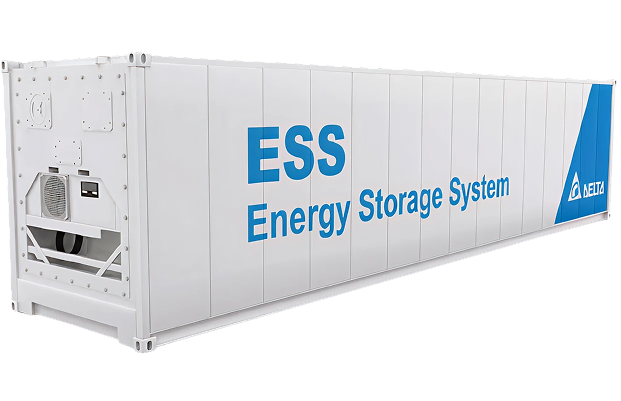
BESS does not yet stand alone for extended outages. A 2 to 4-hour discharge covers a grid disturbance, not a multi-day event, so full battery-only backup at facility scale remains rare. NFPA 855 governs installation spacing and fire protection; UL 9540 certifies against thermal runaway, and cell degradation makes replacement economics part of any honest model.
Why the 2026 Answer Is Usually Hybrid, and How to Size the Split
For most AI-era campuses, the decision is not diesel or gas or BESS. It is which generator pairs with BESS, and how you divide the work. The leading 2026 deployments are hybrids by design.
Gas plus BESS for AI transient campuses
The dominant new-build pattern pairs fast-response gas engines with BESS and often synchronous condensers or STATCOMs. The battery absorbs the sub-second ramp and reactive-power swings, while the engines carry sustained load and provide inertia. Baker Hughes, Caterpillar, and Wartsila deployments follow this template.
Diesel plus BESS for run-hour reduction
Where diesel is already standard, adding BESS changes the compliance math. The battery covers the first seconds to minutes of an outage, so the diesel starts less often and runs fewer hours. Reduced run-hours can keep a set inside its emergency classification and preserve permit headroom.
A simple sizing logic
Assign coverage on a time scale. BESS owns milliseconds to minutes: the ride-through and transient buffer. The generator owns minutes to days: the sustained outage after handoff. Size the BESS for power in kilowatts, not long duration; size the generator for full facility load at your redundancy target. eINDUSTRIFY's skids, BOP, generator systems, and energy-storage categories supply both halves through one pipeline.
A Like-for-Like Total Cost of Ownership Model
This model compares all three on the same basis, with assumptions stated: a 10 MW critical load, Tier III redundancy, a U.S. site with moderate demand charges, and a standby duty cycle under 100 hours (about 8 days) per year. Change these and the ranking shifts, which is the point.
Cost element
Diesel
Natural Gas
BESS (4-hour)
CAPEX per kW
~$1,000
~$1,200 to $1,300
~$1,300
Annual fuel / energy
Low at standby hours
Low per BTU, pipeline-fed
Recharge energy cost
After-treatment
DEF, SCR service (Tier 4)
SCR on some units
None
Maintenance
Fuel polishing, filters, testing
Spark plugs, coils, sensors
BMS, thermal, cell health
Replacement horizon
20 to 30 years
15 to 20 years
Cycle-life dependent
Revenue offset
None at emergency-only
Limited
Peak shaving, ancillary services
Diesel holds the lowest CAPEX near $1,000 per kW against roughly $1,300 per kW for a 4-hour battery on 2025 NREL reference figures. Gas sits 20 to 30 percent above diesel on package cost due to spark-ignition hardware and after-treatment.
At standby duty under 100 run-hours a year, the diesel-gas fuel gap is often negligible. The OPEX story flips at prime or continuous duty, where gas economics and lighter maintenance favor gas for over 15 to 20 years. Only BESS routinely turns a backup asset into revenue: peak shaving alone can offset 20 to 30 percent of electricity spend, and payback can land under three years in high-cost markets.
Net over ten years, emergency-only diesel often wins on lowest total cost where Tier 2 is permittable. In demand-charge-heavy markets or transient-heavy AI campuses, a gas-plus-BESS or diesel-plus-BESS hybrid can beat single-fuel diesel once revenue offsets count. Request current pricing for your load, duty cycle, and jurisdiction through eINDUSTRIFY's RFQ, because these bands move quarterly.
How AI Load Volatility Changes the Backup Power You Should Spec
Traditional server loads draw steadily. AI clusters do not. When thousands of GPUs synchronize on a training step, power demand spikes in milliseconds, and inference generates short, intense bursts on top of the base.
Those sub-second transients are the design driver now, not average kilowatts. Rack densities have climbed from 8 kW toward 80 kW and beyond, so small regulation errors show voltage droop, warm connectors, and nuisance alarms. The failure mode is rarely a clean outage; it is repeated micro-transients wearing the power chain.
A generator alone cannot track a swing that resolves before its governor responds. A campus with heavy synchronized AI load needs a sub-second buffer, which points to BESS or high-rate lithium sized against a documented transient envelope. Characterize that envelope first, then specify the buffering layer against it and size the generator for sustained load.
Choosing by Where You Build: A Jurisdiction-First Framework
The correct technology in Northern Virginia can be the wrong technology in Los Angeles. Geography sets permit-ability, and permit-ability sets the shortlist. Build the decision around your air district first.
US high-restriction markets
In California, Illinois, and parts of Virginia and Oregon, diesel is under active compression. California SB 978 favors hydrogen fuel cells or long-duration storage in high-pollution zones. Illinois Tier 4 begins biting applications after December 1, 2026. Gas, BESS, and hybrids move up the shortlist, and any diesel spec must confirm its permit basis first.
US permit-flexible markets
In much of Texas and permit-flexible regions, the decision reverts to fuel supply and speed-to-power. Diesel stays viable for emergency standby, gas leads for prime and bridge duty, and the OEM slot and interconnection timeline usually decide it, not the air permit.
International considerations
Europe is shifting fastest, with Ireland and Sweden operators moving toward BESS. The Middle East still leans on diesel for grid-instability and climate reasons, where high-ambient packages matter. Across APAC, hyperscale growth in India and Southeast Asia pairs multi-megawatt diesel with rising gas and hybrid adoption. eINDUSTRIFY's data center and power generation industry pages support this cross-market sourcing.
Your 2026 Backup Power Procurement Checklist
Each step removes a way a 2026 procurement package falls apart before commissioning.
Confirm your duty class first. Emergency standby, prime, bridge, or continuous determines your emissions certification, permit path, and warranty basis.
Verify permit-ability in your specific air district before pricing any set. Confirm the tier requirement and any applicable NOx threshold.
Validate usable capacity against the standby-to-continuous derate, not the nameplate, so your N+1 or 2N target holds.
Reserve OEM capacity at land control rather than building permit, because lead times exceed structural design timelines.
Price the hybrid split, not just the single-fuel baseline, wherever demand charges or AI transients change the economics.
Check the secondary market for a permittable in-stock hedge and issue the RFQ early enough to protect your commissioning date.
eINDUSTRIFY's request-a-quote and Prismecs procurement-as-a-service run this checklist across multiple vetted vendors when one OEM cannot hold your window.
Where the Smartest 2026 Backup Decisions Start
The capability worth watching next is fuel flexibility as a hedge against the permitting reset. HVO-ready diesel, hydrogen-blend-capable gas engines, and modular BESS all preserve optionality when the rules in your air district change mid-build. Specify the jurisdiction you have and the one you may face.
When you are ready to price a real configuration, sendeINDUSTRIFY your load, duty cycle, redundancy target, and jurisdiction through ourRFQ. Our procurement-as-a-service team through Prismecs will source permittable, in-window diesel, gas, BESS, and hybrid options across vetted vendors, so your commissioning date drives the equipment, not the other way around.
Frequently Asked Questions
Is BESS cheaper than a diesel generator for a data center?
Not on upfront CAPEX. A 4-hour BESS runs near $1,300 per kW against roughly $1,000 per kW for diesel on 2025 NREL figures. BESS can win on net TCO in demand-charge-heavy markets, where peak shaving and grid-service revenue offset the higher capital cost within a few years.
Can natural gas generators start fast enough for AI loads?
Fast-response gas engines ramp to full load in roughly 7 seconds, close to diesel. They rarely absorb sub-second AI transients alone, so leading deployments pair gas with BESS. The battery handles the millisecond swing, and the engine carries sustained load.
How long can a BESS back up a data center?
Most data center BESS installations are sized for 1 to 4 hours at rated discharge. That covers a grid disturbance or a bridge to generator to start, not a multi-day outage. For extended autonomy, operators still rely on diesel or gas generation alongside storage.
Are diesel generators being banned for data centers?
Not nationally, but restrictions are tightened in specific jurisdictions. California SB 978 targets new diesel in high-pollution zones, and Illinois requires Tier 4 for many applications filed after December 1, 2026. Permit-ability is a county and air-district question.
What is the best backup power for a Tier IV data center?
Tier IV demands the highest fault tolerance, favoring architectures with no single external dependency. Diesel with on-site fuel meets that autonomy test, and hybrid diesel-plus-BESS or gas-plus-BESS designs are increasingly standard. The right answer depends on jurisdiction and commissioning timeline.
Can you run diesel and BESS together?
Yes, and it is a common 2026 architecture. The BESS covers the first seconds to minutes of an outage, so the diesel starts less often and runs fewer hours. Reduced run-hours can preserve the emergency classification and the permit headroom that peak-shaving diesel alone would forfeit.
What is the lead time for data center generators in 2026?
U.S. lead times have run near 42 weeks against a 33-week global average, and major OEMs are booking slots into 2027 and 2028. An order placed in 2026 will miss most near-term commissioning dates, so reserve capacity early or hedge through the secondary market.
Tags: data center backup power BESS energy storage systems gas turbine generators diesel generator procurement hyperscale power infrastructure














 vs Automatic Transfer Switch (ATS) for Data Centers.png)