Static vs Pulse-Jet Gas Turbine Filters: Filter Classes & Replacement Strategy
A baseload plant in the Gulf loses 4 megawatts of output over a single dust season, and the operator blames the turbine before anyone checks the inlet house. The filters were specified for a coastal site, then the plant was built 60 kilometers inland next to an expanding quarry. The elements were never wrong on paper. They were wrong for the air the machine actually breathes.
That mismatch between specification and site is the real subject of this comparison. Choosing between static and pulse-jet inlet filtration is not a catalog decision. It sets your differential pressure curve, your replacement cadence, your compressed air load, and your exposure to unplanned outages for the life of the asset. This guide covers the choice and the ownership phase that follows it, from filter class selection through replacement triggers and total cost of ownership.
Static (barrier) filters trap dust in the media and are replaced when differential pressure hits the turbine maker's terminal limit. Pulse-jet (self-cleaning) filters blow dust off the media with reverse compressed air while the turbine runs. Static suits coastal, humid, and moderate-dust sites and reaches higher efficiency classes, up to HEPA. Pulse suits desert, sandstorm, and arctic sites where dust load or ice bridging would otherwise force an outage. The site decides, not the catalog.
The stakes are measurable. Based on EPA particulate data cited by Donaldson, roughly 1,300 pounds of particulate matter can enter an F-class gas turbine inlet house over a typical year of operation. What gets through fouls compressor blades, raises heat rate, and drops output. Salt and moisture corrode hot-section components. Abrasive dust erodes aerofoil profiles. Compressor washing recovers some fouling loss, but repeated washes degrade output over time and consume availability. The filtration decision is, at root, a decision about how much of that loss you accept and how you pay to avoid it.
Static vs Pulse-Jet Filters at a Glance
Both systems trap particulate before it reaches the compressor. The difference is what happens to the captured dust. A static (barrier) system holds dust in the media until the element is replaced. A pulse-jet (self-cleaning) system periodically blows accumulated dust off the media with a reverse blast of compressed air while the turbine keeps running.
The table below is the short answer. The sections after it explain the reasoning and the numbers behind each row, so every cell here is defensible rather than rounded for convenience.
How Each System Actually Works, and the One Mechanism That Decides Pulsability
The detail that determines whether a filter can be pulse-cleaned is not the housing. It is how the media captures dust. Two loading mechanisms exist, and they behave in opposite ways when you hit them with a reverse pulse.
Depth-loading media traps particles throughout the thickness of the fiber matrix. Progressively smaller particles lodge deeper into the material as air passes through. This captures a wide particle range and builds dust-holding capacity, but the dust is embedded, not sitting on the surface. A reverse pulse cannot extract it, and aggressive pulsing damages the media. Depth-loading filters are therefore replaced, not cleaned.
Surface-loading media does the opposite. Particles collect on the upstream face and form a thin dust cake. That cake increases resistance, but it releases cleanly when the media flexes under a compressed-air pulse from the clean-air side. The dislodged dust falls into a collection hopper, and the element returns near its starting pressure drop. This is the physical basis of self-cleaning, and it is why a pulse system needs surface-loading elements to work at all.
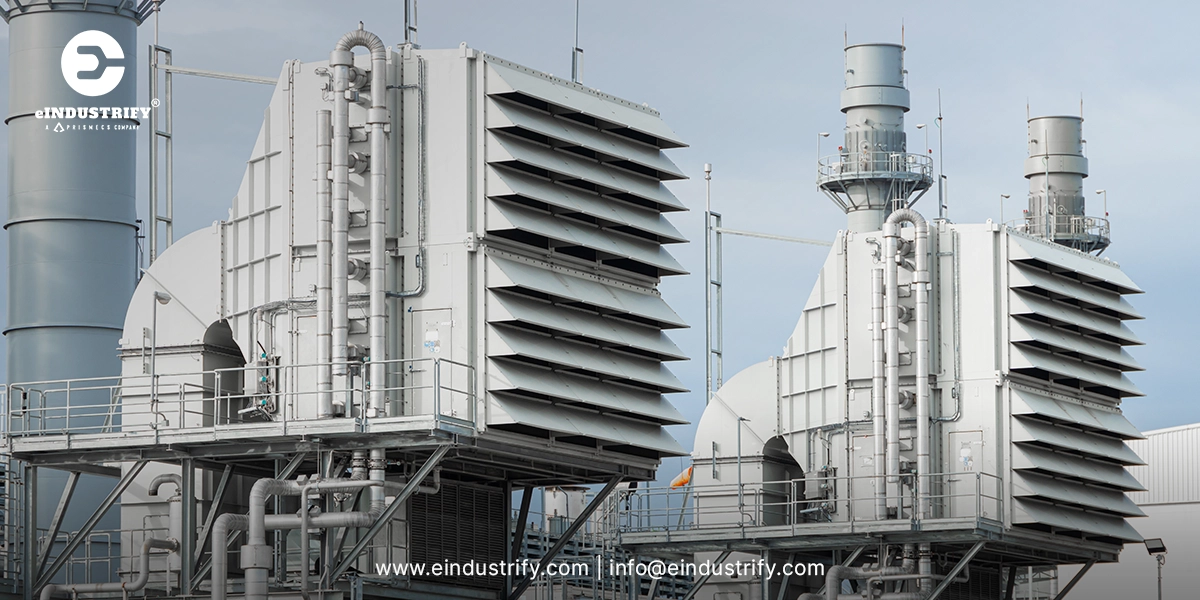
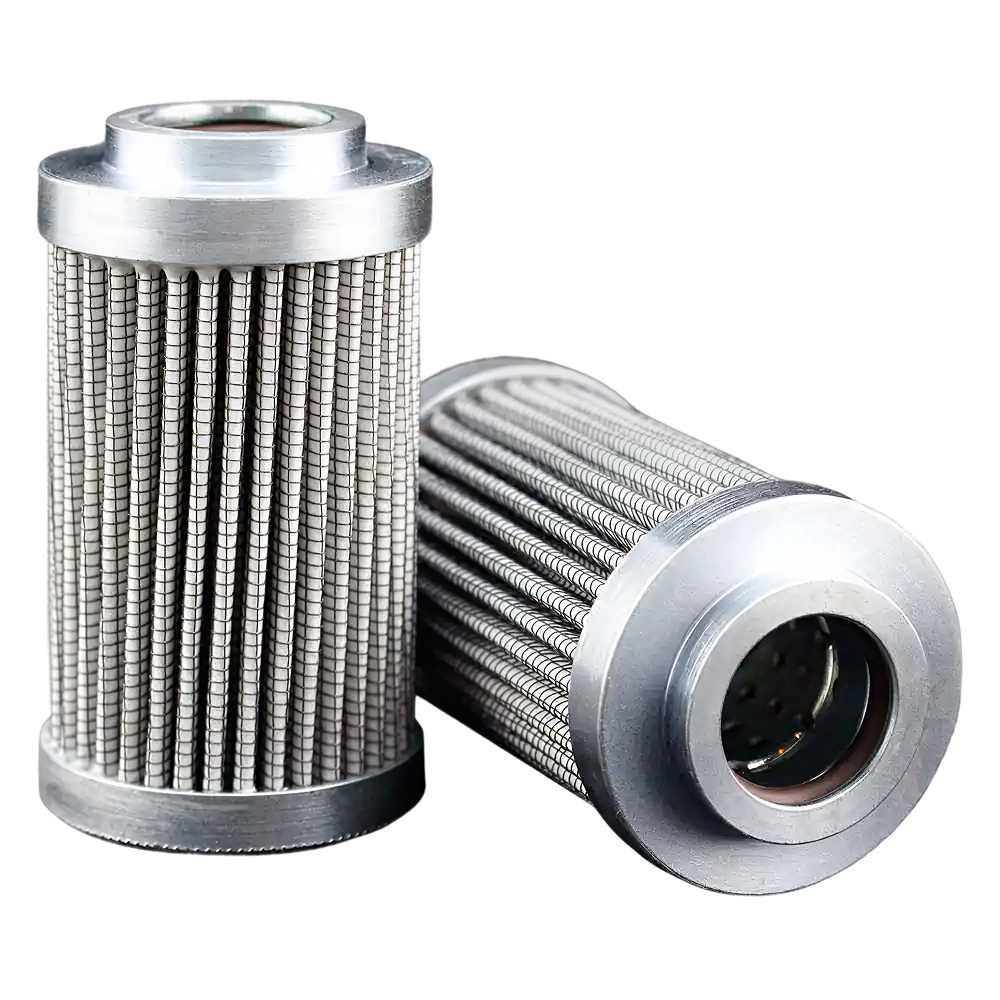
Mechanically, a pulse element is usually a cartridge pair, one cylindrical and one conical, mounted to a tube sheet (the grid plate). Unfiltered air passes radially through the media; clean air exits into a plenum. The two dominant geometries are updraft (Pneuma-Pulse) cartridges derived from baghouse designs and cross-flow arrangements used where footprint is tight. One correction worth stating plainly, because a common misconception runs the other way: pulse cleaning happens while the turbine is running, not during shutdown. In-operation cleaning is the entire reason the architecture exists.
Filter Classes Explained: MERV, EN 779/EN 1822, ISO 16890 and ISO 29461
A filter datasheet can carry four different classification systems, and procurement teams routinely compare elements rated on different scales. Knowing how they map prevents the most common specification error: buying a lower-performing element because its rating looked higher on an unfamiliar scale.
The four standards you will see on a datasheet
MERV (ASHRAE 52.2) runs from 1 to 16 and is still common in North American specifications. EN 779 used the older G, M and F grades (G1 to G4, M5 to M6, F7 to F9) and has largely been superseded. ISO 16890 replaced EN 779 and reports efficiency as ePM1, ePM2.5 and ePM10, tied to the particulate-matter fractions operators actually care about. EN 1822 governs EPA and HEPA filters, defining HEPA as at least 99.95 percent removal at the most penetrating particle size.
ISO 29461: the gas-turbine-specific standard nobody else explains
The standard built for this application gets almost no coverage in competing material, which is a gap worth closing. ISO 29461-1:2021 is the turbomachinery inlet filter test standard. Its second edition introduced a unified T-classification of 13 efficiency classes, T1 to T13, spanning coarse pre-filtration to HEPA-grade final filtration.
The classes draw on existing test protocols: T1 through T9 are evaluated using ISO 16890 methods, while T10 through T13 use ISO 29463 (the HEPA test basis). Coarse classes T1 to T4 are dust-loaded to a final pressure drop of 375 Pa, and fine and high-efficiency classes T5 to T13 are loaded to 625 Pa, at which point dust-holding capacity is recorded. ISO 29461 also strips out electrostatic charge effects, which dissipate quickly in service and overstate field efficiency. For a buyer, that means a T-class rating reflects mechanical efficiency you will still have months into operation.
ISO 29461 Part 2 adds something HVAC standards ignore entirely: a water-ingress endurance test under controlled fog and mist. For coastal and offshore sites, that test is the difference between a filter that holds and one that collapses under salt-laden moisture.
Crosswalk: matching old F-class to ISO ePM and MERV
Use the crosswalk below to compare elements specified on different scales. Treat it as practical alignment, not laboratory equivalence, since the test methods differ.
Legacy EN 779
ISO 16890 (approx.)
MERV (approx.)
ISO 29461 band
G3 / G4
Coarse
MERV 5 to 8
T1 to T2
M5 / M6
ePM10
MERV 9 to 11
T3 to T4
F7
ePM2.5
MERV 13
T5 to T6
F8
ePM1 ~60 to 70%
MERV 14
T7
F9
ePM1 ~80%
MERV 15
T8 to T9
E10 to H14 (EN 1822)
EPA / HEPA
Above MERV 16
T10 to T13
Fitment by Turbine Frame: LM2500, LM6000 and TM2500
Filter selection is usually discussed as if turbines were interchangeable. They are not. Frame size sets airflow, airflow sets element count, and the inlet house that was engineered around one frame will not accept another's cartridge array without modification. Before you compare static against pulse, establish what your frame was built to take.
Aeroderivative frames and the fast-start problem
Aeroderivative machines, the GE LM2500 and LM6000 families, and the trailer-mounted TM2500, are specified for fast start and high cycling. That operating profile changes the filtration calculus in two ways. Frequent starts mean frequent inlet transients, so watertightness and element structural integrity matter more than on a baseload heavy-duty frame. And because these units are often deployed to sites chosen for speed rather than air quality, remote grids, emergency response, temporary power, data-center backup, the air they breathe is rarely the air the original spec assumed.
What changes across frames
Frame
Typical service profile
Filtration consequence
LM2500
Mid-size aeroderivative, industrial and marine
Compact inlet footprint; element count and staging constrained by house depth
LM6000
High-efficiency aeroderivative, fast-start
Higher airflow per frame; pulse systems common in high-dust deployments (e.g. LM6000 UG3 pulse air filter systems)
TM2500
Mobile / trailer-mounted, rapid deployment
Deployed to unknown air quality; static elements sized for transport envelope (e.g. TM2500 GEN8 static air filter)
Heavy-duty (E/F/H class)
Baseload, large frame
Largest element counts; GT26-class frames run 518 static or 1,176 pulse elements depending on installation
Why frame matters more than most specs admit
A pulse house needs more elements at lower velocity to manage pressure drop, which means it needs footprint. On an aeroderivative package where the inlet house was dimensioned for a compact static array, converting to pulse is frequently blocked by physical space before it is blocked by budget. Conversely, a frame originally deployed to a clean-air site and later relocated, the common story with mobile TM2500 units may be running elements two classes below what its new environment demands.
eINDUSTRIFY stocks turbine air filters, pulse air filter systems, and static elements across LM2500, LM6000 and TM2500 packages. If you know your frame and your site conditions, we can match the class before you commit to a house architecture. If you know only your existing part number, we can cross-reference it.
The Pressure-Drop and Energy-Cost Penalty of Pulse Geometry
Pulse cartridges carry a structural disadvantage that rarely appears in a sales conversation: their geometry resists airflow more than a comparable static compact filter using the same media. The reason is aerodynamic, not media quality.
Controlled testing by a European filter manufacturer makes the point with the same media roll in two filter formats. A pulse cartridge measured roughly 140 Pa at a test flow, against about 131 Pa for a compact filter, but the comparison hides a velocity difference. The pulse element ran at 2.03 cm/s media velocity while the compact ran at 5.31 cm/s. Normalized to equal velocity, the aerodynamic penalty of the pulse pleat geometry was an order of magnitude larger than the compact filters.
Plants compensate by packing more filters into a pulse house to drop the per-element velocity. The same study showed a single Alstom GT26 frame served by 518 static compact filters in a European installation versus 1,176 pulse filters in a Middle East installation moving comparable air. More elements at lower velocity keep system pressure within limits, which is exactly why the Saudi Aramco desktop standards cap cleanable-system initial pressure differential at 400 Pa.
Pressure drop is not an abstract number. Every additional inch of water gauge across the inlet is inlet depression the compressor has to overcome, and it shows up as a heat-rate penalty and lost output. When you evaluate a pulse system, you are accepting a higher baseline resistance in exchange for in-operation cleaning. Whether that trade pays depends entirely on the site, which is the next section.
Environment Decision Matrix: Match the Site to the System and the Class
The single most useful thing a buyer can do is stop treating dust as the only variable. Four conditions drive the decision together: particulate load, salt aerosol, humidity, and temperature extremes. The matrix below combines them into a starting recommendation.
Site condition
Recommended system
Target class
Primary risk to manage
Desert / high dust / sandstorm
Pulse-jet
ISO ePM10 to ePM1 / T4 to T8
Rapid loading, abrasive erosion
Coastal / marine
Static, multi-stage
ePM1 / T8 to T9 + water test
Salt corrosion, water ingress
Tropical / high humidity
Static, multi-stage
ePM1 / T7 to T9
Media wetting, pressure spikes
Arctic / snow / icing
Pulse-jet
ePM2.5 to ePM1 / T5 to T8
Ice bridging, dP spikes
Urban / moderate
Static
ePM2.5 to ePM1 / T6 to T8
Cost-efficiency balance
Petrochemical / industrial
Static + gas-phase
ePM1 / T8 + molecular stage
Hydrocarbon and gummy deposits
Agricultural / seasonal dust
Pulse-jet or hybrid
ePM10 to ePM1 / T4 to T8
Seasonal load swings
How to measure your site before you choose
Specify against data, not anecdote. A direct-reading laser photometer measures airborne particulate in mg/m3 and gives you the dust load that anchors the whole decision. As a practical threshold, sustained loads above roughly 0.3 mg/m3 or frequent sandstorm events push the choice toward pulse.
Log salt aerosol and humidity across a full seasonal cycle, not a single survey day. Turbine makers typically want less than 0.01 ppm of salt reaching the machine, while coastal air can carry 0.05 to 0.5 ppm on an ordinary day. That gap is what your watertightness rating and staging have to close.
When inertial separation belongs in front of either system
In very heavy or coarse dust, an inertial separation stage ahead of the filters earns its footprint. It forces a sudden change in air direction so heavier particles continue straight into a hopper while the airstream turns toward the elements. Used as a pre-stage, it strips the coarse fraction that would otherwise load fine filters in days, extending element life regardless of whether the downstream system is static or pulse.
Anti-Icing: The Pulse Capability Static Cannot Replicate
In cold climates, the filter decision is partly an icing decision. When snow or freezing fog bridges across filter faces, differential pressure climbs fast, and a static house has only two defenses: inlet bleed heat and hope. A blocked static element in a snow event is a forced derate or trip.
A pulse system adds a third defense. The same reverse pulse that sheds dust also knocks down snow and ice bridging before it seals the face, which is why some cold-climate plants run pulse systems primarily for de-icing rather than dust. Hydrophobic media helps, but it manages water, not accumulation. Where winter availability is contractual, the pulse capability is not a luxury; it is the mechanism that keeps the machine online through the event.
There is a hybrid worth knowing about. Some designs run static and pulse elements in parallel in the same stage, using the pulse cartridges purely for anti-icing margin while static elements carry the optimized filtration. The turbine keeps running even if a fraction of elements ice, because the rest remain clear.
The Hidden Cost of Pulse: Compressed Air, Valves and Controls
The brochure cost of a pulse system is the housing and elements. The real cost includes a subsystem that runs for the life of the plant. A pulse house needs a continuous, reliable compressed-air supply at header pressure, plus the diaphragm or solenoid pulse valves, a controller, and the instrument air that feeds them.
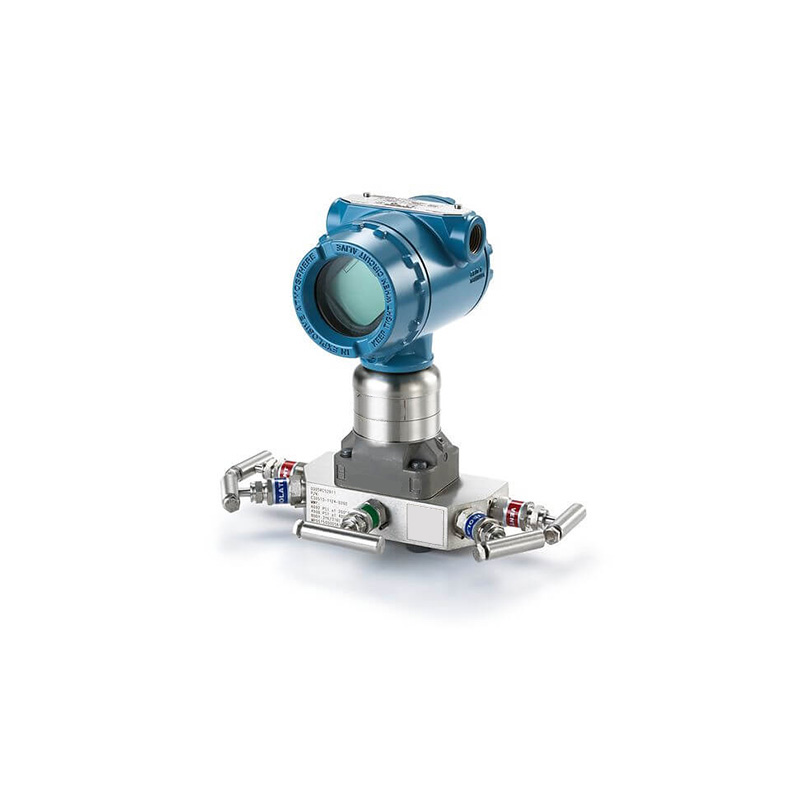
Those pulse valves are consumables on a slow clock. Diaphragms fatigue, solenoids stick, and a valve that fails to fire leaves a bank of elements loading without relief. The controller logic matters too. Pulse cleaning is triggered one of three ways: manually, on a fixed time interval, or on measured differential pressure. Differential-pressure triggering is the most efficient because it pulses only when the system needs it, but it depends on a healthy dP transmitter that itself needs calibration.
None of this is a reason to avoid pulse. It is a reason to budget for it. A static house has no air system to maintain, and no valves to replace, and that simplicity is part of its lower running cost in the right environment. When a procurement model compares the two on element price alone, it understates pulse and overstates the savings.
Replacement Strategy: When to Pulse-Clean and When to Replace
Filters do not have a calendar expiry; they have a pressure-drop expiry. The decision that actually matters in operation is not how old an element is but what its differential pressure is telling you, and whether the right response is a pulse cycle or a replacement.
Reading differential pressure: the numbers that trigger action
Differential pressure across the filter bank, read on a dP transmitter or a Magnehelic gauge, is the primary signal. Each system has a final, or terminal, dP set by the turbine maker, beyond which inlet depression threatens output and the elements must come out. As a practical pattern, fine and high-efficiency classes under ISO 29461 are dust-loaded in test to 625 Pa, and field terminal limits sit in that neighborhood depending on the OEM and the house design.
In a static house, a rising dP toward the terminal limit means schedule a replacement. In a pulse house, a rising dP first means clean: trigger a pulse cycle and watch whether the curve recovers. When the recovered baseline keeps climbing pulse after pulse, the element has reached the point where cleaning no longer restores it, and replacement is due.
Static replacement cadence versus pulse element replacement
Static elements run from six months to three years depending on class and site, with higher-efficiency final filters generally outliving the coarse prefilters that protect them. Replace prefilters on their own faster cycle to preserve the expensive final stage. Pulse cartridges, kept clean by effective pulsing, commonly reach one to three years, but their life is governed by media fatigue and irrecoverable embedded dust rather than simple loading.
Aligning filter changes to planned outages
The most expensive filter change is the one that forces an unplanned shutdown. Track the dP trend and project the terminal-limit crossing against the maintenance calendar, then pull the change forward into the nearest planned outage rather than letting it dictate its own. A static plant that monitors dP trend can almost always convert a would-be forced outage into a scheduled swap. This is where predictive replacement pays for the instrumentation it requires.
Total Cost of Ownership: Static vs Pulse Over the Asset Life
Element price is the smallest honest line in the comparison. A defensible TCO model for inlet filtration carries six cost components, and the ranking between static and pulse flips depending on which dominate at your site.
Capital cost: housing, elements, and for pulse, the valves, controller and air header.
Energy penalty: the heat-rate and output cost of carrying the system's baseline and loaded pressure drop.
Replacement cost: element price multiplied by replacement frequency over the asset life.
Compressed-air and valve maintenance: a pulse-only line covering air consumption and pulse-valve servicing.
Water-washing cost: a static-heavy line covering wash labor, water, and the output lost during washes.
Downtime risk value: the expected cost of forced outages the system is meant to prevent.
The pattern is consistent even without site-specific figures. In low-to-moderate dust with corrosion or humidity exposure, static usually wins TCO because it avoids the air subsystem and reaches higher efficiency classes that cut fouling and washing. In heavy or seasonal dust, pulse wins because in-operation cleaning collapses the replacement-frequency and forced-outage lines that would otherwise dominate. Build the model with ranges for your own site rather than trusting a single payback figure, because the honest answer is conditional and any vendor quoting a universal payback is selling, not modeling.
Retrofit and Conversion: Switching Between Static and Pulse
Operating conditions change. A quarry opens upwind, a peaking unit converts to baseload, or a coastal plant finally tires of corrosion. The question becomes whether to convert the existing inlet house rather than replace it.
Converting static to pulse is the harder direction. It requires a tube sheet and grid-plate arrangement that accepts cleanable cartridges, the physical space for the cartridge array, and a compressed-air supply and controls the static house never had. Footprint is often the binding constraint, because pulse systems need more elements at lower velocity to manage pressure drop. Converting pulse to static is usually simpler, since you are removing a subsystem rather than adding one, and a pulse house typically has the depth to accept static compact filters.
A frequent middle path is the parallel hybrid: retain or add pulse cartridges for anti-icing or peak-dust contingency while running static elements for primary, higher-class filtration. For a peaking-to-baseload conversion, where downtime intolerance rises and water washing stops being an option, the upgrade is often toward higher efficiency and watertightness with less reliance on pulsing. Scope the conversion as an engineered project, not a parts swap, because the grid plate, air supply and footprint decide feasibility before the elements do.
Source the Right Turbine Filters for Your Site with eINDUSTRIFY
The filter you choose today directly impacts long-term equipment performance, pressure drop, and reliability. As dust load, humidity, salt exposure, and ambient conditions change, tracking differential pressure and site conditions helps turn future filter upgrades into planned decisions instead of reactive fixes.
eINDUSTRIFY simplifies filter sourcing through its industrial B2B marketplace, RFQ workflow, and Procurement-as-a-Service support. We help buyers identify and source industrial air filters,turbine air filters, glass fiber filters, and replacement filter elements matched to their application.
Our team supports cross-referencing by ISO 29461, ISO 16890, EN 1822, and MERV class to convert obsolete, hard-to-find, or mis-specified parts into reliable equivalents or upgraded solutions. Submit your filter data sheet, part number, or site conditions through eINDUSTRIFY’sRFQ process, and we’ll help provide a class-matched recommendation for maintenance, outage, or capital planning.
Frequently Asked Questions
What is the main difference between static and pulse gas turbine filters?
A static filter holds captured dust in the media until you replace the element. A pulse-jet filter blows accumulated dust off the media with a reverse compressed-air pulse while the turbine runs, so it cleans itself instead of being swapped.
Are pulse filters more efficient than static filters?
No. Static filters reach higher efficiency classes, up to HEPA grade (EN 1822 H13/H14, ISO 29461 T13). Pulse filters use surface-loading media and rarely reach HEPA. Pulse wins on continuous operation in heavy dust, not on peak efficiency.
What filter class do gas turbines need?
It depends on the site. Most installations land between ISO ePM2.5 and ePM1 (roughly ISO 29461 T5 to T9), with coastal and clean-air-critical plants pushing toward EPA or HEPA. Match the class to dust, salt and humidity, not to a default.
What is ISO 29461 and why does it matter?
ISO 29461-1:2021 is the test standard built specifically for turbomachinery inlet filters. It defines 13 efficiency classes (T1 to T13) and reports mechanical efficiency with electrostatic effects removed, so the rating reflects real in-service performance rather than a charge that fades in weeks.
Do pulse filters clean during turbine operation or only at shutdown?
During operation. In-operation cleaning is the entire purpose of a pulse system. Short reverse blasts of compressed air dislodge dust into a hopper while the turbine keeps running, which is the opposite of a common misconception.
How much compressed air does a pulse filter system need?
Enough continuous, reliable supply at header pressure to fire every pulse valve on its cleaning cycle for the life of the plant. The air system, valves and controls are an ongoing cost, which is why pulse running cost exceeds static in low-dust sites.
At what differential pressure should gas turbine filters be replaced?
At the terminal differential pressure set by the turbine maker for your house. ISO 29461 dust-loads fine and high-efficiency filters to 625 Pa in testing, and field terminal limits sit in that range. In a pulse house, pulse first; replace only when the cleaned baseline keeps climbing.
How long do gas turbine inlet filters last?
Static elements typically run six months to three years, with final filters outliving prefilters. Well-maintained pulse cartridges commonly reach one to three years. Life is governed by pressure-drop behavior and media condition, not a fixed calendar.
Which filter is best for desert, coastal or arctic conditions?
Desert and arctic favor pulse, for dust shedding and de-icing respectively. Coastal favors static, multi-stage filtration with a water-ingress-tested element to handle salt and moisture. The environment matrix above maps each condition to a system and class.
Can a static filter house be converted to pulse?
Sometimes, but it is the harder conversion. It needs a compatible grid plate, footprint for the cartridge array, and a new compressed-air supply and controls. Scope it as an engineered project; footprint and air supply usually decide feasibility before element choice does.
Tags: gas turbine inlet filtration ISO 29461 filter classes pulse-jet self-cleaning filters differential pressure replacement strategy turbine filter total cost of ownership













 vs Automatic Transfer Switch (ATS) for Data Centers.png)