The Importance of Circuit Protection Devices in Preventing Power Failures
A feeder trip during a turbine restart. The standby generator fails to carry expected loads. The root cause is not the motor, transformer, or switchgear; it is a protection device that did not match the fault conditions of the system. One underrated breaker, misapplied fuse, failed fuse holder, uncoordinated relay, damaged surge protector, or missing lightning arrester is enough to turn a controlled interruption into a forced outage.
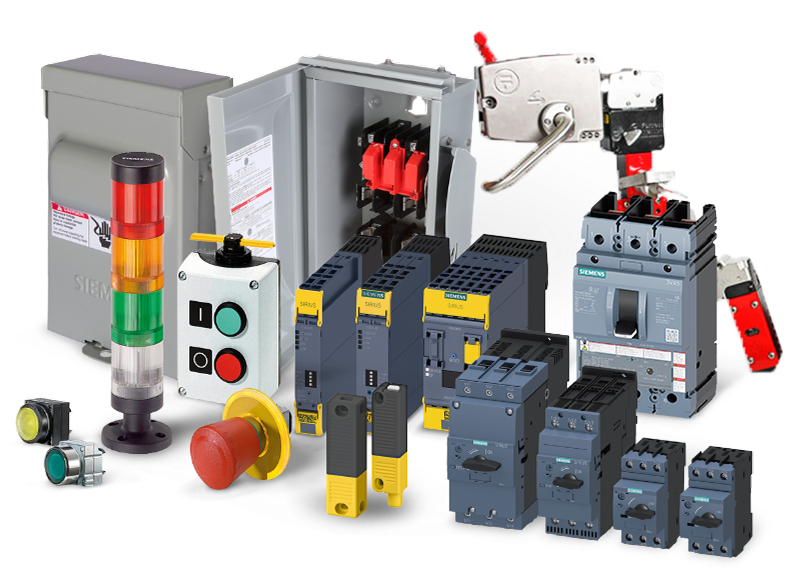
For power generation facilities, data centers, utilities, manufacturing plants, and EPC-managed projects,circuit protection devices are uptime assets, not basic electrical accessories. They determine whether an abnormal electrical event stays local or becomes equipment failure, arc flash hazard, commissioning delay, or emergency procurement problem.
How circuit protection devices control fault energy
Circuit protection devices detect abnormal current or voltage and interrupt, isolate, or divert the fault before damage spreads. The real target is fault energy, which overheats conductors, damages insulation, deforms busbars, ruptures components, and trips upstream systems. Controlling that energy at the right point keeps a local fault from cascading.
Common fault conditions carry distinct risk profiles. Overloads slowly overheat equipment over time. Short circuits release destructive energy in milliseconds. Transient voltage spikes damage control electronics without stopping production immediately. Arc faults create intense heat and ignition risk inside panels, raceways, or degraded wiring.
Selecting a device by amp rating alone ignores interrupting capacity, trip curve, voltage class, coordination, environmental rating, available fault current, and system criticality. Each factor determines whether a device performs under the specific failure mode it must control. Under NEC 110.9, an interrupting device must have an interrupting rating at least equal to the available fault current at its line terminals.
The main circuit protection devices at a glance
Circuit protection divides into distinct device types, each governed by its own standard. The table maps them, and the detail follows.
Device
Function
Governing standard
Circuit breaker
Interrupt overcurrent, resettable
UL 489
Fuse
Interrupt overcurrent, one-time
UL 248
Fuse holder
Mount and connect the fuse
UL 4248
Surge protector (SPD)
Divert transient voltage
UL 1449
Lightning arrester
Divert lightning surge to ground
IEEE C62
Protective relay
Sense and command trip
IEEE C37.2
Circuit breakers: ratings and trip behavior must match the system
Circuit breakers protect switchboards, motor control centers, feeders, transformers, generator auxiliaries, pumps, compressors, HVAC loads, and control panels. In the United States, molded-case breakers are governed byUL 489. A 400 A breaker with the wrong interrupting rating, mismatched trip curve, or incompatible accessories is still the wrong device, however familiar the frame size looks.
The breaker's interrupting rating, or AIC, is expressed in kA RMS symmetrical at a stated voltage, such as 35 kAIC at 480 V. Under NEC 110.9, that rating must be at least the available fault current at the line terminals. Do not substitute a UL 1077 supplementary protector where a UL 489 branch-circuit breaker is required, since supplementary protectors carry much lower interrupting capability.
Selection factor
Why it matters
Interrupting capacity (AIC)
Confirms the breaker can clear available fault current
Trip curve
Sets reaction speed under overload and short circuit
Voltage rating
Confirms suitability for the system voltage class
Frame and mounting
Confirms physical and switchgear compatibility
Trip unit type
Affects adjustability, diagnostics, coordination
Short-time withstand
Supports selective coordination in larger systems
Certifications
Supports inspection and project acceptance
Lead time and lifecycle
Reduces outage and obsolescence risk
Fuses, Fuse Holders, and Safety Switches: More Than the Circuit Element
Fuses, fuse holders, and safety switches work as a set, and a weakness in the supporting hardware defeats a correctly chosen fuse. Each element carries its own rating requirement, and each is governed by its own listing.
Fuses
Fuses limit fault current before peak energy fully develops, making them effective where short-circuit energy must be controlled aggressively. They commonly protect transformers, drives, motor circuits, control panels, capacitor banks, and semiconductor equipment, and are governed byUL 248.
A fuse must match the application's voltage, current, interrupting rating, time-current characteristics, load profile, and inrush behavior. Motor circuits, transformers, and power electronics often require different fuse classes, because normal startup behavior can resemble a fault if the wrong fuse is installed.
Fuse Holders
The supporting hardware matters as much as the fuse element, and fuse holders are governed by UL 4248. A degraded fuse holder creates heat, poor contact pressure, nuisance trips, and voltage drops inside a panel.
In high-duty environments, fuse clips, terminals, insulation condition, enclosure rating, and replacement compatibility deserve the same inspection discipline as the fuse. A fuse holder must match fuse class, current rating, voltage rating, mounting style, and environmental conditions.
Safety Switches
Safety switches provide visible disconnection for maintenance, fault isolation, and load control on motors, transformers, HVAC units, pumps, and auxiliary systems. A safety switch must match the load type, enclosure requirement, duty rating, and installation environment.
Treated as generic hardware, a safety switch becomes a liability in isolation safety, duty performance, and recovery time. Confirm the duty rating and enclosure type against the actual load and environment before specifying.
Surge protectors and lightning arresters: preventing silent electrical damage
Not every power failure comes from sustained overcurrent. Transient voltage events damage sensitive electronics before a visible outage occurs, weakening insulation, degrading control boards, corrupting signals, and shortening component life. The system may keep running until a later restart or transfer exposes the damage.
Surge Protectors
Surge protective devices (SPDs) defend PLCs, turbine controls, SCADA systems, protection relays, UPS systems, VFDs, and metering from voltage spikes. They are governed byUL 1449, and spikes arise from utility switching, capacitor operations, generator switching, motor starts, and load rejection.
Lightning Arresters
Lightning arresters divert high-voltage surge energy to ground on systems exposed to lightning, and are covered by the IEEE C62 family. They reduce the risk of insulation breakdown, transformer damage, switchgear stress, and control failure on outdoor or utility-connected assets.
Surge protection must be layered, not a single device in the electrical room. Main service entrances, distribution panels, control panels, generator systems, UPS input and output points, transformer connections, and outdoor assets each require coverage matched to their exposure and equipment sensitivity.
Arc fault protectors: addressing fire risk before it becomes equipment loss
Arc faults occur when damaged insulation, loose connections, degraded wiring, vibration, or contamination creates unintended arcing. The consequence in industrial environments is not only nuisance tripping; it is heat concentration, ignition risk, enclosure damage, and personnel exposure. NEC 240.87 addresses arc-energy reduction on larger breakers.
Arc fault protectors detect arcing signatures that do not behave like traditional overloads or bolted short circuits. They are especially relevant in control panels, auxiliary systems, aging wiring, temporary power, and facilities where vibration or environmental exposure degrades terminations. Device compatibility, nuisance-trip behavior, voltage class, load type, and coordination must be evaluated before specification.
Short-circuit protectors: matching the device to available fault current
A short-circuit protector must safely interrupt high fault current without rupturing, welding contacts, damaging enclosures, or letting fault energy spread upstream. This function may be performed by a circuit breaker, fuse, current-limiting device, or coordinated protection assembly.
The critical parameter is the available fault current at the point of installation. If that current exceeds the device's interrupting rating, the protection system carries unacceptable risk: the device may fail violently, damage equipment, or expose personnel to hazardous energy. This is the NEC 110.9 requirement in practice.
Requirement
Procurement question
Available fault current
What fault current can appear at the installation point?
Interrupting rating
Can the device safely clear that current?
Current limitation
Does the device reduce let-through energy?
Coordination
Will the correct upstream or downstream device operate first?
Equipment SCCR
Does the device preserve the panel or assembly rating?
Replacement equivalency
Does the substitute match the original protection function?
Protective relays: containing faults to one zone
Protective relays monitor electrical conditions and command breakers to trip when fault thresholds are reached. In medium-voltage systems, generator and transformer protection, substations, and large distribution networks, relays provide precision that thermal-magnetic devices cannot. Their functions are standardized by IEEE C37.2 device numbers, such as 50/51 for overcurrent, 87 for differential, and 27/59 for under and over-voltage.
The value of relays comes from selectivity: identifying the faulted zone and removing only that section. In a power plant, that isolates one feeder rather than tripping an entire auxiliary system. In a data center, it protects a downstream path without compromising upstream UPS or generator-backed loads.
Selective coordination: ensuring the right device trips first
Selective coordination ensures the protective device closest to the fault operates before upstream devices trip. Without it, a local branch fault can take down multiple feeders, stop production, and force a broader restart. NEC 240.12 and, for emergency systems, NEC 700.28 address coordination requirements.
Coordination depends on the combined behavior of breakers, fuses, relays, switchgear, and available short-circuit current. It is not achieved by sourcing high-quality components in isolation; the devices must work together as a system. This is covered device-by-device in our companion guide on industrial circuit breakers for power generation safety.
For procurement teams, this directly affects substitution. A lower-cost alternate meeting basic ratings may still undermine coordination. Review any substitute against time-current curves, interrupting ratings, short-time withstand, relay settings, and OEM compatibility before accepting it.
Circuit protection in power generation facilities
Gas turbines, steam turbines, generators, transformers, excitation systems, lubrication and ventilation systems, control panels, and balance-of-plant equipment all depend on reliable protection. A protection failure here can trigger a forced outage, generator trip, transformer damage, MCC failure, or emergency replacement.
Protection devices must be evaluated by the operational consequence of the asset they support. A breaker on a lube oil pump carries a different consequence than one on a lighting panel. A lightning arrester on an outdoor transformer carries a different risk profile than general-purpose branch protection. These assets are served through the Power Generation, Data Centers, and Electric Utilities hubs.
Procurement errors that create protection failures
Most circuit protection failures trace back to sourcing decisions made under schedule pressure: a substitute offered by a distributor, an amp rating that matched, a project that moved forward. Technical equivalency was assumed rather than verified.
Procurement error
Failure risk
Buying by amp rating only
Device may not clear available fault current
Accepting unverified substitutes
Trip behavior, fitment, or certification may differ
Ignoring trip curves
Protection may nuisance trip or fail to coordinate
Missing SCCR impact
Panel or assembly rating may be compromised
Overlooking environmental conditions
Heat, dust, moisture, or corrosion reduces reliability
Replacing a fuse holder without checking class
Poor contact, overheating, or incorrect protection
Installing an SPD without layered planning
Sensitive controls remain exposed to transients
Treating a safety switch as generic hardware
Isolation, duty, or enclosure suitability compromised
Not checking obsolescence
Future replacement unavailable during an outage
Skipping documentation
Engineering and commissioning approval delayed
Procurement teams reduce these risks by requiring datasheets, certifications, time-current curves, OEM cross-reference data, enclosure ratings, and lead-time confirmation before issuing purchase orders.
Maintenance: keeping protection calibrated over time
Circuit protection devices age, and heat, vibration, dust, corrosion, load cycling, and mechanical wear reduce performance. A device correct at installation can become unreliable without disciplined maintenance, a practice framed by NFPA 70B for electrical equipment maintenance.
O&M programs should include infrared inspections and torque checks, breaker and relay testing, fuse and fuse-holder inspection, surge protector and lightning arrester condition checks, safety switch operation checks, and insulation resistance testing. Repeated trips are not operational noise; they signal overload, poor coordination, insulation degradation, loose connections, harmonic effects, arc fault activity, or an incorrectly selected device. Maintenance data must feed procurement, addressing root cause rather than restocking the same component.
Pre-purchase evaluation checklist
Before sourcing any circuit protection device, procurement engineers and EPC teams should verify the following. This checklist converts protection sourcing from a purchasing task into a reliability decision.
Requirement
Practical question
Voltage rating
Does the device match the system voltage class?
Current rating
Does it match load demand and conductor ampacity?
Interrupting rating
Can it clear available short-circuit current (NEC 110.9)?
Trip curve / relay settings
Will it coordinate with upstream and downstream devices?
SCCR impact
Does it preserve the panel or assembly rating?
Fuse holder compatibility
Does the holder match fuse class, rating, and enclosure?
Surge protection rating
Is the SPD suitable for the exposure point?
Lightning protection role
Is an arrester required for outdoor or utility assets?
Arc fault protection
Is arc fault detection appropriate for the circuit?
Safety switch duty
Does it match load, enclosure, and isolation needs?
OEM compatibility
Will it physically and electrically fit the equipment?
Certification / listing
Will it satisfy inspection and project requirements?
Environmental rating
Can it withstand site heat, dust, moisture, corrosion?
Documentation
Are datasheets, curves, and test records available?
Lead time
Can it support outage or emergency replacement needs?
Key takeaway: rank protection devices by consequence, not category
The right circuit protection strategy does not begin with buying better breakers, fuses, or relays. It begins with ranking every protection device by the consequence of its failure.
A device tied to a turbine auxiliary, generator system, transformer feeder, UPS path, switchgear lineup, or critical control panel deserves tighter sourcing control than a low-consequence branch circuit. That means stronger documentation, verified compatibility, confirmed lead times, reliable supplier vetting, and a clear spare strategy before the next outage or commissioning window.
Source circuit protection devices through eINDUSTRIFY
eINDUSTRIFY helps industrial buyers source trusted circuit protection devices, switchgear components, generators, transformers, and mission-critical power infrastructure through vetted suppliers and RFQ-based procurement support. Browse the live Electrical category and itsCircuit Breakers range.
For hard-to-find parts, bulk electrical requirements, emergency replacements, or technically sensitive substitutes, eINDUSTRIFY provides Procurement-as-a-Service with documentation, cross-referencing, and lead-time transparency built in.Submit an RFQ to route your specification to suppliers with the relevant product expertise.
Frequently asked questions
What are the main types of circuit protection devices?
The main circuit protection devices are circuit breakers (UL 489), fuses (UL 248), fuse holders (UL 4248), surge protective devices (UL 1449), lightning arresters (IEEE C62), and protective relays (IEEE C37.2). Each detects or diverts a specific fault type, from sustained overcurrent to transient voltage, and each carries its own rating and listing requirement.
What is the difference between a fuse and a circuit breaker?
A fuse interrupts overcurrent by melting a metal element and must be replaced after operating, limiting fault current quickly before peak energy develops. A circuit breaker interrupts overcurrent mechanically and resets after tripping. Fuses are governed by UL 248 and breakers by UL 489. Fuses suit fast current limiting; breakers suit resettable protection and adjustable trip units.
What is the difference between SCCR and interrupting rating (AIC)?
Interrupting rating, or AIC, is a device rating under UL 489 or UL 248, the fault current a single breaker or fuse can safely clear, expressed in kA RMS symmetrical. SCCR is an assembly rating for a panel or control cabinet. Both must be at least the available fault current under NEC 110.9 and 110.10.
What is the available fault current and why does it matter?
Available fault current is the maximum current that can flow at a point in the system during a short circuit. Under NEC 110.9, every interrupting device must have an interrupting rating at least equal to it. If the available fault current exceeds the device rating, the device can fail violently, damage equipment, and expose personnel to hazardous energy.
What is the difference between a surge protector and a lightning arrester?
A surge protective device (SPD), governed by UL 1449, diverts internally generated transient voltage from utility switching, motor starts, and capacitor operations to protect sensitive electronics. A lightning arrester, covered by the IEEE C62 family, diverts high-energy lightning surges to ground on outdoor and utility-connected assets. A layered strategy often uses both at different points.
What is selective coordination?
Selective coordination ensures the protective device closest to a fault operates before any upstream device, so only the faulted section is isolated. NEC 240.12 and 700.28 address it. Without coordination, a single branch fault can trip upstream feeders and take down multiple circuits, turning a local event into a facility-wide outage.
What is a protective relay device number?
Protective relay functions are standardized by IEEE C37.2 device numbers, a shorthand for the protection each relay performs. Common examples are 50/51 for instantaneous and time overcurrent, 87 for differential protection, 27 and 59 for under and over-voltage, and 32 for reverse power. These numbers let engineers specify protection schemes unambiguously.













 vs Automatic Transfer Switch (ATS) for Data Centers.png)