Industrial Power Supply Systems: Specification and Procurement Guide for Plant Engineers
Specifying the wrong power supply system rarely announces itself on commissioning day. It shows up later, as a trip coil that fails to energize during a switching sequence, a UPS battery string that delivers forty minutes of runtime instead of ninety, or a DC supply that sags under pulse load and corrupts a protection relay's memory. By then the procurement decision is months old, and the correction costs far more than better specification would have.
Most sourcing errors in this category share one root cause. The selection focused on nominal ratings rather than on how equipment behaves under the real load profiles, environmental conditions, and failure scenarios of the specific installation. Undersized capacity for peak demand, incorrect environmental ratings, and topology mismatches account for the majority of field problems.
This guide works through each major system type: AC power units, DC power supplies, UPS systems, voltage regulator supplies, and backup power units. It is written for plant engineers and procurement teams moving from a requirements brief to a defensible, sourceable specification.
Types of Power Supply Systems Used in Industrial Power Generation
A plant's power architecture is a layered set of equipment, not a single system. Each layer handles a distinct part of the electrical supply problem, from control-circuit conversion to backup generation. Understanding where each type fits, and what its selection depends on, is the prerequisite for a specification that holds up in practice. The five families below cover the full architecture.
AC Power Units
An AC power unit converts grid power into usable control-circuit power, and the core choice is between linear and switched-mode designs. Linear supplies produce low-ripple, low-noise output, making them correct for sensitive laboratory instrumentation, precision calibration, and signal-conditioning circuits where output cleanliness affects measurement accuracy. The tradeoff is efficiency and footprint, since linear units run hotter and occupy more panel space per watt.
Switched-mode power supplies are now the industrial standard for the 24 VDC rails feeding PLCs, safety relays, and HMI panels. They offer better efficiency, a smaller footprint, and wide input tolerance, typically 85 to 264 VAC, which matters where grid quality sags during large motor starts. For DIN-rail applications, specify units certified toIEC 61558 with clearly rated short-circuit and overload protection.
Input range is the specification overlooked most often. A unit rated 100 to 240 VAC behaves differently from one rated 85 to 264 VAC when supply voltage sags during heavy inductive switching. Redundancy is the second: for critical control circuits, N+1 configurations using decoupling modules must be designed in from the outset, since panel layouts not dimensioned for redundant current paths are expensive to modify later.
DC Power Supplies
DC power supplies are not interchangeable across applications, and the difference between a 24 VDC instrumentation supply and a 110 VDC protection supply is a class of performance, not merely a voltage. Confusing the two at the sourcing stage creates field problems that are difficult to correct.
In substations, generation control rooms, and protection panels, the DC system feeds trip coils, relay panels, and emergency shutdown systems. These loads draw modest steady-state current but demand high pulse currents during coil energization, so the supply must hold output through grid disturbances. Battery-backed DC systems at 110 VDC or 125 VDC are standard here. The supply must be compatible with the battery charger's float voltage, not just the nominal bus voltage, a detail that creates incompatibility when mixing manufacturers.
For 24 VDC instrumentation and field-device circuits, the critical features are documented short-circuit protection and diagnostic outputs that flag faults early. A DC failure in a field loop can take a measurement offline without any obvious alarm, usually discovered during an investigation into unexplained process deviation. Specifying supplies with status contacts or network monitoring outputs costs marginally more and detects degradation before it causes a process event.
UPS Power Systems
The most common UPS specification error is topology mismatch, meaning the wrong architecture applied to the load. IEC 62040-3 classifies UPS by a three-letter code: VFD (standby), VI (line-interactive), and VFI (online double-conversion). Matching that class to the load criticality is the core decision.
Standby (VFD) units switch to battery when input fails, with a transfer time of 4 to 10 milliseconds. That is acceptable for office IT but not for motion control, SCADA servers without ride-through, or any load needing continuous conditioned supply. Selecting standby for a PLC control system to save on price fails at the first grid disturbance that reboots the controller.
Line-interactive (VI) units correct the sags, swells, and sustained over- or under-voltage that occur most often in light to medium industrial settings. The automatic voltage regulation stage handles these without drawing the battery, extending battery life. For facilities with chronic voltage-quality issues but no critical-uptime requirement, line-interactive offers a practical balance of protection and cost.
Online double-conversion (VFI) units provide zero transfer time and full isolation, because the load runs continuously from the inverter. The rectifier-charger feeds the DC bus, the battery maintains it, and the inverter reconstructs clean AC regardless of input. This is correct for DCS, SCADA, and safety instrumentation, and it is governed for safety byIEC 62040-1. Class 1 units recover output within 200 ms of a step load change, and modern VFI units reach 92 to 96 percent efficiency.
Battery runtime deserves more attention than it gets. Some sectors mandate minimum autonomy, commonly 30 minutes to 2 hours, and real runtime depends on battery configuration, ambient temperature, and actual discharge rate, none matching nameplate assumptions. Specify autonomy at actual expected load and installation temperature. Size the battery through the liveUPS Battery range.
Voltage Regulator Supplies
A voltage regulator protects existing equipment from grid voltage instability rather than enabling new functionality. The justification is almost always a documented problem: chronic motor overload trips, nuisance PLC resets, or quality rejects correlated with grid voltage events. The practical choice is between ferro-resonant transformers, servo-controlled electromechanical regulators, and static electronic regulators.
Ferro-resonant transformers use no active components and are robust in harsh environments, but output quality degrades below rated capacity and the waveform produces harmonic distortion affecting some switched-mode supplies downstream. Servo-controlled units handle a wide input range, typically plus or minus 20 percent of nominal, with accurate output, but contain moving parts and respond slowly. They suit slowly varying loads where mechanical reliability is acceptable.
Static electronic regulators offer the fastest response and highest reliability for most industrial loads, including CNC machines, variable-frequency drives, and motor control centers that cycle frequently. Where tight regulation and fast response are both required, static is the correct starting point. One scope note: automatic voltage regulators tied to generator excitation operate at plant distribution level and are governed by generator specifications, not a substitute for load-side regulation.
Backup Power Units
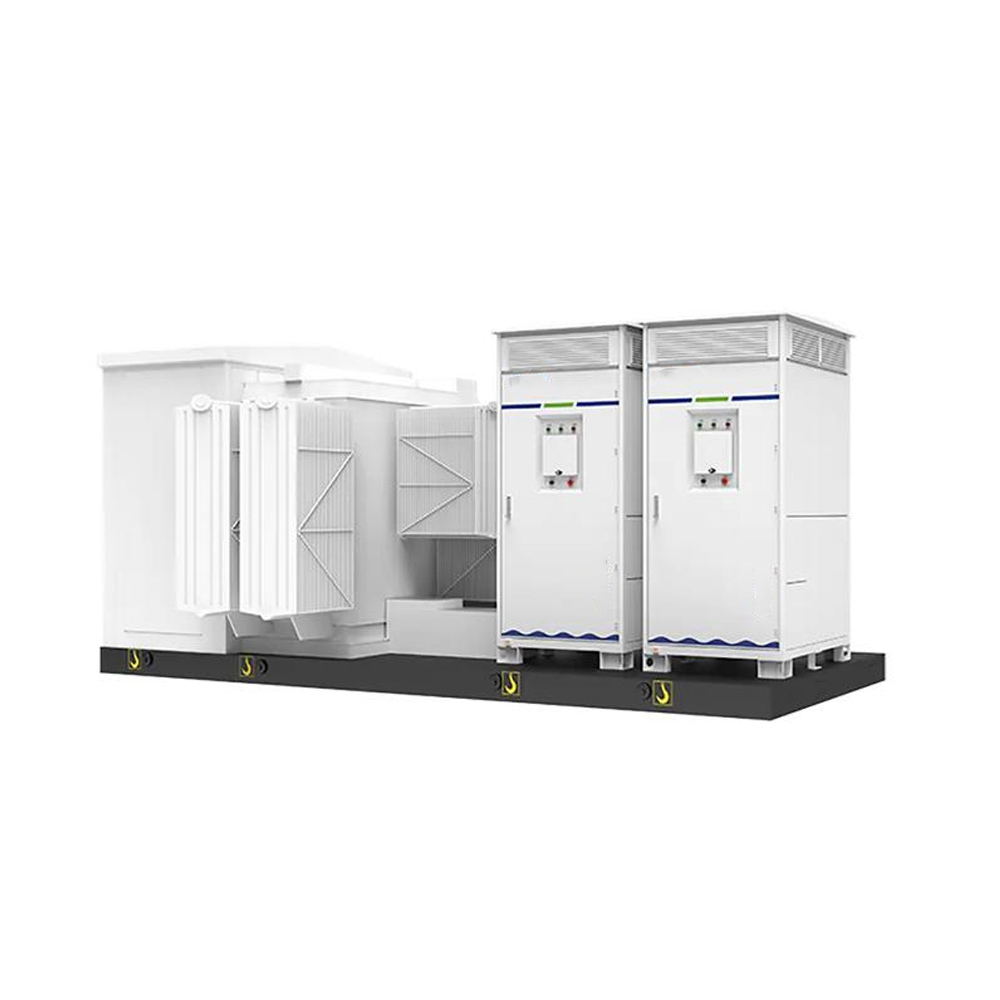
Generator-based backup involves more variables than any other equipment in this category, and error consequences are severe enough to warrant detailed specification before going to market. Fuel type is the first variable. Diesel dominates for its high energy density, established supply infrastructure, and understood regulatory treatment. Gas-fueled units have grown where reliable natural gas exists and emissions rules restrict diesel hours, an increasingly common urban constraint. Fuel type drives storage design, bunding and containment, and the maintenance schedule.
Sizing is where most procurement errors occur. A generator sized for average running load often fails to start large motors without visible voltage dip and frequency excursion. Direct-on-line motors draw starting currents commonly three to seven times running current, and the generator must source that pulse without dropping below the motor's acceleration threshold. The specification must capture peak kVA demand, the largest individual motor start, and planned load-step sequencing, not just average kW.
For facilities where extended outage is costly, including continuous process plants, data centers, and critical infrastructure, N+1 generator configurations are now baseline rather than premium. The incremental cost of a redundant unit is modest against the risk of a single-unit failure during a grid outage. For the full fuel comparison, see our guide ondiesel vs natural gas vs BESS backup power.
UPS topology comparison
UPS topology is the single highest-impact power supply decision, so it deserves a direct comparison. The table maps each IEC 62040-3 class to its transfer behavior and correct application.
Topology (IEC 62040-3)
Transfer time
Conditioning
Best for
Standby (VFD)
4 to 10 ms
None
Office IT, non-critical loads
Line-interactive (VI)
2 to 4 ms
Voltage regulation
Light industrial, variable grid
Online double-conversion (VFI)
Zero
Full isolation
DCS, SCADA, safety systems
Choose VFI wherever a momentary interruption has production or safety consequences. Choose VI where voltage quality is poor but uptime is not safety-critical. Choose VFD only for loads that tolerate a short transfer.
How to Specify Power Supply Systems for Your Facility
Specifying power supply equipment is a risk-management exercise, not a catalog search. The specification must work under the actual conditions of the installation, not the idealized conditions of a datasheet. Moving through requirements in sequence prevents the errors that appear later.
Start With Load Characterization, not with Equipment Selection
Map total power requirements at the load level, not the facility level, and identify peak demand rather than average. These diverge sharply where large motors start under load, where equipment cycles frequently, or where inrush is high relative to steady-state draw. Separate continuous loads from short-duration surges.
Confirm whether each distribution point is single-phase or three-phase, and define acceptable voltage tolerance and ripple for each major load group. This matters most where sensitive electronics or protection systems are involved, since those loads set the ripple ceiling for the whole group.
Assess the Operating Environment before Shortlisting Products
A supply that performs in a temperature-controlled electrical room may fail prematurely in a hot, dusty, or chemically aggressive location. Confirm the ambient temperature range at the installation point, and if it sees seasonal or process peaks, specify the peak, not the average. Humidity, dust loading, corrosive gas, and vibration all affect component life.
Where the area is classified for flammable gases or combustible dust,ATEX and IECEx certification is non-negotiable. Confirming the area classification before shortlisting avoids identifying suitable products and then discovering the leading candidates are not rated for the zone.
Determine Compliance Requirements Before Pricing
Required certifications depend on jurisdiction, industry, and application, and UL, CE, and IEC standards are not interchangeable. UPS safety follows IEC 62040-1, or UL 1778 in the United States, while DIN-rail supplies follow IEC 61558. Confirming compliance up front prevents late substitutions that delay delivery or force re-engineering.
The table below covers the key selection criteria and what each requires in practice.
Criterion
What to Look At
Power requirements
Total watts, peak current, diversity factors for mixed loads
Input and output specs
AC or DC, phase count, voltage range, ripple, regulation band
Load characteristics
Resistive, inductive, capacitive mix, motor start demands
Environmental conditions
Temperature extremes, dust, moisture, chemicals, vibration
Compliance and safety
UL, CE, IEC, and hazardous-area approvals where required
Sector context shapes power strategy, and the same five equipment families carry different risk weightings across industries. A refinery, a mining operation, and a data center all rely on power supply systems, but their constraints differ sharply.
In oil and gas, safety and explosion risk dominate. Electrical rooms and field equipment near flammable gases must meet strict hazardous-area standards, and UPS coverage for control and safety systems is treated as life-safety infrastructure. Main and standby transformers, redundant feeds, and automatic transfer schemes are normal practice. These sectors are served directly through the Power Generation hub.
Manufacturing and automation focus on continuity and product quality. AC and DC supplies feed long chains of PLCs, drives, and sensors, where even small voltage dips upset motion control or process tuning. Voltage regulators become a quiet insurance policy against rejects and downtime. See the Manufacturing hub for sector sourcing.
Mining stretches power across harsh, remote locations, where dust, vibration, and shock challenge both hardware and enclosures. Backup power units are vital for ventilation, hoisting, and communications, and longer service response times make robustness count. Data centers live and die by their UPS systems, and as AI workloads raise power density, both AC and DC distribution come under greater pressure, sized to strict uptime commitments through the Data Centers hub. Renewable sites add DC and AC-to-DC conversion linking variable generation and storage to the grid, with more dynamic operating profiles.
Moving From Specification to Sourcing
A complete specification covering load characterization, environmental brief, compliance, and redundancy is the document that makes procurement straightforward. Without it, sourcing becomes a process of filtering out-of-scope options after the fact, which wastes time and risks accepting a marginal product because it was available and priced attractively.
The five equipment families in this guide are available through eINDUSTRIFY's live Electrical and Energy Storage categories, including Power Supplies and UPS Battery. Every supplier is vetted before listing, and stock availability is live.
For standard catalog items, procurement teams can compare options and order directly. For non-standard requirements, high-voltage configurations, or ATEX-rated equipment,submit an RFQ to route specifications to suppliers with the relevant expertise. If you are specifying for a new project or replacing aging equipment, start from a brief that captures actual load and installation conditions, not nominal ratings from an old nameplate. Bring that brief, and sourcing becomes a much shorter process.
Frequently asked questions
What is an industrial power supply system?
An industrial power supply system is equipment that converts, conditions, and backs up electrical power for plant loads. The main types are AC power units, DC power supplies, UPS systems, voltage regulators, and backup generators. Each handles a distinct part of the supply problem, from converting grid power for control circuits to providing backup during outages.
What is the difference between standby, line-interactive, and online UPS?
Standby (VFD) UPS switches to battery on failure with a 4 to 10 ms transfer, suiting non-critical IT. Line-interactive (VI) adds voltage regulation for variable grids without draining the battery. Online double-conversion (VFI) runs the load continuously from the inverter with zero transfer time, and is correct for DCS, SCADA, and safety systems under IEC 62040-3.
What is the difference between linear and switched-mode power supplies?
Linear power supplies produce low-ripple, low-noise output, suiting precision instrumentation and signal conditioning, but run hotter and larger per watt. Switched-mode supplies offer higher efficiency, smaller footprint, and wide input tolerance of 85 to 264 VAC, making them the industrial standard for 24 VDC control rails feeding PLCs and HMI panels.
How do I size a backup generator for motor loads?
Size a backup generator on peak kVA demand and the largest individual motor start, not just average kW. Direct-on-line motors draw starting currents three to seven times their running current, and the generator must supply that surge without the voltage dropping below the motor's acceleration threshold. Capture load-step sequencing in the specification.
What voltage do industrial DC power systems use?
Industrial DC systems commonly use 24 VDC for instrumentation and field devices, and 110 VDC or 125 VDC for protection and switchgear tripping. The 24 VDC and 110 VDC classes are not interchangeable: they represent different performance requirements. Protection-class DC supplies must match the battery charger's float voltage, not just the nominal bus voltage.
What standards apply to industrial power supplies and UPS systems?
UPS systems follow IEC 62040 for safety and performance, or UL 1778 in the United States, with IEC 62040-3 defining the topology classification. DIN-rail power supplies follow IEC 61558. In areas classified for flammable gas or combustible dust, ATEX or IECEx certification is mandatory. Confirm requirements before shortlisting equipment.
What is N+1 redundancy in power supply systems?
N+1 redundancy means providing one more unit than the minimum needed to carry the load, so a single failure does not interrupt supply. It applies to AC power supplies using decoupling modules and to parallel generator sets. It must be designed in from the outset, since panel layouts not dimensioned for redundant current paths are expensive to modify later.
Tags: industrial power supply systems UPS systems DC power supply backup generators power supply specification IEC 62040















 vs Automatic Transfer Switch (ATS) for Data Centers.png)