Industrial Lubricants: Types, Standards, and How to Choose the Right One
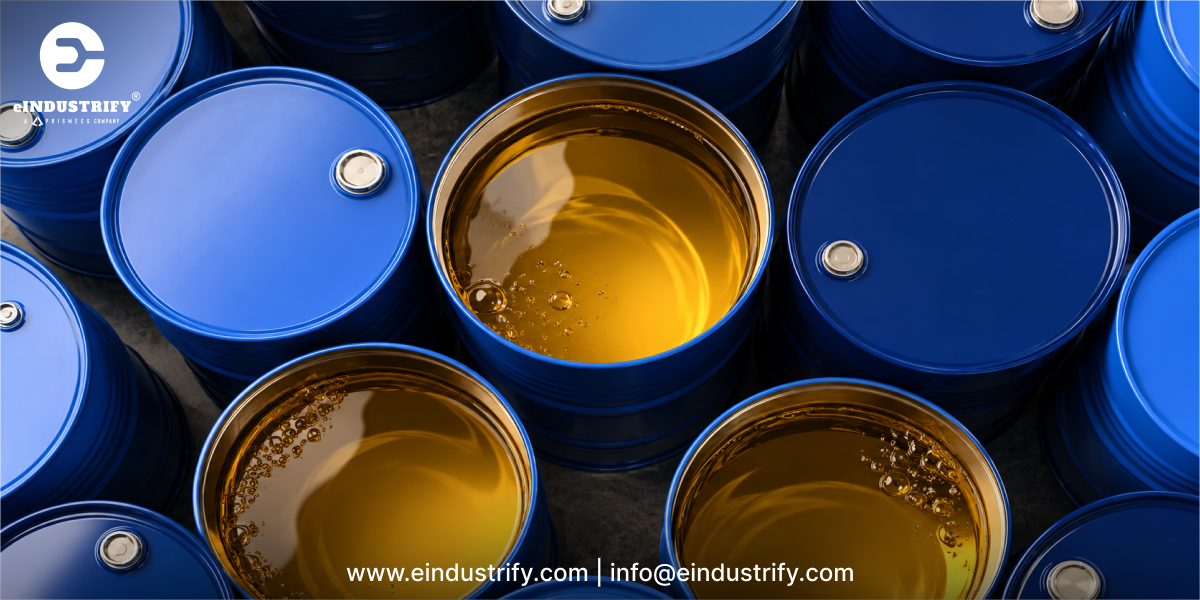
Industrial lubricants are the engineered oils and greases that reduce friction, carry away heat, seal out contaminants, and protect machinery from wear and corrosion. Choosing the right one is a reliability decision, not a commodity purchase: lubrication-related problems are among the leading causes of premature bearing failure, with SKF attributing roughly a third of premature bearing failures to lubrication issues. Get it right and you extend equipment life, cut energy use, and lower maintenance cost. This guide covers what industrial lubricants do, the types by base oil and by application, the standards that classify them (ISO VG, AGMA, SAE, NLGI, API base-oil groups), how to select the correct grade, and how oil analysis keeps it working.
It is written for maintenance and reliability teams, plant engineers, and procurement buyers specifying lubricants for industrial equipment. To source across the full range, see ourlubricants and greases category.
What Industrial Lubricants Do
An industrial lubricant forms a film between moving parts that minimizes direct metal-to-metal contact. Beyond reducing friction it does several jobs at once: it cools by carrying heat away from contact zones, cleans by suspending wear particles and contaminants, seals gaps against moisture and debris, and protects metal surfaces from rust and corrosion. The five concrete benefits:
Extended equipment life by reducing the friction and wear that break components down.
Higher efficiency by cutting frictional losses, which lowers energy consumption and holds optimal operating temperature.
Lower maintenance cost by reducing repair frequency and preventing unplanned breakdowns.
Corrosion protection through a barrier film against moisture and chemicals.
Improved safety by keeping moving parts operating smoothly and reducing mechanical-failure risk.
Types of Industrial Lubricants by Base Oil
The base oil determines a lubricant's fundamental performance, temperature range, and service life. The American Petroleum Institute (API) classifies base oils into five groups; the practical distinction for buyers is mineral vs synthetic. Mineral oil still dominates the market, accounting for roughly 70 percent of industrial lubricant use by volume.
Mineral-based oils are refined from crude oil (API Groups I to III). Economical, widely compatible with seals and materials, and adequate for normal operating conditions. They degrade faster under extreme heat and pressure.
Synthetic lubricants (API Group IV PAO and Group V esters) are chemically engineered for superior oxidation resistance, more stable viscosity across temperature extremes, and longer service life. They cost more upfront but extend drain intervals and protect better in high-temperature, high-load, and wide-temperature-swing applications, often lowering total cost.
Specialty lubricants meet compliance needs, such as NSF H1 food-grade lubricants for food and beverage processing or fire-resistant fluids for steel mills and hydraulics near heat sources.
Greases combine a base oil with a thickener to stay in place where a fluid would drain away. They resist water washout and protect bearings, seals, and intermittent-duty equipment, lubricating even when idle.
Grease by Application Type
Beyond consistency, grease is formulated for the duty it faces. The three most common industrial types:
Heavy-duty (EP) grease: carries extreme-pressure additives for high-load and shock-load equipment in mining, construction, and heavy manufacturing, resisting breakdown where standard grease would be squeezed out.
High-temperature grease: uses a synthetic base oil and a stable thickener to hold its film and resist hardening or bleeding in furnaces, kilns, ovens, and high-speed bearings.
Water-resistant grease: resists water washout to protect against rust and corrosion in marine, food processing, wastewater, and outdoor equipment exposed to moisture.
Greases are also defined by their thickener (commonly lithium, lithium complex, polyurea, or calcium sulfonate), and not all thickeners are compatible with one another. Confirm compatibility before mixing or switching greases to avoid a breakdown of the combined product.
The Standards That Classify Lubricants
Specifying by standard, not by name, is what separates correct selection from guesswork.
Viscosity: ISO VG, AGMA, and SAE
Viscosity is the single most important property of a lubricant, and three grading systems describe it depending on the equipment:
ISO VG (ISO 3448) is the standard for industrial oils. The number is the approximate kinematic viscosity in centistokes (cSt) at 40 degrees C, across grades from ISO VG 2 to 1500, each roughly 50 percent thicker than the last, with a plus or minus 10 percent tolerance. ISO VG 46 cSt at 40 degrees C means about 46 cSt.
AGMA (American Gear Manufacturers Association) grades gear oils, correlating to ISO VG ranges but tuned for the heavy loads and sliding contact of gears.
SAE (Society of Automotive Engineers) grades engine and automotive gear oils, measured differently, which is why the numbers look unrelated. For example, SAE 90 gear oil is roughly equivalent to ISO VG 220.
Because OEMs reference different systems, buyers often need to convert between them when cross-referencing a spec.
Application
Typical ISO VG
Notes
Servo valves, tight-tolerance pumps
ISO VG 32
Thinner; fast response, cooler climates
General industrial hydraulics
ISO VG 46
The safe default for most piston and vane pumps
Heavy or high-temperature hydraulics
ISO VG 68 to 100
Thicker film for load and heat
Industrial gearboxes
ISO VG 220 to 460
Heavy load, sliding contact (AGMA grades)
Viscosity Index: Why the Catalog Number Is Not the Whole Story
A critical point most selection guides miss: ISO VG is measured at 40 degrees C, but your equipment does not run at 40 degrees C. Viscosity Index (VI) describes how much viscosity changes with temperature, and it is not in the ISO VG number. Mineral oils typically have a VI of 90 to 110; Group III and PAO synthetics reach 120 to 160 or higher. The practical implication: a synthetic ISO VG 32 with VI 150 delivers significantly more protective viscosity at 80 degrees C than a mineral ISO VG 32 with VI 95. Operating viscosity at operating temperature, not the catalog grade, determines whether the oil film actually protects the part.
Hydraulic Oil Classes (HLP, HM, HV)
Hydraulic oils carry an additional ISO 6743 / DIN 51524 class designation: HL (basic, rust and oxidation inhibited), HM / HLP (anti-wear, the industrial standard), and HV / HVLP (high viscosity index for wide temperature swings). Match the class to the system, not just the ISO VG, when sourcing hydraulic oil.
Grease Consistency: NLGI Grades
The National Lubricating Grease Institute grades grease consistency from 000 (near-fluid) to 6 (block), with NLGI 2 the general-purpose industrial default. Higher grades suit vertical shafts and high temperature; lower grades suit low temperature and centralized systems.
Additives
Anti-wear (AW) additives protect under moderate load; extreme-pressure (EP) additives protect gears and bearings under shock and heavy load.
Types of Industrial Lubricants by Application
Lubricant Type
Primary Use
Key Property
Engine oils
Combustion engines (automotive, marine, gensets)
Detergency, cooling, wear protection
Gear oils
Gearboxes, differentials
High film strength, EP additives, AGMA grades
Hydraulic oils
Presses, forklifts, excavators
Power transmission, anti-wear (HM/HLP)
Compressor oils
Air and refrigeration compressors
High-temperature stability, deposit control
Turbine oils
Steam and gas turbines, high-speed machinery
Oxidation resistance, rust protection
Slideway oils
Machine tool slides and ways
Stick-slip control, machining precision
Spindle oils
High-speed textile and machining spindles
Low viscosity, deposit prevention
The power generation sector is the single largest application segment for industrial lubricants, accounting for roughly 31.8 percent of the market, relying on turbine, compressor, and gear oils for continuous duty. For hydraulic-specific guidance, see our guide onhydraulic oil grades.
How to Choose the Right Industrial Lubricant
Selecting a lubricant means matching its properties to the machine and its operating conditions:
Start with the OEM specification. Always begin with the manufacturer's recommended viscosity grade and class. Following the OEM spec protects both performance and warranty.
Match viscosity to operating temperature, not just the catalog. Use the ISO VG together with the Viscosity Index and your actual operating temperature. Too thin and the film fails under load; too thick and it wastes energy and runs hot.
Account for load and speed. High or shock loads need EP additives; high speed needs lower viscosity with thermal stability.
Match the environment. Moisture, dust, and chemical exposure call for water-resistant grease, oxidation-resistant synthetics, or sealed application methods.
Weigh base oil on total cost. Mineral (lower cost, normal duty) vs synthetic (longer life, extreme conditions), judged on total cost of ownership, not purchase price.
For hard-to-match or OEM-spec products, eINDUSTRIFY'sRFQ and sourcing service can cross-reference the equivalent.
Oil Analysis: Making the Lubricant Last
Selecting the right lubricant is half the job; keeping it in condition is the other half. Oil analysis (sampling and testing oil on a schedule) is the highest-return reliability practice in lubrication, because it catches problems before they cause failure. A basic program tracks:
Viscosity drift, which signals degradation, contamination, or the wrong top-up oil.
Wear metals (iron, copper, chromium), which reveal which component is wearing before it fails.
Contamination by water, dust, or fuel, the leading accelerant of oil and bearing failure.
Additive depletion and oxidation, which set the real drain interval.
The payoff: scheduled oil changes based on fluid condition rather than fixed hours, plus early warning of a developing failure. Combined with keeping oil within its ISO cleanliness code through good filtration, analysis can substantially extend both oil and equipment life.
Industrial Lubricants Across Industries
Manufacturing: conveyors, gearboxes, and hydraulic systems depend on gear, hydraulic, and slideway oils.
Power generation: the largest application segment, using turbine, compressor, and gear oils rated for continuous high-temperature duty.
Mining and construction: heavy machinery under shock load and abrasive dust needs EP gear oils and water-resistant grease.
Aerospace and high-speed machinery: specialized lubricants for extreme temperature and load.
Food and pharmaceutical: NSF H1 food-grade lubricants where incidental product contact is possible.
Market Context
Industrial lubrication is a large, stable market: independent research firms valued the global industrial lubricants market in the range of roughly USD 64 to 74 billion in 2024, with projections toward USD 90 to 105 billion over the following decade at a CAGR around 3 to 3.5 percent. Growth is driven by industrial automation, manufacturing expansion, and a shift toward high-performance synthetic and bio-based formulations. Mineral oils still dominate by volume (around 70 percent), while synthetics are the fastest-growing segment.
The Bottom Line
The right industrial lubricant is matched by standard and property to the machine and its conditions, not chosen by name or price. Start with the OEM specification, match the ISO VG and Viscosity Index to your real operating temperature, select the correct hydraulic class or NLGI grade, choose mineral or synthetic on total cost of ownership, and keep the oil in condition with a basic analysis program. Correct lubrication is one of the cheapest, highest-return reliability investments a plant can make.
Source Industrial Lubricants with eINDUSTRIFY
eINDUSTRIFY connects industrial buyers with engine, gear, hydraulic, compressor, turbine, slideway, and spindle oils, plus greases and specialty lubricants, from vetted, trusted manufacturers meeting recognized standards. Browse industrial lubricants and greases, or for OEM-spec matching and hard-to-find products,send an RFQ and our team will source the equivalent. Reach us at info@eindustrify.com or +1 (888) 774 7632, and register your account for access to the B2B industrial marketplace.
Frequently Asked Questions
What does ISO VG mean on a lubricant?
ISO VG (Viscosity Grade) is the ISO 3448 system that grades industrial oil by kinematic viscosity in centistokes at 40 degrees C, shown as a number such as ISO VG 32, 46, or 68. Matching the ISO VG to your equipment and operating temperature is the most important single step in selecting the correct oil, since viscosity too low or too high causes film failure or energy waste.
What is the difference between ISO VG, AGMA, and SAE grades?
ISO VG grades industrial oils by viscosity at 40 degrees C and is the most widely used industrial system. AGMA grades gear oils for the heavy loads of gear systems. SAE grades automotive engine and gear oils on a separate scale, which is why the numbers differ; for example, SAE 90 gear oil is roughly equivalent to ISO VG 220. Buyers convert between them when cross-referencing OEM specs.
Why does Viscosity Index (VI) matter if I already know the ISO VG?
ISO VG is measured at 40 degrees C, but equipment runs hotter, and Viscosity Index describes how much viscosity drops as temperature rises. A high-VI synthetic holds more protective viscosity at operating temperature than a low-VI mineral oil of the same ISO VG. Operating viscosity at real temperature, not the catalog grade, determines whether the oil film actually protects the part.
What is the difference between mineral and synthetic lubricants?
Mineral oils are refined from crude oil, cost less, and suit normal conditions, which is why they account for roughly 70 percent of industrial use. Synthetic lubricants are engineered for better oxidation resistance, more stable viscosity across temperature extremes, and longer service life, making them worth the higher price in high-temperature, high-load, or wide-temperature-swing applications.
What is an NLGI grade for grease?
NLGI grade is the National Lubricating Grease Institute scale for grease consistency, from 000 (nearly fluid) to 6 (very firm). NLGI 2 is the general-purpose industrial default; softer grades suit low temperatures and centralized lubrication systems, while firmer grades suit vertical shafts and high-temperature service.
How do I choose the right industrial lubricant for my equipment?
Start with the OEM-recommended specification, then match the ISO VG and Viscosity Index to your operating temperature, the hydraulic class (HM/HLP) or NLGI grade to the system, and the additive package (AW or EP) to the load. Use synthetics for extreme temperatures, water-resistant grease for wet environments, and certified specialty lubricants such as NSF H1 where compliance requires it.
What is oil analysis and why does it matter?
Oil analysis is scheduled sampling and testing of in-service oil to track viscosity, wear metals, contamination, and additive depletion. It matters because it lets you change oil based on actual condition rather than fixed hours and gives early warning of a developing failure, making it one of the highest-return reliability practices in lubrication.

























 vs Automatic Transfer Switch (ATS) for Data Centers.png)