Uses of Industrial Control Equipment: What Each Device Does and When to Use It
Industrial control equipment covers the controllers, relays, timers, and interfaces that automate and regulate a plant. The main devices are PLCs for machine control, DCS for continuous processes, RTUs for remote sites, plus HMIs, timers, overload relays, and signal conditioners. Each solves a specific job, and choosing the right device for the task is what separates reliable automation from constant troubleshooting.
This guide explains what each type of control equipment is used for, maps devices to real applications, and shows how to choose. For the deeper architectural comparison, how PLCs, DCS, and SCADA stack within the ISA-95 model that connects these devices into a system, see the companion piece.
What is industrial control equipment?
Industrial control equipment refers to the devices that manage, regulate, and automate industrial operations. It ranges from single-function parts like timers and overload relays up to full controllers like PLCs and DCS platforms.
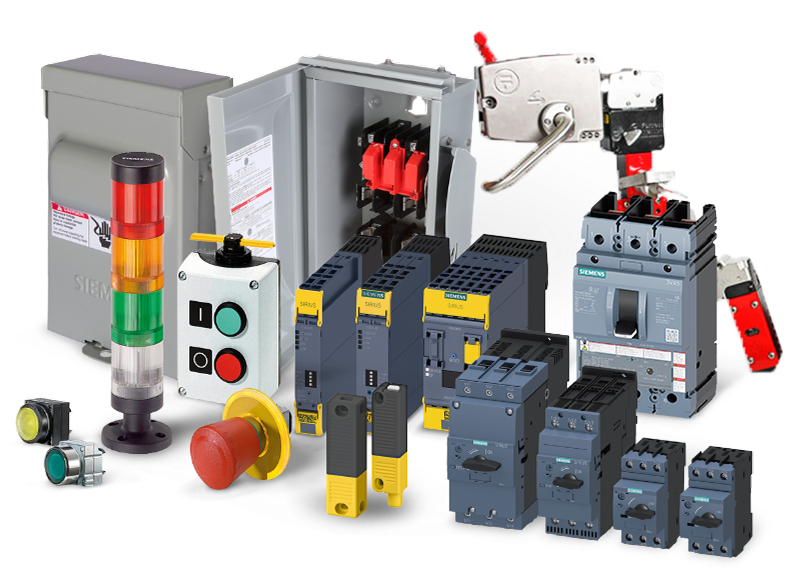
These devices sit within the broader industrial control system (ICS) framework, reading sensors, deciding on an action, and driving actuators such as valves and motors. You can source controllers, timers, and relays in the eINDUSTRIFY Industrial Control category.
Types of industrial control equipment and what each does
Different control jobs call for different devices. The table maps the main equipment types to their function and typical use, and where to source each.
Equipment
What it does
Typical use
PLC
Discrete and sequential logic control
Machines, assembly, robotics
DCS
Continuous process control, plant-wide
Refining, chemical, power
RTU
Remote data collection and control
Pipelines, distributed sites
HMI
Operator display and interaction
All supervised processes
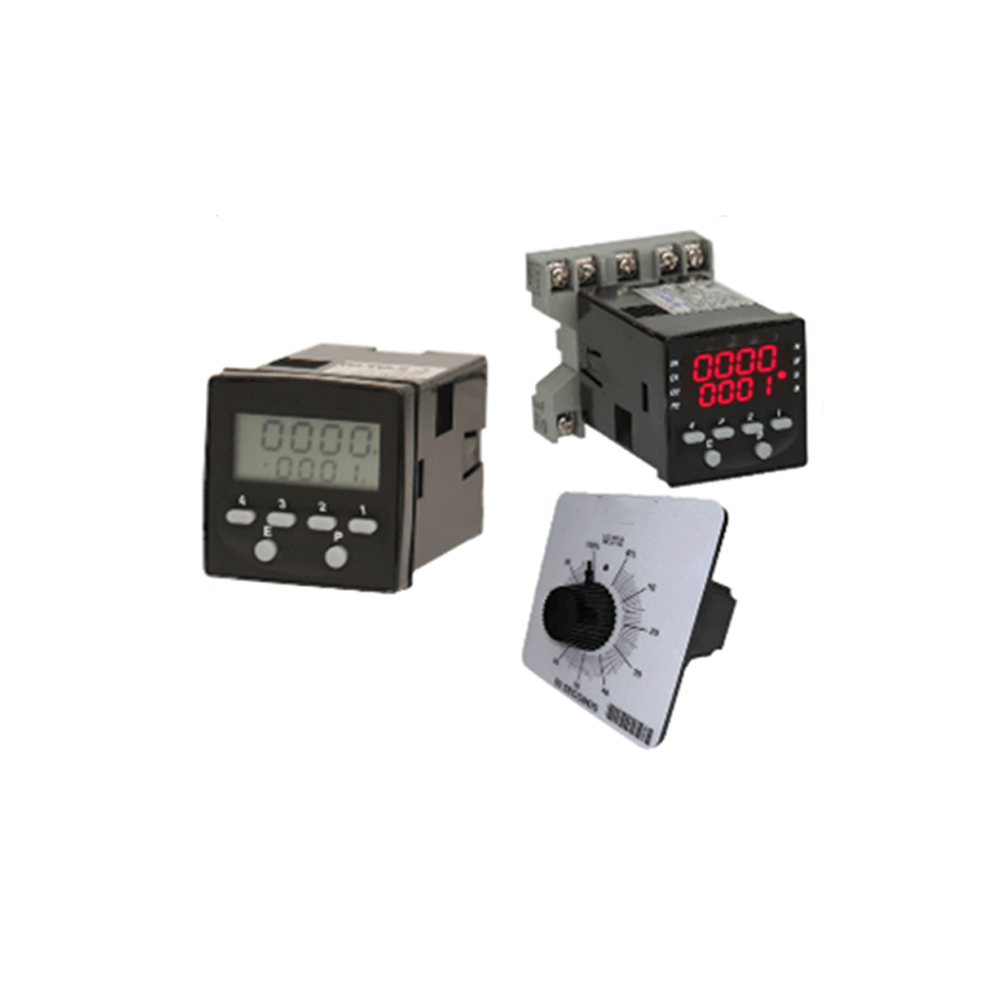
Timers
Time-based sequencing and delays
Motor starts, cycle timing
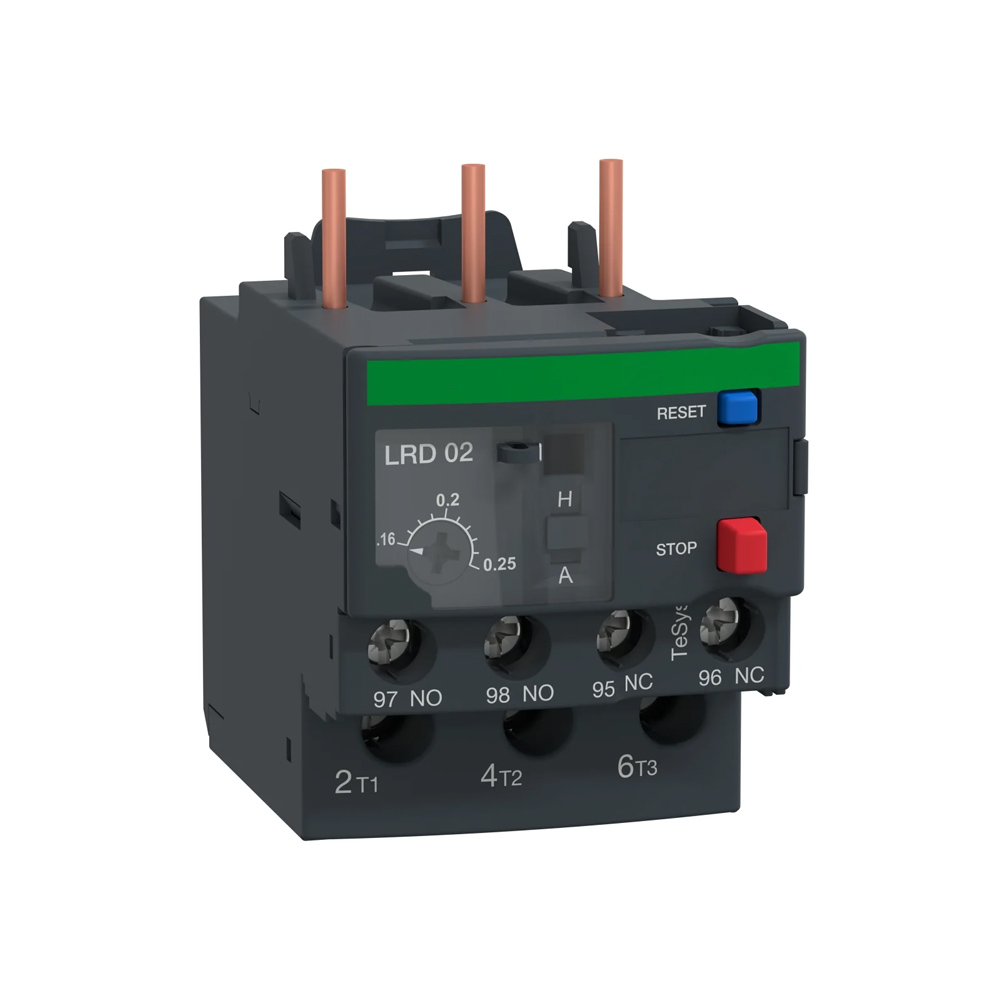
Overload relays
Motor overcurrent protection
Every motor circuit
Signal conditioners
Clean and convert sensor signals
Instrument loops
PLCs provide Boolean and sequential logic and are often used in stand-alone machinery and robotics. DCS platforms handle real-time, continuous control in large process plants. RTUs serve geographically dispersed SCADA applications like pipelines and electrical distribution. The single-function devices, timers, overload relays, and signal conditioners, are the workhorses that support them.
Key Uses of Industrial Control Equipment
Some of the key uses of industrial control equipment are listed below. The table summarizes which device drives each use, and the detail follows.
Use
Equipment involved
Benefit
Production-line automation
PLC, HMI
Fewer errors, higher throughput
Uptime and monitoring
Sensors, DCS, SCADA
Fewer unplanned breakdowns
Predictive maintenance
Sensors, controllers
Longer equipment life
Process safety
Safety relays, PLC
Protects people and assets
Energy and process control
PLC, DCS
Lower cost, consistent quality
Enhancing Automation in Production Lines
The most common use of control equipment is automating repetitive tasks. In production lines, PLCs manage material handling, assembly, and packaging with fast, deterministic logic. This reduces human error, raises throughput, and frees workers for higher-value tasks. Discrete manufacturing depends on PLC-driven automation for precision and repeatability.
Reducing Downtime
Downtime hits profitability directly, and control equipment reduces it through real-time monitoring. Sensors feed controllers that flag abnormal readings and alert operators before a fault becomes a breakdown. This proactive visibility is often the single biggest operational payoff of a control system.
Supporting Predictive Maintenance
Predictive maintenance uses control-equipment data to anticipate failures rather than react to them. Controllers log vibration, temperature, and pressure trends, and analytics reveal wear before it causes a shutdown. In power generation, this keeps turbines and generators running without unplanned outages.
Improving Safety and Reducing Human Error
Safety is critical in refineries, chemical plants, and water treatment. Safety-rated control systems, built to functional-safety standards like IEC 61508, detect dangerous conditions and respond automatically. If pressure exceeds a limit, the system adjusts valves or trips the process, protecting people and equipment.
Optimizing Energy and Process Control
Control equipment holds processes to stable set points, which cuts energy waste and keeps quality consistent. In power generation, PLCs and a DCS regulate turbines, boilers, and generators to optimize fuel use. Across manufacturing, steady control of temperature, pressure, and speed is what delivers uniform product quality.
How to choose industrial control equipment
Matching the device to the job is the core decision. A short set of questions gets you there.
Question
Points to
Discrete machine or continuous process?
PLC for discrete, DCS for continuous
One site or geographically dispersed?
Local controller vs RTU and SCADA
Is the function safety-related?
Safety-rated device (IEC 61508 / IEC 61511)
Simple timing or motor protection?
Timer or overload relay
Noisy or mismatched sensor signal?
Signal conditioner
Start with discrete-versus-continuous, since that single split points to PLC or DCS immediately. Confirm whether any function is safety-related, because that mandates a rated device, not a standard one. For programming portability, look for controllers that follow IEC 61131-3, the standard for PLC languages.
Benefits of Using Industrial Control Equipment
The benefits below follow directly from the uses above, summarized for procurement and operations teams.
Benefit
How control equipment delivers it
Efficiency
Automation speeds operations and cuts error
Cost savings
Prevents breakdowns, optimizes energy
Scalability
Modular controllers expand with the line
Safety
Automated monitoring and rated trip functions
Better decisions
Real-time data feeds analytics
Improved efficiency comes from automating repetitive work and holding tight tolerances. Cost savings come from avoided downtime and optimized energy use. Scalability comes from modular, standards-based controllers that grow with the operation. Enhanced safety comes from automated monitoring and rated protective functions. Better decision-making comes from the real-time data these devices generate.
Applications across industries
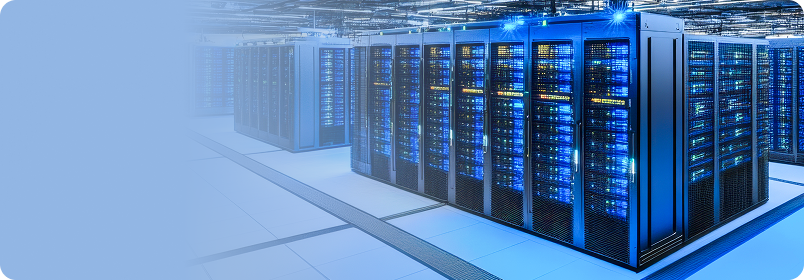
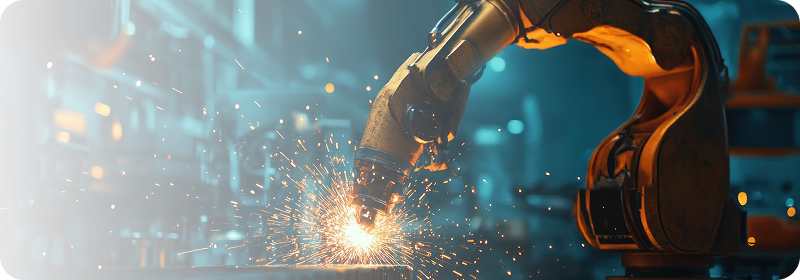
Control-equipment needs to shift by sector, and each maps to industries eINDUSTRIFY serves. In Power Generation, a DCS coordinates turbines and boilers for continuous, safe output. In Manufacturing, PLCs and HMIs run discrete assembly and packaging lines. In Data Centers, control equipment manages power and cooling for uptime. Water and wastewater utilities rely on SCADA and RTUs to supervise dispersed sites.
Frequently asked questions
What is industrial control equipment?
Industrial control equipment is the set of devices that automate and regulate industrial operations, including PLCs, DCS, RTUs, HMIs, timers, overload relays, and signal conditioners. They read sensors, decide on actions, and drive actuators like valves and motors within a control system.
What is a PLC used for?
A programmable logic controller (PLC) is used for discrete and sequential control of machines, assembly lines, and robotics. It excels at fast, deterministic logic and is common in stand-alone machinery. PLCs are programmed using the IEC 61131-3 languages.
When should I use a DCS instead of a PLC?
Use a DCS for continuous processes across a whole plant, such as refining, chemical production, or power generation, where many control loops must be coordinated from central operator stations. Use a PLC for discrete machine control. The two are often combined in one facility.
What is an RTU used for?
A remote terminal unit (RTU) collects data and executes control at remote, geographically dispersed sites, then reports to a central SCADA system. Typical uses include pipelines, electrical distribution networks, and water distribution.
What does an overload relay do?
An overload relay protects a motor from sustained overcurrent by tripping the circuit before heat damages the windings. It is a core protective device on virtually every industrial motor circuit.
How do I choose the right control equipment?
Start by identifying whether the job is discrete machine control (PLC) or continuous process control (DCS), and whether it spans dispersed sites (RTU and SCADA). Confirm whether any function is safety-related, which requires a device rated to IEC 61508 or IEC 61511, and match single functions to timers, relays, or signal conditioners.
Source industrial control equipment through eINDUSTRIFY
eINDUSTRIFY is a premier global B2B marketplace for industrial supplies, connecting plant, controls, and procurement teams with vetted suppliers of control hardware. Every seller is vetted, so you source genuine controllers, timers, and relays with documentation, and compare across brands like Siemens, ABB, Eaton, and Schneider Electric in one place.
Browse the Industrial Control category for controllers, Timers, and Overload Relays, plus Signal Conditioners and Instrumentation for the sensing side of the loop. For project sourcing or multi-site standardization,submit an RFQ and our team will match you to the right suppliers. Call 1-888-774-7632 or email info@eindustrify.com to get started.










 vs Automatic Transfer Switch (ATS) for Data Centers.png)