Industrial Oil Filters: Types, Standards, and Selection
Industrial oil filters remove contaminants from hydraulic, lubricating, and engine oil to protect machinery from wear and failure. Filter performance is defined by two standards: ISO 4406, the fluid cleanliness code, and ISO 16889, the Beta ratio that measures filtration efficiency. Contamination causes up to 80 percent of hydraulic system failures, so selecting a filter by cleanliness target and Beta ratio, not just by fit, is what protects the equipment.
This guide covers industrial oil filter types, the standards that rate them, and how to select for a cleanliness target. It is written for maintenance, reliability, and procurement teams specifying filtration for industrial equipment.
Why industrial oil filters matter
Industrial oil filters protect machinery by removing the particles that cause most mechanical wear and failure. Contaminants such as dust, metal debris, and sludge score bearings, jam valves, and abrade pump surfaces, and each particle generates more wear debris in a self-accelerating cycle. Clean oil improves lubrication, reduces friction, and prevents costly unplanned downtime.
The scale of the problem is well documented. Contamination causes up to 80 percent of hydraulic system failures, and a single 10-micron particle can jam a servo valve or scar a piston rod. In operations where downtime means lost production, filtration rated to a defined cleanliness target is a reliability investment, not a commodity purchase.
Types of Industrial Oil Filters
Industrial oil filters divide by the system they protect, each with distinct flow, pressure, and contaminant demands. The four core types below cover most industrial equipment. Each is specified by micron rating and Beta ratio, summarized in the table.
Filter type
Protects
Typical target ISO 4406
Notes
Hydraulic (pressure line)
Pumps, valves, actuators
16/14/11 for servo systems
High collapse strength
Hydraulic (return line)
Whole system
18/16/13 general industrial
Most common location
Diesel engine oil
Engine internals
Per OEM spec
Handles soot, high flow
Lube/machine oil
Bearings, gears
17/15/12 typical
Continuous duty
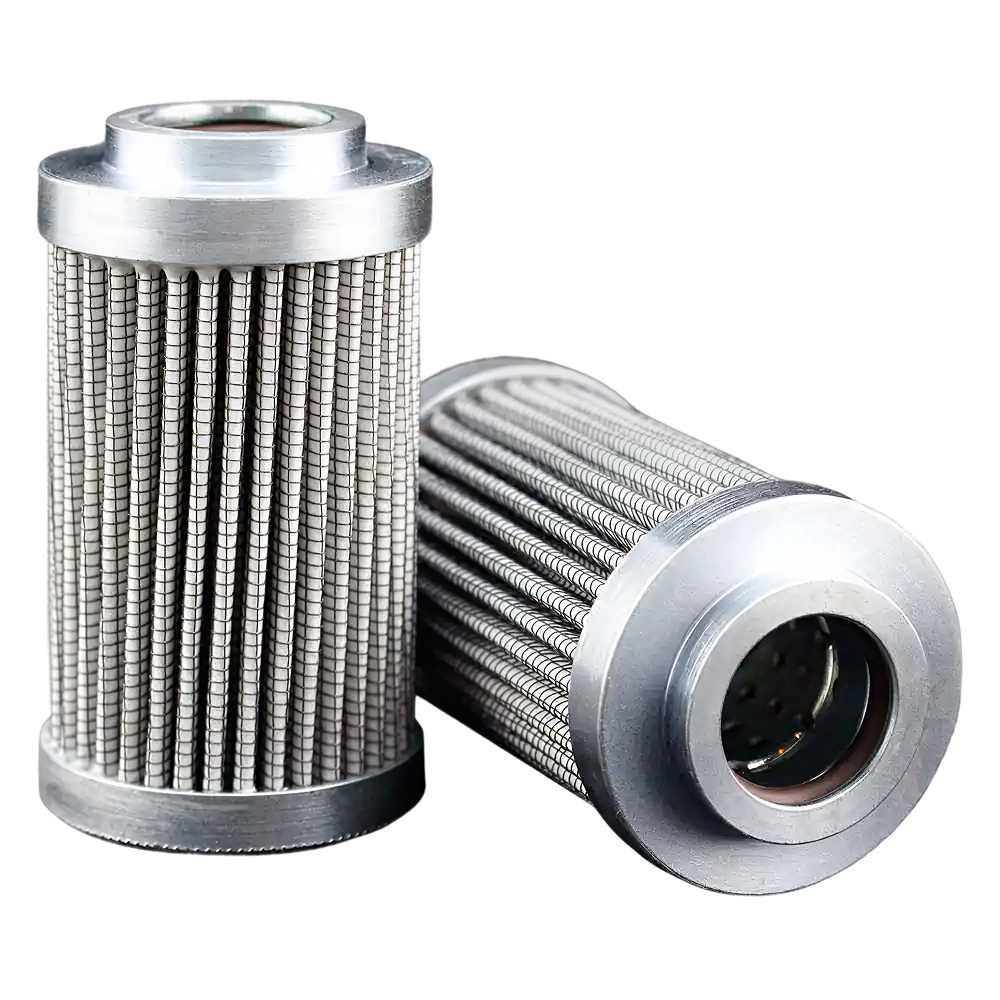
Hydraulic oil filters protect pumps, valves, and actuators, where a trapped particle causes immediate failure. They are placed on the pressure line (protecting downstream components), the return line (the most common, cost-effective location), or the suction line (coarse protection for the pump). Servo and piston systems demand the cleanest oil, targeting ISO 4406 16/14/11 or lower.
Diesel engine oil filters remove soot, carbon, and metallic debris from engine oil under high flow and pressure, used in generators and heavy equipment. Generator oil filters keep lube oil clean through continuous high-temperature operation for uninterrupted power. Machine and lube oil filters protect bearings and gears in continuously running machinery, extending both oil and equipment life.
Understanding filter ratings: micron, Beta ratio, and ISO 4406
Oil filter performance is defined by three linked metrics: micron rating, Beta ratio, and the ISO 4406 cleanliness code they achieve. Understanding them is the core of correct filter selection, and each is standardized.
The micron rating is the particle size a filter captures, either nominal (approximate) or absolute (at least 98.7 percent capture). The Beta ratio, defined byISO 16889, measures efficiency: a filter with β10 = 200 removes 199 of every 200 particles 10 microns and larger, a 99.5 percent efficiency. The ISO 4406 cleanliness code, fromISO 4406, reports the resulting fluid cleanliness as three numbers such as 18/16/13, counting particles at 4, 6, and 14 microns. Specify filters by absolute micron rating and Beta ratio for servo, piston, and high-pressure systems.
Key features to look for in industrial oil filters
Selecting an industrial oil filter means matching Beta ratio, dirt-holding capacity, compatibility, and durability to the system and its cleanliness target. Each feature ties to a measurable specification rather than a general claim.
Beta ratio and micron rating determine filtration efficiency; specify the absolute rating for sensitive components. Dirt-holding capacity determines how much contaminant the filter traps before it needs replacement, driving service intervals. Compatibility covers the oil type (hydraulic, engine, or lube), the flow rate, and the collapse-pressure rating for the filter's location. Durability is the ability to hold efficiency under the operating temperature, pressure, and vibration, critical in harsh industrial service.
Benefits of Using the Right Industrial Filters
The right industrial oil filter delivers reliability and cost benefits that extend well beyond clean oil. Each benefit ties directly to maintaining the fluid cleanliness target that protects the equipment.
Increased equipment lifespan follows from clean oil reducing wear on bearings, pumps, and gears, delaying expensive failures. Lower maintenance costs come from preventing the contamination-driven breakdowns that cause most unplanned repairs. Better performance results from components running within tolerance on clean fluid. Energy efficiency improves because clean, correctly filtered oil reduces friction and flow resistance, lowering the power the system draws. Meeting an ISO 4406 target is what delivers all four.
How to Choose the Best Filter Suppliers
Choosing an oil filter supplier means evaluating range, quality assurance, technical support, and value against your equipment needs. The supplier decision matters as much as the filter, since the wrong cross-reference or an uncertified element defeats the filtration.
A capable supplier offers a wide range covering hydraulic, diesel, generator, and lube filters, so one source serves the whole fleet. Quality assurance means elements meet ISO 16889 Beta-ratio ratings with documentation. Technical support means help matching the filter to your ISO 4406 target and component sensitivity. Competitive pricing balances cost against verified performance rather than defaulting to the cheapest element.
Maintenance Tips for Industrial Filters
Correct filter maintenance sustains the fluid cleanliness that protects the equipment. Even a correctly specified filter fails to protect if it is neglected, so a monitoring and replacement routine is essential.
Monitor oil condition through regular particle-count sampling against the ISO 4406 target, which detects contamination before it causes damage. Replace filters on the manufacturer's interval or when the differential-pressure indicator signals, rather than waiting for the element to clog and bypass. Keep spare elements to avoid downtime during peak operation, and match the filter to the correct oil type and viscosity. Regular oil analysis is the most reliable indicator of both filter and system health.
Why heavy-duty filters are worth the investment
Heavy-duty industrial oil filters cost more upfront but lower total cost of ownership through longer service and better protection. Their construction handles higher pressures, larger contaminant loads, and longer operating hours than standard filters, holding their Beta-ratio efficiency in harsh conditions.
Over the equipment life, that reliability compounds. Fewer oil changes, fewer contamination-driven repairs, and less unplanned downtime outweigh the higher element price. For critical hydraulic and lube systems, specifying a high-efficiency filter to a lower ISO 4406 target is one of the highest-return reliability decisions a maintenance team can make.
Source industrial oil filters through eINDUSTRIFY
eINDUSTRIFY is a premier global B2B marketplace for industrial supplies, connecting maintenance, reliability, and procurement teams with vetted suppliers of industrial oil filters. Every seller is vetted, so you source filters with documented ISO 16889 Beta ratings and micron specifications, and compare efficiency, capacity, and price across suppliers in one place.
ISO 4406 is the international standard for classifying oil cleanliness, expressed as three numbers such as 18/16/13. Each number represents the particle count per milliliter at 4, 6, and 14 microns, on a logarithmic scale where each step doubles the count. Lower numbers mean cleaner fluid. Setting and monitoring an ISO 4406 target for the most sensitive component is the foundation of contamination control in hydraulic and lube systems.
What is a filter Beta ratio?
A filter Beta ratio, defined by ISO 16889, measures filtration efficiency at a given particle size. It is the number of upstream particles divided by downstream particles: a filter with β10 = 200 removes 199 of every 200 particles 10 microns and larger, a 99.5 percent efficiency. A higher Beta ratio means higher efficiency. Specify filters by Beta ratio rather than nominal micron rating for reliable, comparable performance.
What micron oil filter do I need?
The micron rating depends on the most sensitive component in the system. Servo valves and piston pumps need absolute ratings near 3 to 5 microns to hit an ISO 4406 target of 16/14/11 or cleaner, while general industrial hydraulics tolerate 10 to 25 microns. Use the absolute rating (98.7 percent capture, Beta 75 or higher) rather than the nominal rating when specifying for sensitive or high-pressure systems.
What is the difference between a hydraulic filter and an engine oil filter?
A hydraulic filter protects pumps, valves, and actuators from particles that cause immediate failure, and is rated by micron and Beta ratio to an ISO 4406 target. An engine oil filter removes soot, carbon, and combustion debris from engine oil under high flow. They handle different contamination types, pressures, and system structures, so they are not interchangeable. Always match the filter to the system it protects.
Where should a hydraulic filter be installed?
Hydraulic filters are installed in three locations, each with a purpose. A pressure-line filter sits after the pump and protects sensitive downstream components, requiring high collapse strength. A return-line filter, the most common and cost-effective, catches wear particles from the whole system. A suction filter protects the pump with coarse filtration only. Return-line filtration is standard for general cleanliness control.
How often should industrial oil filters be replaced?
Replace industrial oil filters on the manufacturer's interval or when the differential-pressure indicator signals a clogged element, whichever comes first. Never wait for full clogging, since a blocked filter goes into bypass and lets unfiltered oil through. Regular particle-count sampling against the ISO 4406 target is the most reliable guide, since actual interval depends on contaminant load, duty cycle, and operating conditions rather than time alone.
Tags: industrial oil filters hydraulic filter ISO 4406 Beta ratio oil filtration filter selection